Food banks use AI now, data readiness decides its impact
AI is already inside food-bank work, but at A Simple Gesture its value will rise or fall on clean data, not clever software.
AI is already in the workflow
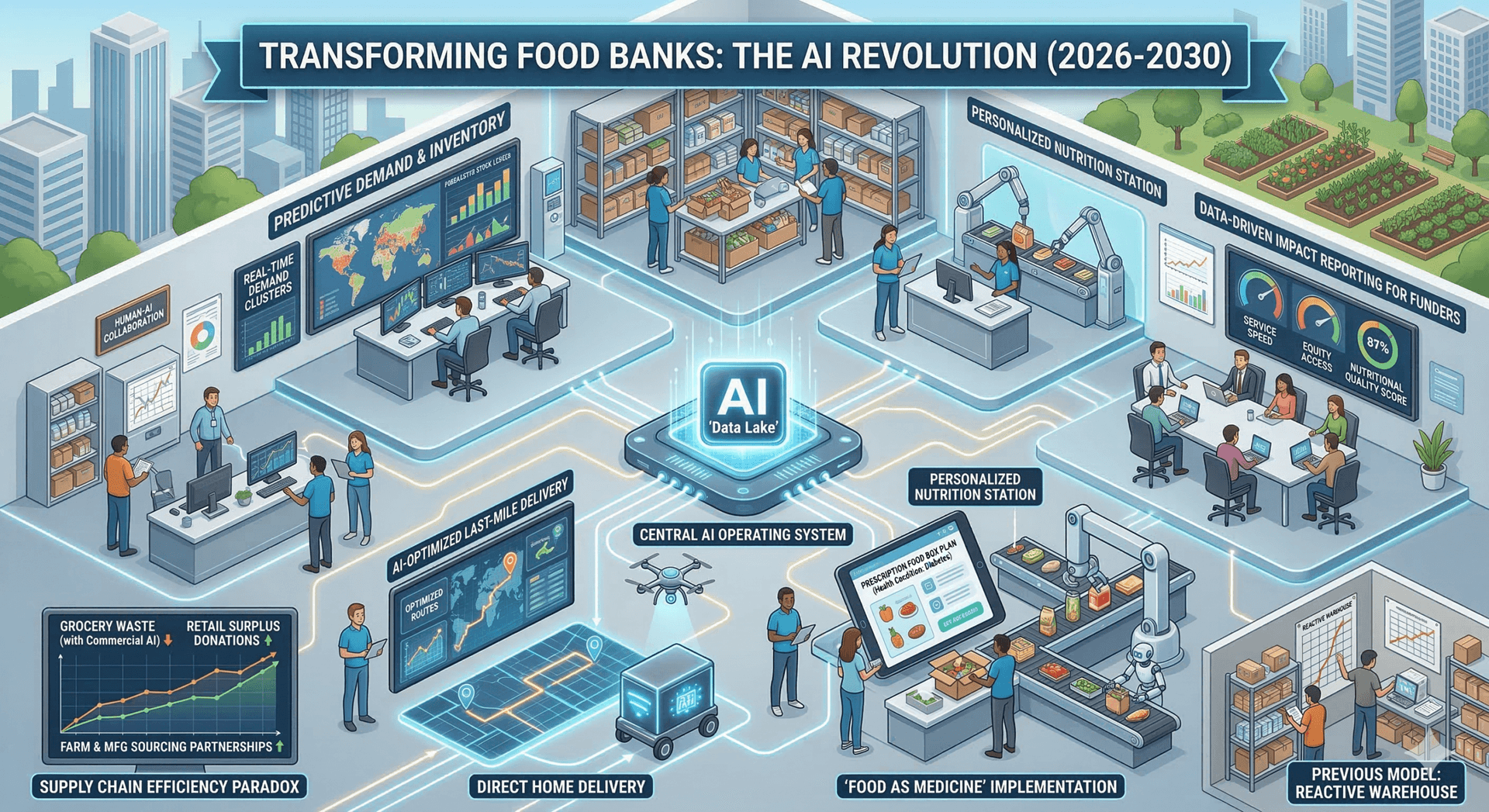
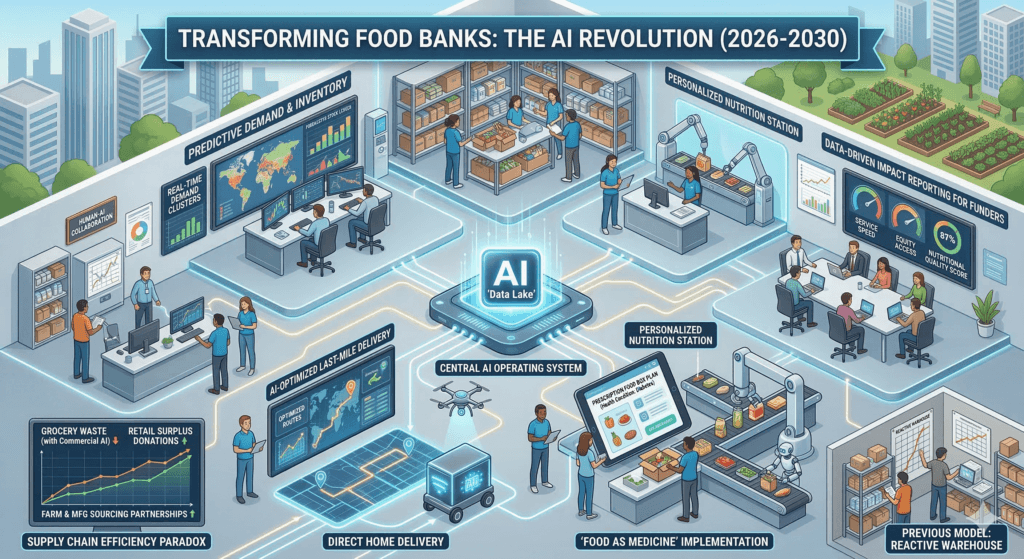
Artificial intelligence is no longer something food banks can file under future planning. Across the sector, it is already showing up in donor segmentation, demand forecasting, automated grant drafting, and logistics optimization, which makes the real question less about whether to use it and more about whether the data behind it is worth trusting.
The clearest message from the AI tools reviewed in Food Bank News is practical: when three major models point to the same answer, the bottleneck is not the chatbot. It is data readiness. For a food-recovery operation like A Simple Gesture, that means the organization’s ability to benefit from AI will depend on whether donor records, volunteer schedules, route notes, and pantry partner information are entered consistently and kept current.
Why data readiness matters in a green-bag model
A Simple Gesture is built on recurring, low-friction logistics. It helps people start monthly or every-other-month food drives, collects donations from home or community gatherings, and moves green bags through volunteer donors and volunteer drivers directly to pantry partners. That model works because the operation depends on a steady chain of small decisions: who donates, which route covers which neighborhood, which volunteers are available, and where the food goes next.
That is exactly why AI can help, but only if the back-end discipline is already there. Clean route notes can improve pickup planning. Accurate partner contact data can make it easier to confirm need before a truckload arrives. Reliable volunteer records can help coordinators fill shifts faster. A shared language for donation volume and frequency can make it easier to compare one neighborhood’s output with another’s. If those basics are sloppy, AI does not fix the mess. It amplifies it.
Where AI can save time first
The most immediate uses at A Simple Gesture are likely to be the unglamorous ones. AI can help staff and coordinators sort donor lists, identify neighborhoods with strong participation, draft routine communications, and flag where pickup coverage is thin before a scheduled window closes. It can also help compare route performance over time, which matters for a neighborhood-based program that depends on efficient volunteer driver coordination.
That is the kind of help that could save time without changing the mission. Instead of replacing the relationships that keep a green-bag model working, AI can make those relationships easier to manage at scale. In practice, that means better call lists for recruitment, better route planning, and more precise internal communication before volunteers head out.
- Donor segmentation can show which households are most likely to stay active.
- Demand forecasting can help staff anticipate which pantry partners may need more food, or different product types.
- Draft communications can speed up reminders to volunteers and donors.
- Logistics tools can help staff match routes to coverage gaps and timing constraints.
There is a second layer of potential use on the food-distribution side. Food Bank News says AI can synthesize information in seconds, which could help match just-rescued food with pantries able to distribute it quickly. The same coverage notes that some pantries are already using AI for training videos and real-time translation during client conversations, pushing the technology from back-office planning into frontline service.
The sector is still early, and that matters
The evidence base is still thin. A 2025 systematic review in *Nutrients* found only five peer-reviewed studies on AI in food bank and pantry services between 2015 and 2024, and those studies were focused mainly on food donation, collection, and distribution processes. That small number tells you something important: the sector is experimenting, but it has not yet built a deep body of proof around what works best.
That should make staff cautious about overpromising. AI can be useful in a food-recovery nonprofit, but the strongest case for it is operational, not magical. Feeding America’s public data tools point in the same direction, showing how data visualization can help food banks understand the relationship between food insecurity and socioeconomic factors without requiring massive technical investments. The lesson for A Simple Gesture is not to chase novelty. It is to use tools that sharpen decisions already being made.
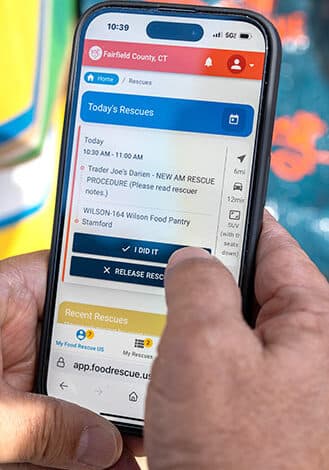
There is also a wider digital infrastructure story here. Platforms such as Plentiful have become a backbone for more than 800 providers, which shows that food banks are already relying on software to handle scheduling and coordination. AI is arriving on top of that existing stack, not instead of it.
What A Simple Gesture’s scale changes
Scale is the reason this conversation is becoming more practical. A Simple Gesture says it has more than 1,700 food donors and volunteer drivers who collect over 132,000 pounds of food each year, and its model has been adopted in more than 65 communities across the country. That is enough activity for patterns to matter. At that point, a small improvement in route planning or volunteer scheduling can ripple through the whole operation.
The organization’s own history also shows how quickly a chapter can grow when the system works. One local program began in 2015 with just six families and reached 650 donors and 100 volunteers by 2022. Growth like that makes a strong case for better data hygiene, because larger participation creates more moving parts, not fewer. The Peter Kent-founded model succeeds when the volunteer pipeline is easy to manage and pantry partnerships stay responsive.
For staff, the operational takeaway is straightforward: AI will not replace the trust built through doorstep donation and local pantry relationships. It will matter only where the organization already knows how to measure and manage its work. That means standardizing the basics now so the next layer of technology has something useful to work with.
Know something we missed? Have a correction or additional information?
Submit a Tip