Health benefits top SHRM’s 2025 employee benefits survey
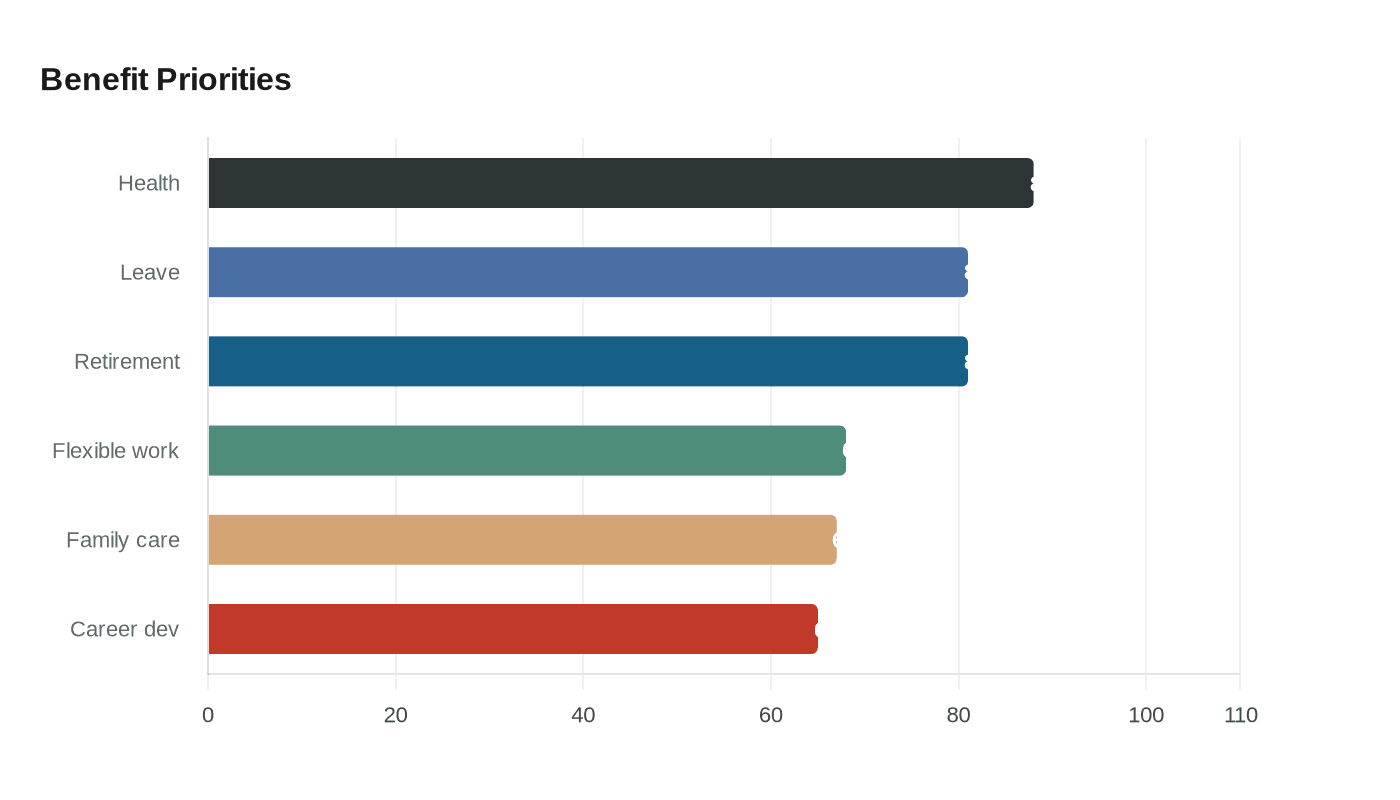
Health coverage stayed the top priority for 88% of employers, while leave and retirement plans tied at 81%, a signal that retention now rests on stability, not perks.
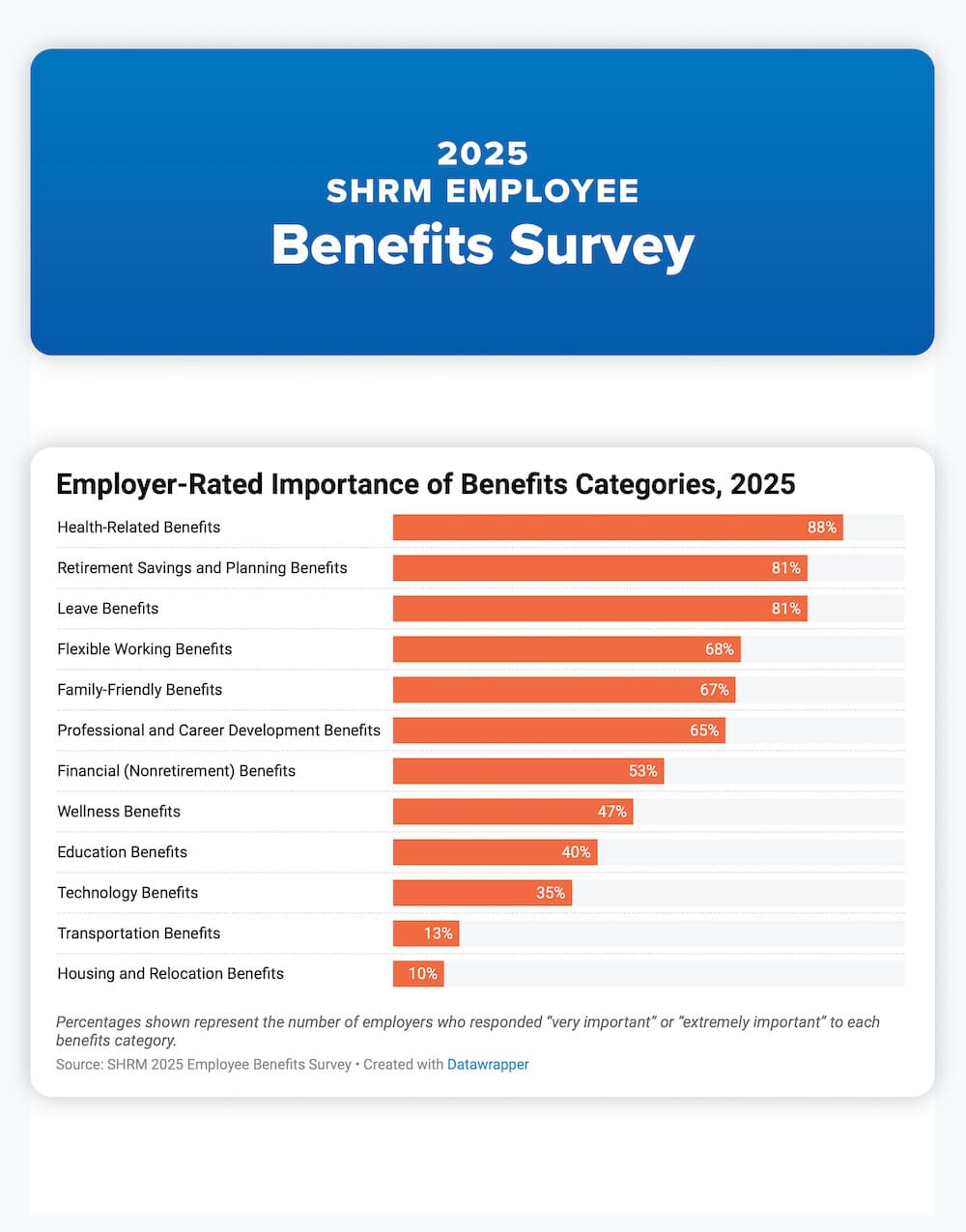
SHRM’s 2025 benefits survey puts a blunt number on what employers are chasing: health-related benefits were rated extremely important or very important by 88% of employers, the highest share in the report’s executive summary. Leave benefits and retirement savings and planning tied for second at 81% each, while flexible working benefits came in at 68%, family care benefits at 67% and professional and career development benefits at 65%.
The survey, which SHRM says it has published since 1996, benchmarks results against 3,969 organizations and remains one of the longest-running annual U.S. benefits datasets. For workers and managers at A Simple Gesture, where staffing depends on route coordination, pantry partnerships and volunteer support, that matters because the report shows employers are still competing on the basics: whether people can stay healthy, take time away, plan ahead and keep building skills.

Health coverage remains especially widespread. SHRM’s 2025 materials say general health plan coverage was offered by 97% of employers, dental insurance by 99% and vision insurance by 96%. Traditional 401(k) or similar defined contribution plans were offered by 93% of employers, and 85% of those employers offered a match. That mix signals that even as wages remain tight in many organizations, benefits still carry real weight for staff deciding whether a role can support a household.
Leave also stayed central. SHRM says vacation leave and sick leave continue to be two of the most provided benefits of any type, and it reintroduced paid jury duty leave and paid military leave in 2025 under a new civic leave category. Flexible working benefits slipped by 2 percentage points, but they still ranked among the second tier of priorities, a reminder that schedule control remains part of the retention equation for employees balancing work with caregiving, transportation and other basic household pressures.
SHRM’s talent research adds another layer: nearly 70% of organizations still face challenges recruiting full-time positions. For a nonprofit like A Simple Gesture, that is a useful warning. A mission-driven workplace can attract people, but the survey suggests that loyalty is increasingly built on a practical package of support. Health coverage, leave, retirement access, flexibility and development are not side issues anymore; they are part of the operating strategy that keeps workers in place.
Know something we missed? Have a correction or additional information?
Submit a Tip