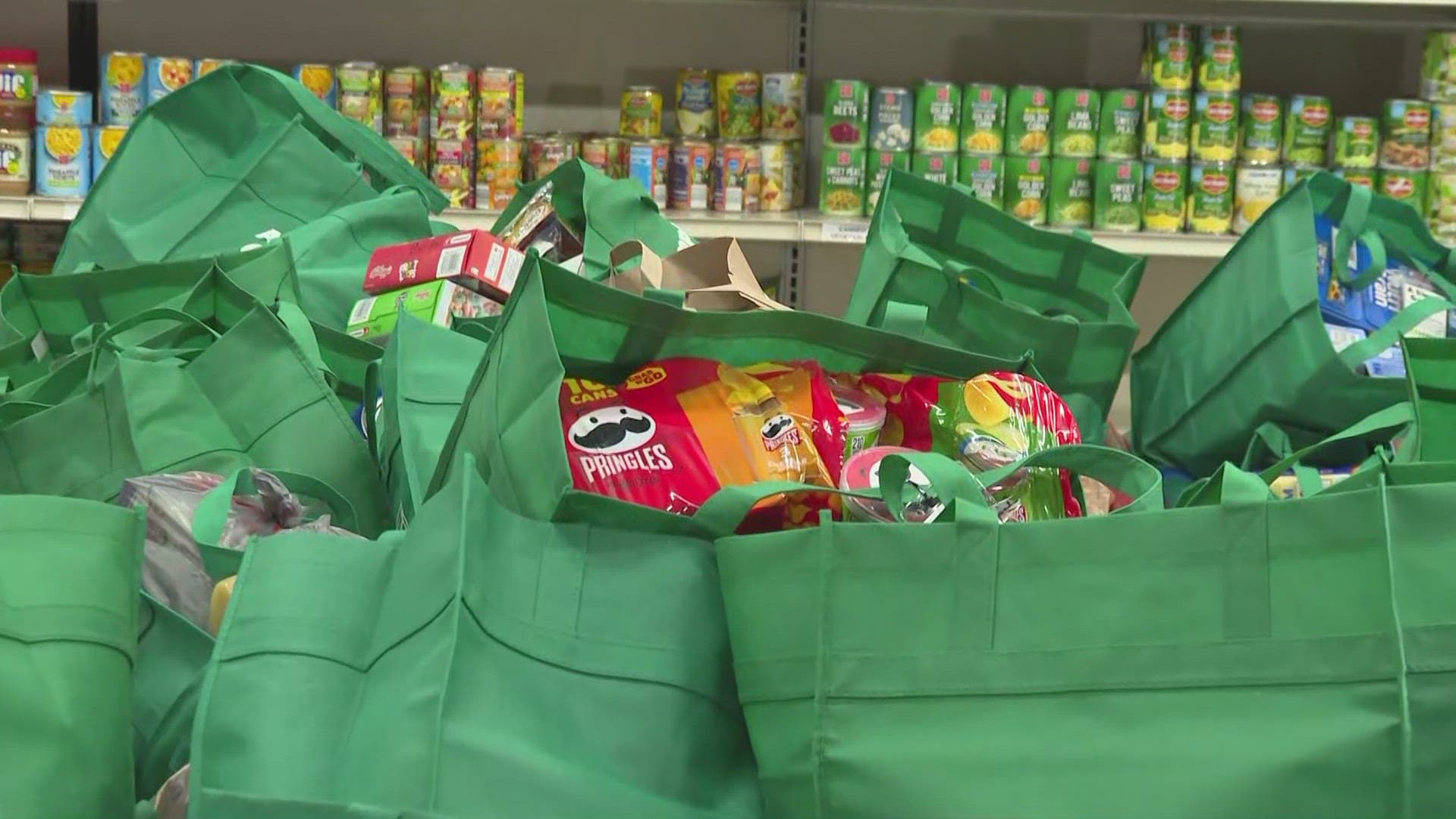
How simple calls to action can boost hunger relief campaigns
A single message, $1 = 10 Meals, can move millions of pantry meals when the ask is easy enough to repeat from checkout to a green bag pickup.
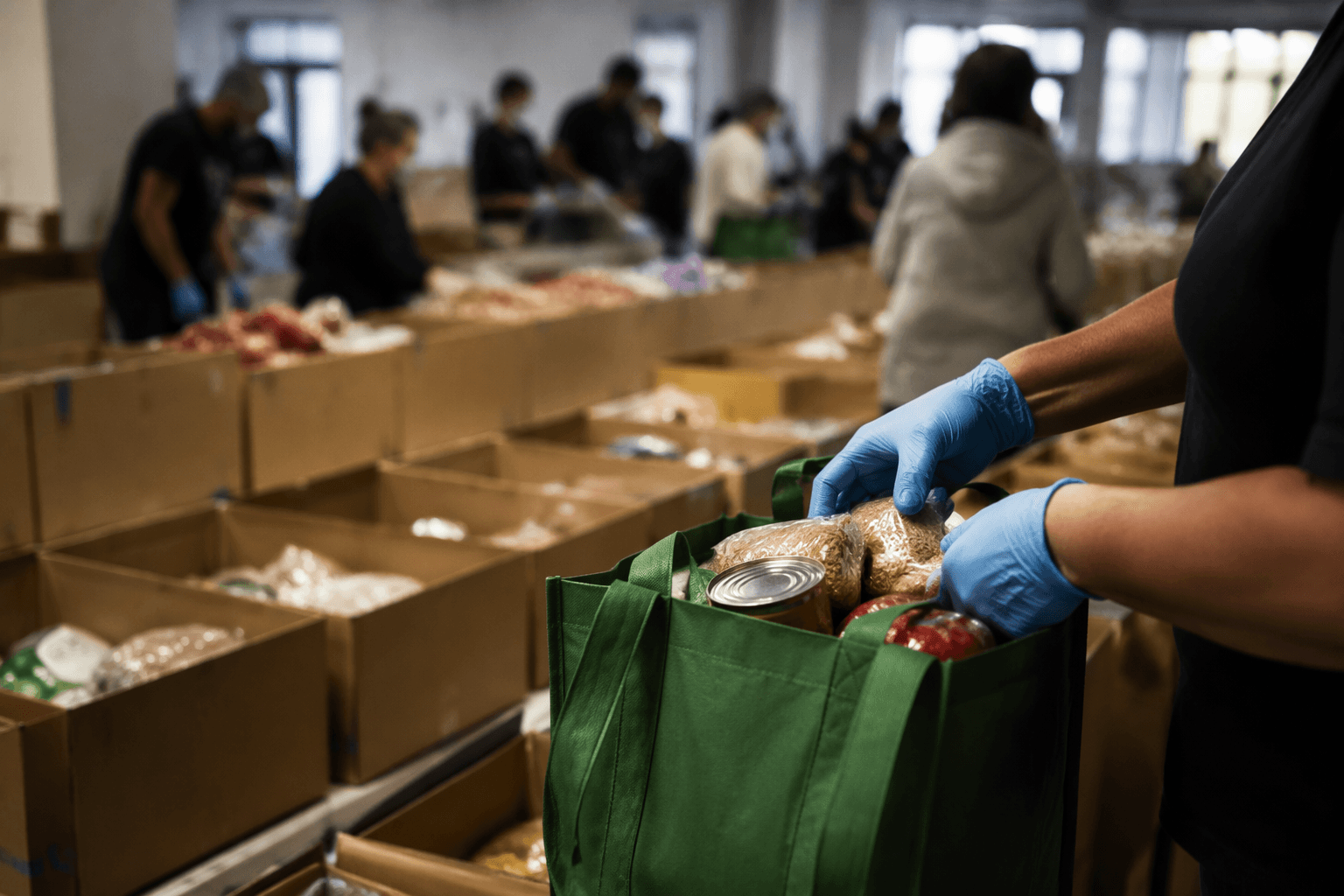
A hunger campaign works best when people know exactly what to do. Feeding America’s Fight Hunger. Spark Change. does that with a simple conversion, $1 = 10 Meals, while A Simple Gesture’s green bag model uses the same logic at the doorstep: one bag, one pickup, one clear handoff to a pantry.
Why simple instructions travel farther
Feeding America frames Fight Hunger. Spark Change. as cause marketing, the kind of public-facing campaign that rallies customers to raise food and funds. That matters because the mechanics are easy to understand and easy to repeat, which is exactly what a neighborhood food recovery nonprofit needs when it is asking busy households, volunteers, and local employers to show up more than once.
The campaign’s structure also makes the point that donation behavior does not need to be complicated to be effective. In 2026, Walmart and Sam’s Club launched the 13th annual campaign on April 6 and ran it through May 3, giving shoppers several simple ways to participate: donate or round up at checkout, buy specially marked items, or give directly online. Those are small actions, but they are built to fit the moment people are already making a purchase.
That repeatability is part of why the campaign has scale. In 2025, Walmart and Sam’s Club said Fight Hunger. Spark Change. had helped Feeding America partner food banks secure more than 2 billion meals. The same formula also produces visible local wins: Feed More in Central Virginia has used the campaign as a fundraising hook, Food Bank Northeast Louisiana has tied it to the 13th straight year of national retail participation, Ozarks Food Harvest said it brought in more than $1.5 million and more than 6 million meals in southwest Missouri, and an Arkansas-area effort linked to Arvest said it reached more than 1.9 million meals across its service area.
What A Simple Gesture can borrow from that playbook
A Simple Gesture is already built around a behavior that is just as legible as a checkout prompt. Its Green Bag Food Donor Program lets households donate from the doorstep, and the organization’s founders, Jonathan Trivers and Karen Trivers, started the effort after retiring in Paradise, California and looking for a way to move excess food to people who needed it. The model proved early that a simple action can scale: the Paradise program had 1,700 households signed up and collected about 135,000 pounds of food annually.
That combination of clarity and repetition also matters on the operations side. A 2020 report on the Reston program said 61 volunteers were scheduled to pick up 1,300 bags of food in one weekend, which is the kind of route coordination that turns a neighborhood idea into a real collection system. In Greensboro, green bag donors reportedly delivered 369,637 pounds of nonperishable food to Guilford County food pantries in one year, a reminder that pantry partnerships are not an abstract feel-good add-on. They are the delivery mechanism that makes the collection matter.
The organization is still expanding the same basic idea into more channels. A 2025 WFMY News 2 report said A Simple Gesture received a $50,000 grant to grow Green Bag Recovery, Food Recovery, and the SHARE program, with the nonprofit based at Backpack Beginnings in The Triad. That kind of funding is useful because it supports both the public-facing side of the work and the less visible logistics, including pickup routes, volunteer scheduling, and the handoff to pantry partners.
What smaller employers and office programs can copy
A workplace campaign does not need national retail scale to borrow this structure. The strongest lesson from Feeding America’s campaign and A Simple Gesture’s green bag network is that people respond when the request is concrete, social, and easy to repeat.
- Make the ask visible and numerical. A simple conversion like $1 = 10 Meals gives donors an instant frame for impact, just as a green bag on the doorstep gives households one obvious action.
- Offer one primary action first, not five. Checkout rounding, special purchase items, direct online giving, and doorstep bag collection all work because the instruction is short enough to remember.
- Pair the campaign with a local partner that can absorb the result. Feeding America’s retail model works because partner food banks can convert money and food into meals; A Simple Gesture works because pantry partnerships turn bags into distributed food support.
- Build the campaign around a repeatable route or collection cycle. The Reston example, with 61 volunteers picking up 1,300 bags in one weekend, shows that the back end has to be as disciplined as the message on the front end.
- Use the campaign to recruit beyond the initial donor. The notes on A Simple Gesture point to one of the most useful byproducts of this kind of effort: a one-time supporter can become a regular donor or a recurring volunteer if the first interaction is simple and successful.
For coordinators, that means the real job is not inventing a bigger slogan. It is turning a clear ask into a routine people can join without a long explanation. Seasonal drives, route expansions, and employer partnerships all get easier when the participation model is the same every time and the local payoff is easy to see.
That is why these campaigns work across grocery stores, offices, and neighborhood pickup routes. The message is simple enough to remember, the participation options are specific enough to act on, and the results are visible enough to bring people back.
This article was produced by Prism’s automated news system from verified source data, official records, and press releases, then run through automated quality and moderation checks before publishing. The system is built and supervised by the people who set the standards it runs under. Read our full AI policy.
Did this article answer your question?