Indeed’s 2026 volunteer coordinator guide spotlights nonprofit skills and pay
Volunteer coordination at A Simple Gesture is really operations work. Indeed’s pay data and duty list show why the job demands recruiting, routing, retention and community trust.

A volunteer coordinator title can sound soft around the edges. In practice, it is one of the clearest entry points into nonprofit operations, where the work is part people management, part logistics, and part neighborhood diplomacy. That is exactly what stands out when you put Indeed’s updated volunteer coordinator guide next to A Simple Gesture’s food-recovery model: the job is not just about welcoming helpers, it is about keeping a donation network moving.
The job title hides a real operations job
Indeed’s guide breaks the role into the tasks that actually keep a volunteer program alive: recruiting, interviewing, placing people in roles, supervising, training, scheduling, tracking hours, managing records, organizing events, fundraising, community outreach, maintaining the volunteer database, and evaluating volunteers periodically. For anyone coming out of corporate admin, events, or HR, that list reads less like a charity title and more like a practical skills map.
That matters at A Simple Gesture because volunteer coordination is not abstract there. In a doorstep donation model, someone has to think about route planning, donor communication, pantry needs, and neighborhood coverage at the same time. A coordinator who can keep schedules tight and expectations clear is not just supporting the mission, they are protecting the reliability that donors and pantry partners depend on.
Why the pay data belongs in the conversation
Indeed’s salary snapshot helps ground the work in the broader labor market. The company lists an average hourly wage of $21.99 for a volunteer coordinator in the United States, with a low of $9.55 and a high of $39.40. Its separate salary page says the average annual salary is $47,187, based on 697 salaries taken from job postings in the past 36 months and updated May 10, 2026.
For nonprofit staff, that kind of range is a reminder that the role can sit at very different levels depending on organization size, scope, and geography. The work often carries responsibilities that look closer to middle-management operations than to entry-level administration, yet compensation can vary widely. That gap is worth naming, especially for organizations that rely on volunteer programs to deliver measurable public benefit without always budgeting as if the coordination work itself is essential infrastructure.
What A Simple Gesture asks from its volunteers and leaders
A Simple Gesture’s Guilford County chapter says it has made food donations easy since 2015, and the scale behind that statement is substantial. As of December 2025, it reported more than 3,900 recurring food donors, 200 monthly volunteers, more than 75 pantry partners, more than 8,000,000 child-size meals donated, and about $13,000,000 in donated food value. Those are not symbolic numbers. They point to a system that depends on consistency, follow-through, and a steady pipeline of people who know how to show up.
The organization’s mission is equally operational. It says it works to engage the community to provide a sustainable supply of food to local food pantries, collect excess perishable food for local nonprofits and community meals, and support the SHARE program in Guilford County Schools. In other words, the volunteer program is not a side project. It is the connective tissue between households, schools, pantries, and community meal providers.
The green bag model turns coordination into a logistics test
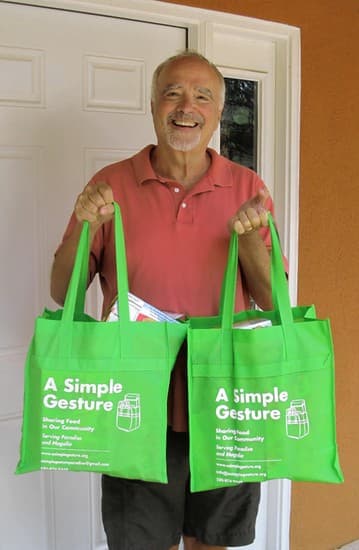
A Simple Gesture’s Guilford County program runs through door-to-door pickups, corporate pickups, and food-recovery pickups. That mix creates a workflow that is unusually dependent on accurate scheduling and reliable communication, because the work happens in neighborhoods, workplaces, and donation sites rather than in one fixed location. When a volunteer coordinator keeps those pieces aligned, they are essentially managing a distributed food-recovery system.
The food-recovery side of the program shows how hands-on the role can be. Volunteers must be able to lift 20-pound boxes, use a smartphone, use a clean personal car for pickups and deliveries, be flexible, wear closed-toe shoes, and be age 18 or older. Those requirements make clear that this is not just a desk role with a mission statement attached. It blends physical readiness, basic technology use, and dependable transportation with the interpersonal work of keeping volunteers engaged.
Retention is part of the job, not an afterthought
One of the most revealing parts of Indeed’s guide is its emphasis on tracking volunteer hours. In a nonprofit setting, that is not merely bookkeeping. It is recognition, retention, and program storytelling rolled into one. Hours recorded accurately can help a coordinator show volunteers that their time matters, identify who is active and who is drifting away, and build the case for future support with hard numbers.
That logic fits A Simple Gesture particularly well because the organization’s model depends on repeat participation. A recurring food donor, a monthly volunteer, and a pantry partner are all relationships that have to be maintained, not just acquired. A strong coordinator is the person turning one-time interest into dependable participation, which is often the difference between a program that looks good on paper and one that can actually keep food moving.
A nonprofit career path built on transferable skills
The volunteer coordinator role is one of those jobs that reveals how much nonprofit work is powered by ordinary workplace skills used at a higher level of consequence. Recruiting looks like talent acquisition. Scheduling looks like operations management. Database upkeep looks like administrative control. Community outreach looks like external relations. Event promotion and fundraising add another layer of public-facing work that can define whether the program grows or stalls.
A Simple Gesture’s story shows why those skills matter. The organization traces its model back to Paradise, California, a town of about 35,000 people and 14,000 households, where Jonathan Trivers and Karen Trivers started the idea. The site says that effort grew to more than 1,700 food donors and numerous volunteer drivers collecting over 132,000 pounds of food each year, and that communities across the country have since started their own versions. A Simple Gesture-Guilford County was established as a 501(c)(3) nonprofit in 2015, and the chapter’s growth since then shows what happens when mission is matched with disciplined execution.
For workers moving from corporate admin, events, or HR into nonprofit operations, that is the real lesson in the volunteer coordinator guide. The job is not a soft landing. It is a systems role with human stakes, and in a food-recovery organization like A Simple Gesture, the quality of that coordination can shape trust, retention, and community reach all at once.
This article was produced by Prism’s automated news system from verified source data, official records, and press releases, then run through automated quality and moderation checks before publishing. The system is built and supervised by the people who set the standards it runs under. Read our full AI policy.
Did this article answer your question?