Kentucky grants expand summer meal access for rural children
Rural Kentucky families can now reach summer meals through grab-and-go boxes, delivery routes and library sites as $115,470 in grants backs seven local groups.

Children in rural Kentucky can miss summer meals even when the food is there, because the real barrier is often the trip. No Kid Hungry Kentucky said transportation problems, work schedules and extreme weather make summer access harder, and it is putting $115,470 into seven organizations that can move food closer to children instead of waiting for families to travel.
The grants went to Edmonson County Schools, Elliott County Schools, Feeding America, Kentucky’s Heartland, Henderson County Schools, Powell County Schools, Shelby County Schools and Todd County Schools. The biggest operational lesson is in how that money will be used: meals can be picked up at central locations, sent home for multiple days at a time, or delivered in some cases, which matters in places where fixed sites are simply too far away for many parents to reach consistently.
One of the clearest examples is Feeding America, Kentucky’s Heartland. The organization said it expanded summer feeding after starting the program in two counties in 2025, and it distributed weekly boxes with breakfast and lunch in Green County and Casey County, totaling 14 meals per child each week. That kind of structure turns a summer feeding program from a single-site handoff into a practical weekly supply line, especially for families juggling jobs, long drives and changing weather.
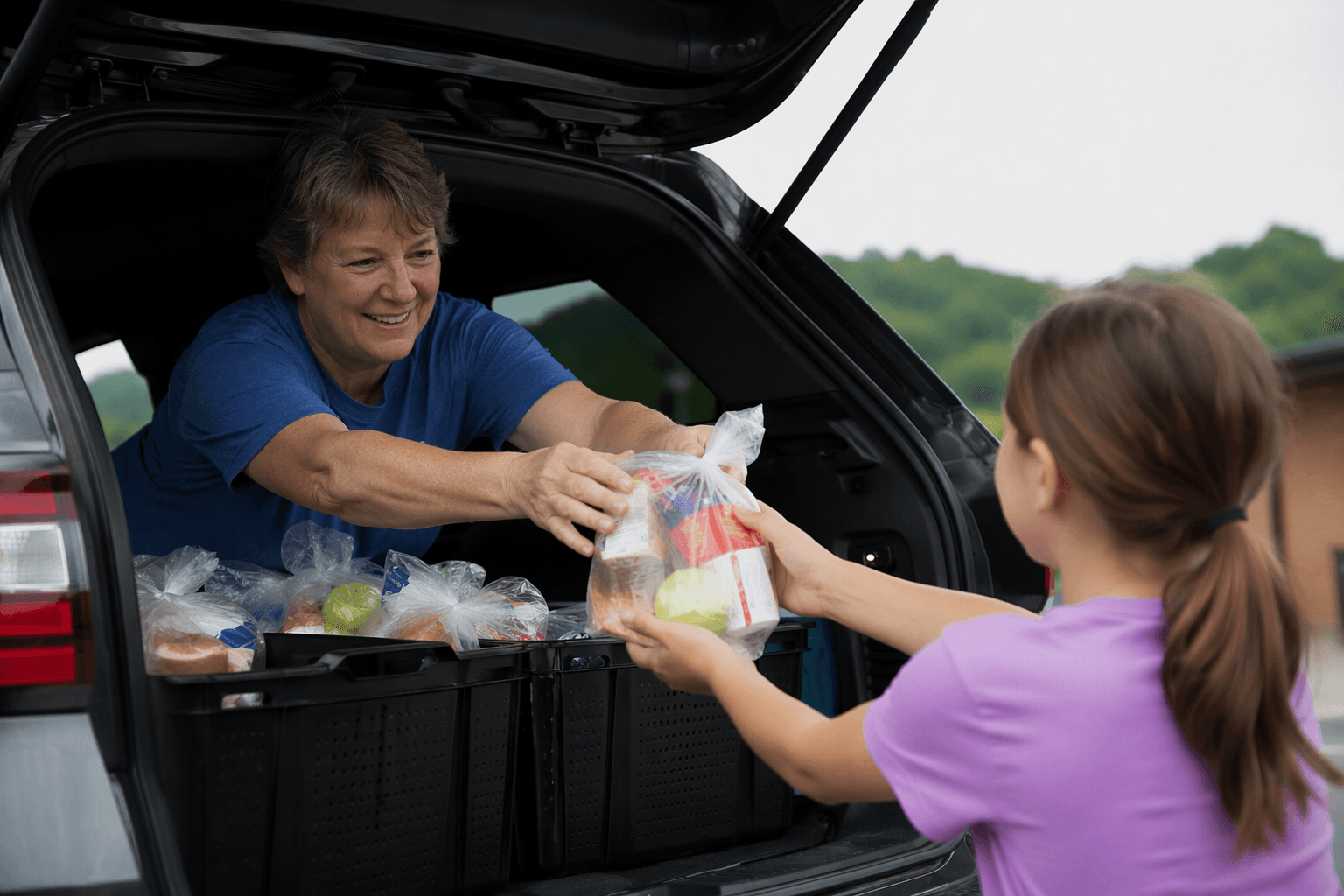
The Kentucky system already reflects that shift. The Kentucky Department of Education says SUN Meals, the state’s renamed Summer Food Service Program, provides free meals to children ages 1 through 18 at participating sites, with some 19- to 21-year-olds with disabilities and individualized education plans also eligible. The department says more than 2,000 summer meal sites are open this summer, and rural sites may offer meals for multiple days or provide them to go. Federal guidance made the rural non-congregate option permanent through the Consolidated Appropriations Act of 2023 and a December 2023 rule, then spelled out in February 2024 that rural sponsors can use alternate service models tailored to local children and communities.
For food-recovery groups and volunteer networks, the Kentucky model looks familiar: reduce friction, build around existing routes and make the handoff easy enough that distance stops being the deciding factor. No Kid Hungry Kentucky, a coalition of No Kid Hungry and Feeding Kentucky, said the June 2 grants build on a 2025 round that funded delivery trucks, refrigerators and grab-and-go sites. With more than 200,000 Kentucky children facing food insecurity, the summer meal challenge is not simply finding food. It is getting food where rural families can actually use it before school starts again.
This article was produced by Prism’s automated news system from verified source data, official records, and press releases, then run through automated quality and moderation checks before publishing. The system is built and supervised by the people who set the standards it runs under. Read our full AI policy.
Know something we missed? Have a correction or additional information?
Submit a Tip