Los Angeles outlines cleanup and relief after massive Boyle Heights warehouse fire
Karen Bass said cleanup of the Boyle Heights warehouse fire will move 85 million pounds of spoiled food, while relief centers and testing continue.
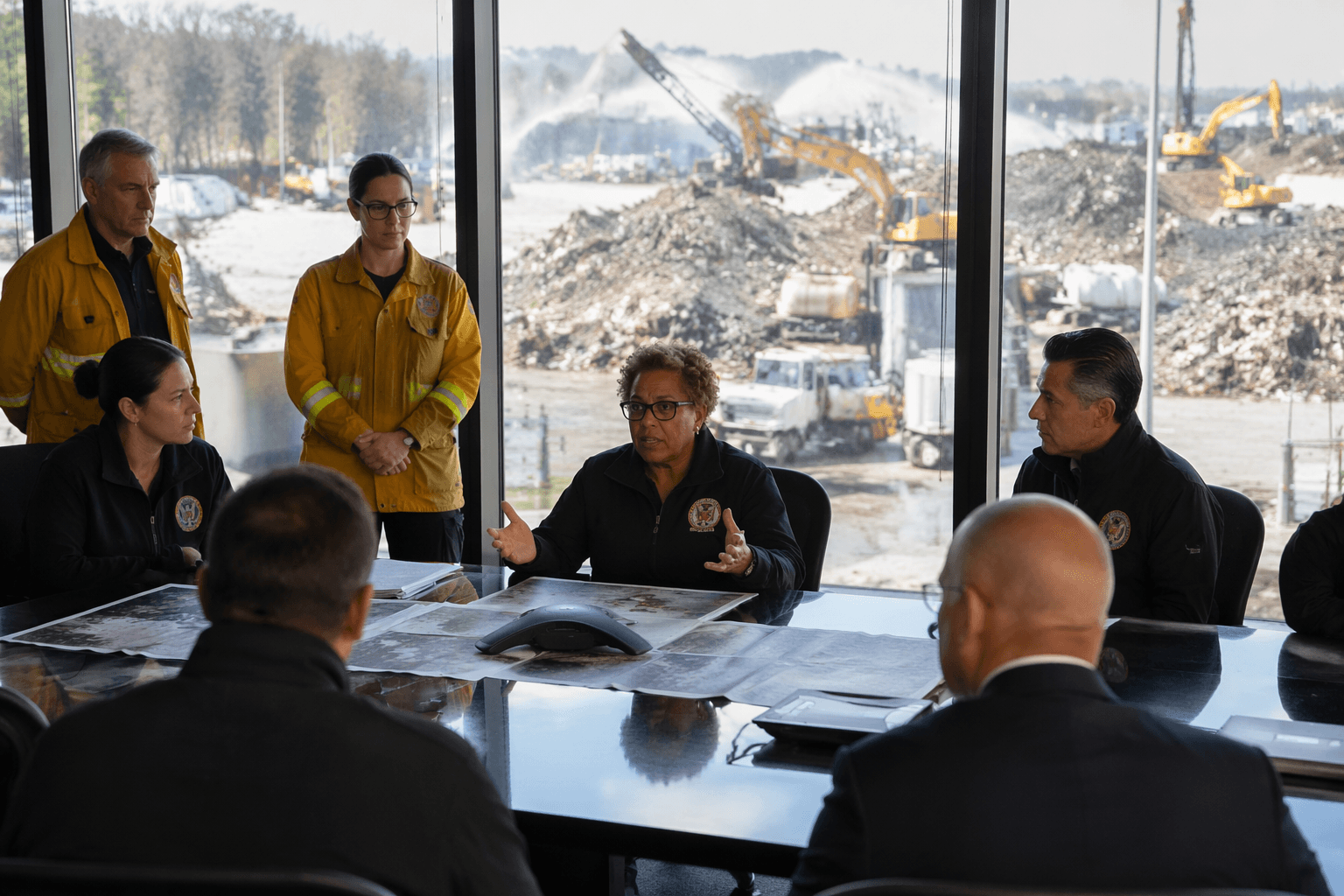
Los Angeles officials said the cleanup of the Boyle Heights warehouse fire is now centered on removing about 85 million pounds of frozen and imported food from the Lineage cold-storage warehouse, a job that began June 29 and is expected to take about 5,000 truckloads. Mayor Karen Bass, Councilmember Ysabel Jurado and city partners framed the effort as more than debris removal, pairing the haul-out with air and water testing, pest control, financial assistance and a community resource center for people living with the fallout.
The fire started June 17 at the privately owned warehouse and was declared officially knocked down by the Los Angeles Fire Department on June 28, more than a week after it broke out. Bass issued a Declaration of Local Emergency on June 20, citing a major, multi-jurisdictional response and hazardous materials concerns, including ammonia off-gassing from refrigeration systems. Two days later, Bass, Jurado and Fire Chief Jaime Moore said the city was opening smoke relief centers at Pecan Recreation Center and City Terrace Park while distributing masks, air purifiers and other supplies.
The damage did not stop at the warehouse fence line. Residents in Boyle Heights spent days under smoke and shelter-in-place orders, and the smell from the rotting food was strong enough to reach businesses miles away. A temporary EPA air sensor near the site recorded an AQI spike to 621 on June 22 before dropping later. UCLA researchers also collected ash, dust and water samples near the warehouse to study whether hazardous chemicals had escaped into the surrounding area.
The cleanup has raised additional environmental questions because contaminated firewater carrying foam was reported flowing into the Los Angeles River, prompting more testing. City officials said the response had cost about $4.45 million by June 26, with state and federal money potentially helping cover some of the expense. Officials also said the first phase of disposal would move the spoiled food to landfills in Ventura and Riverside counties, with trucks kept off residential streets and routed through existing hauling paths near a recycling facility.
For food recovery groups such as A Simple Gesture, the Boyle Heights disaster is a blunt reminder that warehouse failures are not just property losses. They become contamination events, transportation problems and trust tests all at once, especially when neighborhood donation systems depend on quick pickup, safe storage and reliable handoff to pantry partners. The Lineage fire showed how fast a food supply chain can shift from logistics to public health.
This article was produced by Prism’s automated news system from verified source data, official records, and press releases, then run through automated quality and moderation checks before publishing. The system is built and supervised by the people who set the standards it runs under. Read our full AI policy.
Did this article answer your question?