Meals on Wheels campaign shows how volunteer roles create mutual value
Meals on Wheels is selling volunteer work as a match, not a favor, and that shift is the lesson for A Simple Gesture. Clear time commitments and human payoff can turn one-time signups into steady route coverage.
Meals on Wheels America launched its Meet Your Match campaign on April 2, 2026, during National Volunteer Month. The pitch centers on schedule fit. For a doorstep donation operation like A Simple Gesture, the message is more than branding: it is a blueprint for how to keep pickup routes staffed, donors confident, and partner pantries supplied without treating volunteers like a revolving door.
Why the campaign lands with route-based nonprofits
The network is under pressure on two fronts at once: it needs more volunteers, and it serves millions of older adults who are waiting for food and social contact. Meals on Wheels America supports about 5,000 independent senior nutrition programs nationwide that collectively serve 2.4 million seniors each year, and its 2025 network reporting shows more than 5,000 local home-delivered and congregate programs served 244 million meals to 2.6 million older adults.
Nearly half of local providers are struggling to recruit and retain enough volunteers, and over half report volunteer shortage as a significant challenge to reaching more seniors.
The real pitch is fit, not guilt
The strongest part of Meet Your Match is how plainly it describes the work. Volunteering can take as little as one to two hours a week, and many opportunities can fit within a lunch break of about 90 minutes, depending on the local provider. That kind of detail matters because it removes the vague, all-consuming image that often scares people away from signing up in the first place.
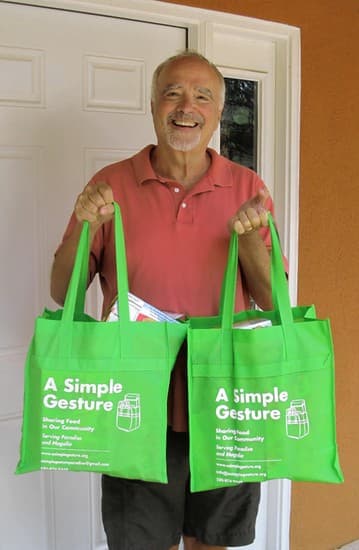
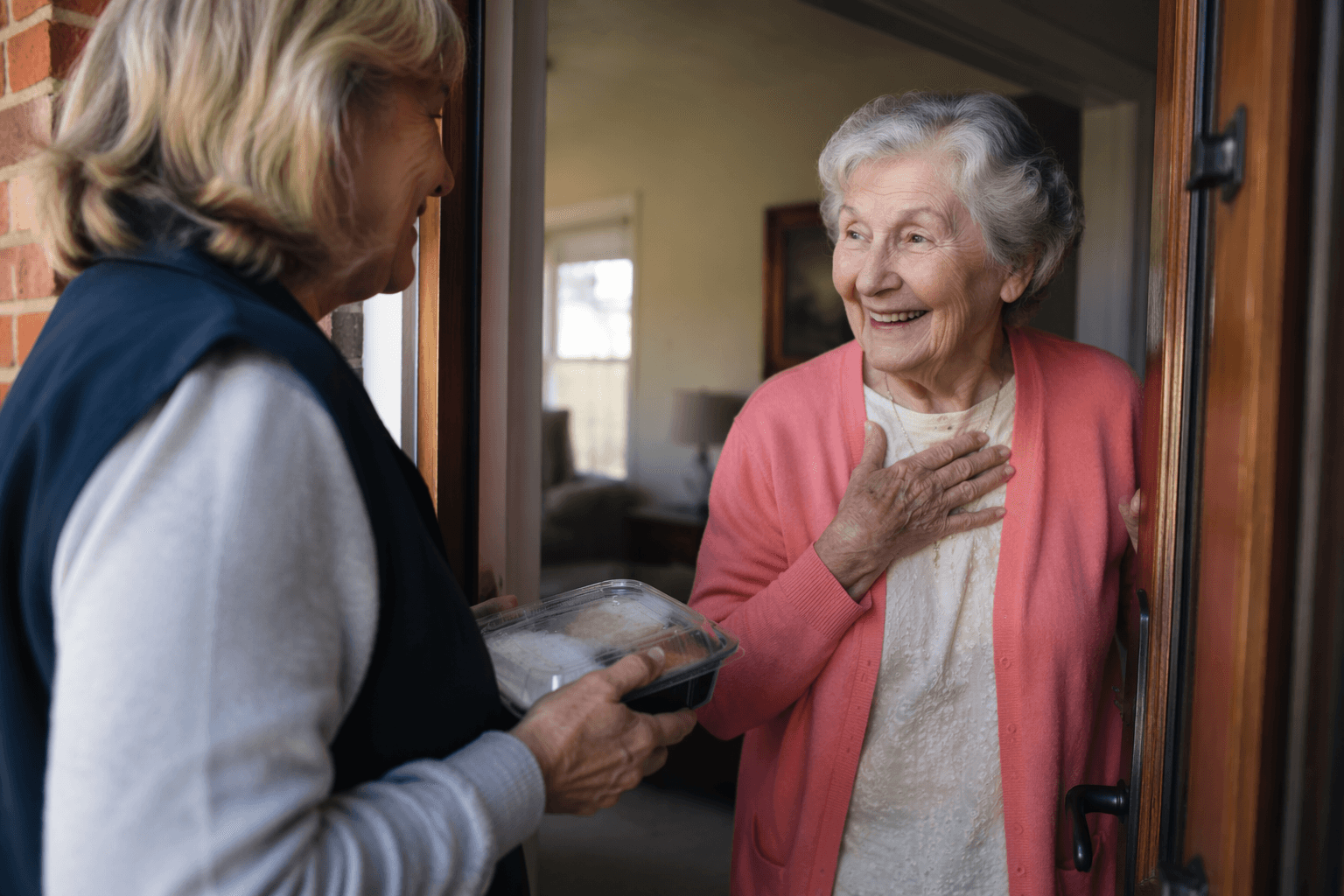
For many seniors, their Meals on Wheels volunteer is the only person they see all week. That is a powerful reminder for any nonprofit that depends on recurring face-to-face or doorstep contact: the role is not just operational, it is relational. For A Simple Gesture, that translates directly to green bag pickup routes, where a volunteer’s consistency can shape whether a donor keeps participating and whether a pantry gets dependable volume week after week.
What retention looks like in practice
Volunteer recruitment often fails when organizations talk only about need. Meet Your Match flips that logic by framing volunteering as a mutual exchange: the volunteer gets connection and purpose, and the client gets meals, wellness checks, companionship, and regular human contact. That approach is useful for A Simple Gesture because food recovery programs rely on volunteers who feel part of a system, not just assigned to a task.
The operational lesson is to make the role feel manageable and social at the same time. If a person knows the time commitment, understands exactly how the pickup route helps pantry partners, and sees where they fit into a dependable team, they are more likely to stay past the first sign-up.
Why the social piece is not a soft add-on
Strengthening social connections and reducing isolation are core goals of senior nutrition programs, and Meals on Wheels has long tied its work to that logic through the Older Americans Act Nutrition Program.
If a route is missed, the loss is not only a delivery. It can also mean a skipped check-in, a weaker relationship, and a drop in trust that makes future participation harder. For food recovery groups, the same principle applies when a pickup route is inconsistent or poorly matched to a volunteer’s schedule.
The labor market for volunteers is crowded too
Meals on Wheels is also making its case in a national environment where volunteer time is scarce. AmeriCorps’ 2024 civic engagement research summary puts formal volunteering at 23.2% of Americans, or 60.7 million people. That is a large base, but it is still only part of the population, which means nonprofits are competing for limited attention, especially among people balancing work, caregiving, and commuting.
The U.S. Census Bureau projects that the older U.S. population will continue to grow sharply through 2060, with older adults outnumbering children beginning in the mid-2030s. That demographic shift raises the stakes for both senior nutrition networks and food recovery groups. More older adults will need support, while the labor pool for volunteer work will keep getting pulled in more directions.
What A Simple Gesture can borrow from the model
For A Simple Gesture, the practical takeaway is not to copy Meals on Wheels language word for word. It is to borrow the structure of the pitch. The best volunteer message says what the job is, how much time it takes, who it helps, and why the person doing it will feel part of something durable.
- route length and pickup timing
- how a volunteer fits into pantry partnerships
- what happens when a green bag pickup is completed on schedule
- how consistency improves donor trust and service reach
- why a volunteer who feels known is more likely to return
That means being specific about:
Meals on Wheels America says one in three providers has a waitlist, nearly 46,000 seniors are waiting nationally, and the average waitlist is 187 seniors, with some exceeding 5,000.
This article was produced by Prism’s automated news system from verified source data, official records, and press releases, then run through automated quality and moderation checks before publishing. The system is built and supervised by the people who set the standards it runs under. Read our full AI policy.
Did this article answer your question?