Move For Hunger shows transportation is key to food recovery
Food recovery only works when trucks, cold storage, and timing line up. Move For Hunger and A Simple Gesture show that logistics, not goodwill, decide what reaches pantries.
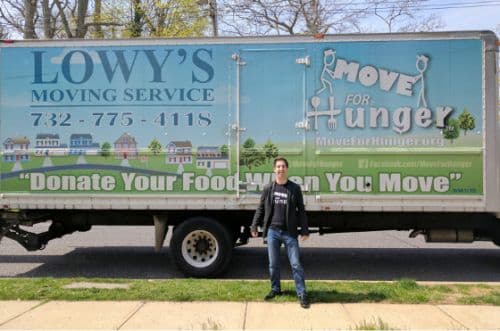
A donation is only useful if someone can move it fast, keep it cold, and hand it off at the right dock. Move For Hunger’s numbers make that plain: a network of more than 1,200 transportation companies has helped move more than 59 million pounds of food, but only under rules that turn transportation into the gatekeeper of rescue.
Transportation is the first test
Move For Hunger treats food recovery like an operations problem, not a slogan. Its support pages set clear thresholds for what can move and how far it can go: nonperishable food needs to weigh at least 500 pounds and stay within a 100-mile round trip, while fresh food recoveries must reach at least 8,000 pounds and can travel as far as 400 miles round trip. That difference matters because it determines which donations are worth dispatching, which routes can be consolidated, and which loads are likely to reach a pantry before they lose value.
The organization also pairs gleaning groups, farms, and food manufacturers with transportation partners, which shows how much of food recovery depends on coordination before a truck ever leaves the lot. For workers and volunteers, the practical lesson is straightforward: a promising donation is not a rescue until someone has matched the load size, the route, and the time window.
Cold storage changes what can be saved
The hidden bottleneck is not only truck space. It is refrigeration, transfer time, and the ability to keep food safe while it moves between donor, driver, warehouse, and pantry. Move For Hunger says its cold storage work has included a cold storage unit at a farm in Kentucky, a mobile cold storage unit in Colorado, and a unit at a farmer’s market in Rhode Island, a small sample of how flexible storage can stretch the reach of recovered food.

That flexibility expands what can be accepted. When a program can use cold storage or refrigerated transport, it can bring in produce, dairy, and frozen food instead of relying only on shelf-stable items. USDA’s 2022 food-supply-chain framework made the larger point clearly: limited processing, distribution, storage, and aggregation capacity are still major problems, which means food often goes unused not because it is unavailable, but because the infrastructure to move it is missing.
What that means for A Simple Gesture
For A Simple Gesture, the transportation lesson lands close to home. The Guilford County program has been operating since 2011 and became a nonprofit in 2015, building a model around door-to-door pickups, corporate pickups, and timely food-recovery pickups. As of December 2025, it says it had delivered more than 8,000,000 child-size meals, with $13,000,000 in donated food value, more than 75 pantry partners, more than 3,900 recurring food donors, and about 200 monthly volunteers.
That scale depends on reliable handoffs, not just generous neighbors. A Simple Gesture’s food-recovery volunteer requirements show how operational the work is: volunteers need a clean personal car, a smartphone, and the ability to lift 20-pound boxes. Those are not small details. They shape recruitment, retention, route design, and the number of pickups that can be completed in a given day without breaking the system.
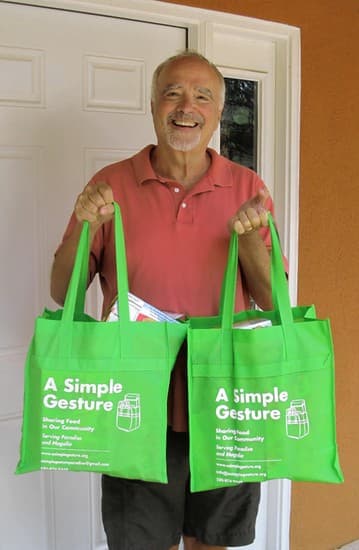
The green bag model also depends on timing. Doorstep donations only help partner pantries if routes are tight enough to keep food moving and if the team can consolidate pickups without creating delays. For staff, that means thinking about every donor as part of a route network, not an isolated household.
Why capacity is bigger than truck space
Feeding America has been making the same argument at national scale. It says food rescue now depends on investments in cold storage, trucks and transportation networks, staff and volunteers, and training and logistics systems. The group also says its network rescued 4.3 billion pounds of food and groceries last year and distributed 5.9 billion meals through food pantries, mobile pantries, and Kids Cafes, underscoring how much capacity is required just to keep food flowing.
That framing is important for A Simple Gesture because it captures the day-to-day reality of food recovery work. Route coordination, dispatch communication, donor follow-up, pantry scheduling, and temperature control are all part of the same chain. When one link breaks, the result is not just inconvenience. It can be wasted food, missed pantry deliveries, and families who wait longer for fresh options.
The model is meant to spread
A Simple Gesture says its Guilford County model follows a template created by Jonathan, who hoped hundreds of towns and communities would adopt it. That matters because the strongest food-rescue systems are not one-off programs built around a single truck or a single warehouse. They are repeatable operating systems that can be copied, adapted, and staffed locally.
Move For Hunger’s work points in the same direction. By linking more than 1,200 transportation partners with food donors and by building cold storage options in places as different as Kentucky, Colorado, and Rhode Island, it shows that logistics can be designed to fit local conditions while still operating at scale. A Simple Gesture’s own numbers show what happens when that design is working: more donors stay involved, more pantry partners can count on supply, and more of the food that would have been wasted instead becomes a meal.
This article was produced by Prism’s automated news system from verified source data, official records, and press releases, then run through automated quality and moderation checks before publishing. The system is built and supervised by the people who set the standards it runs under. Read our full AI policy.
Did this article answer your question?