NLRB explains workers’ rights to act together at A Simple Gesture
At A Simple Gesture, workers can talk pay, routes, safety, and workload together, and managers cannot punish them for protected concerted activity.
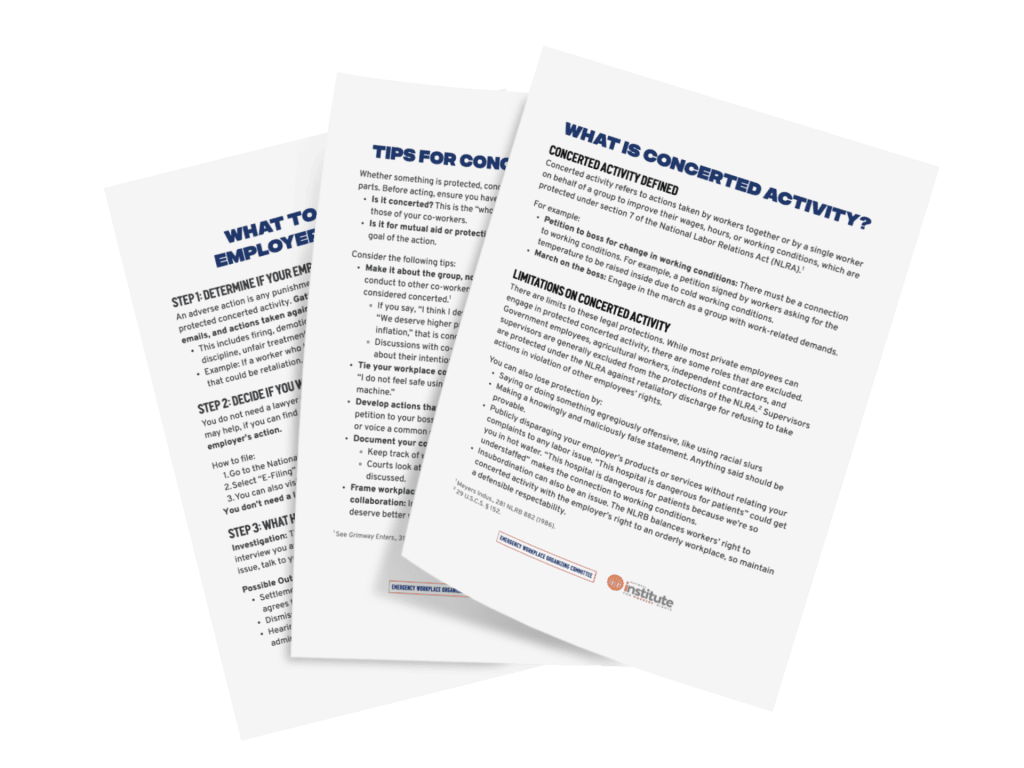
At A Simple Gesture, a volunteer-heavy food recovery nonprofit, the line between a routine staff gripe and protected workplace action can be thinner than managers think. The National Labor Relations Board says private-sector employees have the right to join together, with or without a union, to improve wages and working conditions, and that protection reaches far beyond formal organizing drives. For a workplace built around green bag pickups, route coordination, pantry partnerships, and community trust, that means ordinary conversations about staffing, safety, and workload can carry legal weight.
What the law protects
Section 7 of the National Labor Relations Act gives employees the right to self-organization, to form, join, or assist unions, to bargain collectively, to engage in other concerted activities for mutual aid or protection, and to refrain from those activities. Congress passed the law in 1935 to encourage collective bargaining and protect workers’ freedom of association, and the National Labor Relations Board remains the agency that enforces those rules in private-sector workplaces.
That matters at A Simple Gesture because the law is not limited to union drives. Employees who compare notes about pay, ask why pickup routes are understaffed, discuss missed green bag collections, or raise concerns about volunteer safety may be speaking in a protected way if they are acting together for their mutual aid or protection. The point is not to turn every conversation into a legal event. The point is to recognize that everyday workplace speech can be protected when it is tied to shared working conditions.
Why this applies in a nonprofit like A Simple Gesture
A mission-driven nonprofit can sometimes blur the boundaries of management power. Staff may feel pressure to absorb extra work because the cause is good, the pantry partners depend on timely deliveries, and neighbors count on the service. But the NLRB’s rules do not change because the employer serves the public good; if anything, the pressure cooker of nonprofit operations makes the need for clear labor rights more important.
That is especially true in work like route scheduling, volunteer recruitment and retention, and food recovery logistics. If employees talk together about unsafe pickup conditions, unrealistic route assignments, or systems that delay food getting to partner pantries, that is exactly the kind of workplace discussion the law is meant to protect. In a setting where people often care deeply about the mission, managers need to understand that caring about the mission does not erase employees’ rights to raise concerns collectively.
A single employee can still be protected
The NLRB says protected concerted activity is not limited to a room full of people speaking at once. A single employee may also be protected if acting on the authority of other employees, bringing group complaints to management, trying to induce group action, or preparing for group action. In plain English, that means one staff member who speaks up on behalf of a route team, warehouse crew, or volunteer coordinators may still be protected even if no one else is standing beside them.
That detail matters in workplaces where people often speak one at a time to supervisors. A coordinator who tells management that several workers are concerned about late pickup times, a staffer who raises a group safety complaint, or an employee who starts gathering information before asking coworkers to act together may all be engaging in protected activity. Managers who treat that as insubordination without looking at the context can cross a line quickly.
Where managers get into trouble
The NLRB says employers cannot discharge, discipline, threaten, or coercively question employees over protected concerted activity. The broader rule is that employers may not interfere with, restrain, or coerce workers in the exercise of their Section 7 rights. In practice, that means a manager at A Simple Gesture should be careful not to shut down group complaints simply because they are inconvenient or make the operation look messy.

The danger often shows up in everyday interactions. A supervisor who singles out staff for talking about wages, pressures them to reveal who else is complaining, or warns them that raising concerns will hurt the team can move from ordinary management into unlawful interference. Even in a nonprofit culture that prizes teamwork and mission loyalty, employees still have the right to discuss the conditions they work under.
What employees should know about coverage and choice
Most private-sector employees are covered by the NLRA, but not everyone is. The law excludes public-sector workers, agricultural workers, domestic workers, independent contractors, workers employed by a parent or spouse, railroad and airline employees covered by the Railway Labor Act, and supervisors. For the staff at a private nonprofit like A Simple Gesture, that coverage question usually points toward protection, not exclusion, but the classification still matters.
The law also gives employees the right to refrain from organizing or collective activity. That is an important part of the picture for workers who do not want to join a union but still want to raise concerns without retaliation. The right to stay out of a union drive is not the same thing as giving up the right to speak up about pay, scheduling, safety, or workload with coworkers.
Why the NLRB still matters in a low-union era
The U.S. Bureau of Labor Statistics said the union membership rate was 10.0 percent in 2025, equal to 14.7 million wage and salary workers. In 1983, the first year for comparable BLS data, the rate was 20.1 percent and there were 17.7 million union members. That long decline helps explain why the NLRB’s basic rights guidance remains relevant even in workplaces that are nowhere near a formal organizing campaign.
A Simple Gesture staff, coordinators, and volunteers are operating in a labor climate where many people have never seen a union election, but still need a clear understanding of what they can and cannot say together at work. The NLRB’s homepage exists for exactly that reason: to translate a complicated system into plain rights that workers can use before conflict escalates.
What happens if the law is violated
The NLRB says it can order remedies such as cease-and-desist orders and notices to employees. In other words, the system is not just about identifying bad conduct after the fact. It is also about forcing employers to stop, correct the record, and make workers aware of their rights.
For a nonprofit like A Simple Gesture, that can be a practical warning as much as a legal one. A workplace that depends on trust, retention, and smooth coordination cannot afford to treat protected employee speech as a nuisance to be stamped out. The better approach is straightforward: let staff raise shared concerns, keep the focus on operations and service quality, and remember that the law protects the right to act together when workplace conditions need to change.
This article was produced by Prism’s automated news system from verified source data, official records, and press releases, then run through automated quality and moderation checks before publishing. The system is built and supervised by the people who set the standards it runs under. Read our full AI policy.
Did this article answer your question?