Nonprofits Must Carefully Classify Volunteers to Avoid Costly Legal Pitfalls
Misclassifying volunteers as employees — or vice versa — exposes nonprofits to wage, tax, and benefits liability under federal law.
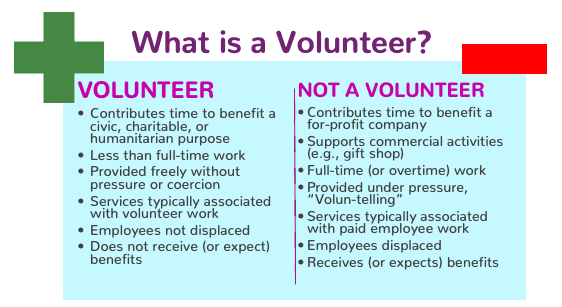
Misclassifying a volunteer as an employee, or treating a worker who should be on payroll as a volunteer, can trigger serious legal consequences for nonprofits, including liability under federal wage-and-hour law, tax exposure, and benefits obligations. For organizations like A Simple Gesture, which rely heavily on unpaid community members to carry out their work, getting this distinction right is not a procedural formality but a genuine operational risk.
Federal law draws a meaningful line between volunteers and employees, and the consequences of drawing it in the wrong place cut in both directions. A nonprofit that compensates someone beyond modest, non-hourly benefits risks having that person reclassified as an employee, which would trigger minimum wage requirements under the Fair Labor Standards Act, payroll tax obligations, and potentially benefits eligibility. Conversely, a worker who performs services that would otherwise be filled by paid staff, under the direction and control of the organization, may have a claim to employee status regardless of how the nonprofit labels the relationship.
The IRS and the Department of Labor apply their own separate tests, which means an organization can satisfy one agency's definition while running afoul of another's. Tax-exempt status does not insulate nonprofits from these scrutiny frameworks; it simply changes which forms and thresholds apply.
For chapter-based organizations like A Simple Gesture, the risk is compounded by the decentralized nature of operations. Individual chapter leaders, often volunteers themselves, may make staffing and compensation decisions without the same legal oversight that a centralized HR function would provide. A reimbursement policy applied inconsistently across chapters, or a stipend that crosses into wage territory in one location, can create uneven exposure across the organization.

Practical risk management in this area starts with clear written policies distinguishing volunteer roles from any compensated positions, limiting reimbursements to actual documented expenses rather than flat stipends that resemble wages, and ensuring that no volunteer is performing work that displaces a paid employee position. Organizations should also periodically audit their volunteer programs against current IRS guidance and DOL interpretations, both of which have evolved as the gig economy has blurred the lines around work, compensation, and obligation.
The classification question is unlikely to get simpler. As nonprofits expand digital operations and remote volunteer coordination, the traditional markers that regulators use to distinguish employees from volunteers, physical presence, direct supervision, the nature of the work, become harder to apply cleanly. Organizations that build rigorous classification practices now are better positioned to absorb whatever regulatory and legal shifts come next.
This article was produced by Prism’s automated news system from verified source data, official records, and press releases, then run through automated quality and moderation checks before publishing. The system is built and supervised by the people who set the standards it runs under. Read our full AI policy.
Did this article answer your question?