OSHA urges year-round heat safety planning for summer work
OSHA says confusion, slurred speech or unconsciousness can mean heat stroke, and A Simple Gesture's summer pickup crews need water, shade and shorter shifts.

OSHA's heat guidance puts the warning signs at the center: confusion, slurred speech or unconsciousness can signal heat stroke, and supervisors are told to call 911 immediately while cooling the worker with ice or cold water.
Heat-related illness can be prevented when management commits to extra precautions for new workers, trains supervisors and staff to spot hazards, and checks throughout the workday whether total heat stress has climbed too high. Rest breaks should happen in cooler places such as shade or air-conditioned rooms, cool water should be available, and workers on jobs lasting two hours or more should also get electrolytes. For food-recovery work, pickups often mean repeated lifting, carrying and sorting in afternoon temperatures and in spaces that are not fully climate-controlled.
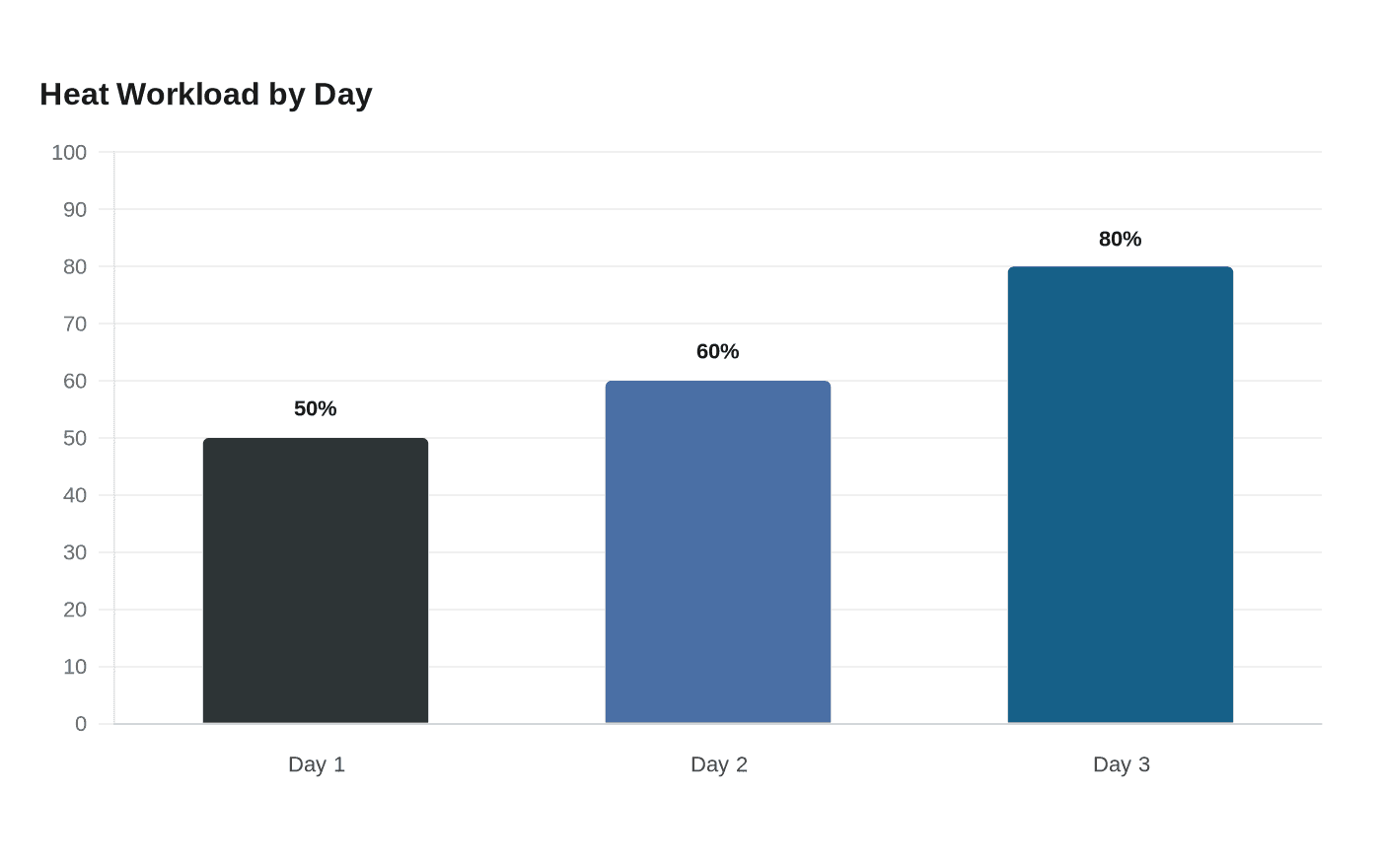
New workers should be acclimatized gradually over 7 to 14 days, and older NIOSH advice sets a stepped approach for experienced workers: no more than 50 percent of a normal heat workload on day one, 60 percent on day two, 80 percent on day three and full work on day four. New employees should be closely supervised for the first 14 days or until fully acclimatized. Coordinators can shorten shifts for new volunteers, add clearer check-ins and use written procedures that do not depend on memory.
A Simple Gesture's Guilford County program has operated since 2015 as a year-round, door-to-door pickup food drive that partners with dozens of local food pantries. A Simple Gesture says the model is near zero-cost, with a $1 donation converting to more than $30 of food for food banks and pantries.
CDC data show the warm-season months of 2023 were the hottest ever recorded in the United States, and an AP analysis found more than 2,300 U.S. death certificates in 2023 mentioning excessive heat, the highest in 45 years of records. Schedule with the heat in mind, keep water and shade within reach, slow new volunteers down before they overheat and make symptom recognition part of every route briefing.
This article was produced by Prism’s automated news system from verified source data, official records, and press releases, then run through automated quality and moderation checks before publishing. The system is built and supervised by the people who set the standards it runs under. Read our full AI policy.
Know something we missed? Have a correction or additional information?
Submit a Tip