Points of Light helps nonprofits build capacity through volunteer strategy
Points of Light treats volunteer engagement as infrastructure, not nice-to-have labor. For A Simple Gesture, that shift can mean steadier pickups, better role design, and more meals moved with less strain.
Volunteer strategy as an operating system
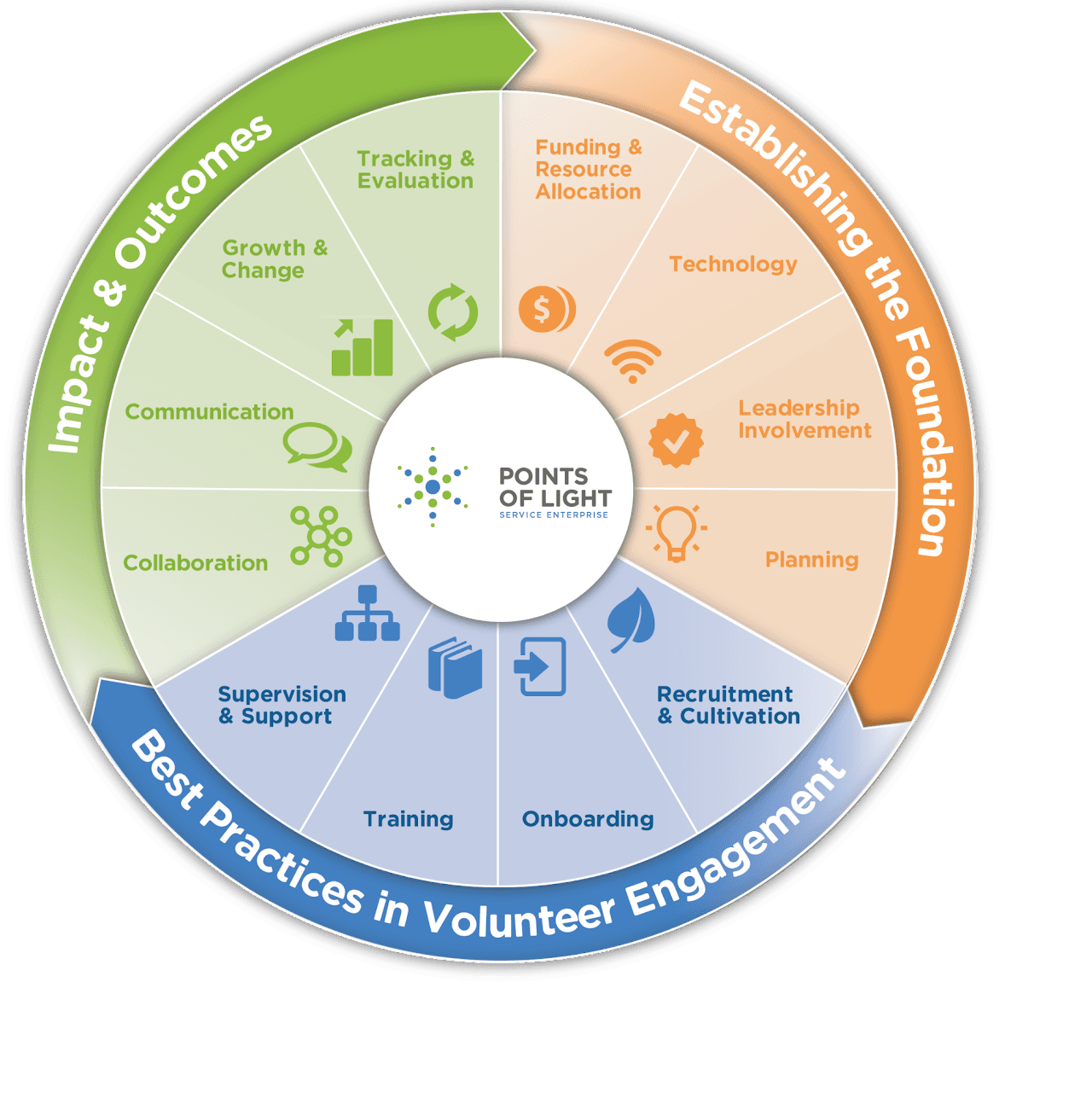
Points of Light frames Service Enterprise as a capacity-building model, not a recruitment campaign. The idea is simple but demanding: nonprofits work at an enterprise level when they use volunteers and their skills more strategically, reduce silos, and build a system that can scale without burning out staff.
That matters because the program was built from data, not slogans. Points of Light says its curriculum grew out of analysis from more than 600 organizations that took TCC Group’s Core Capacity Assessment Tool, and only 11% of those groups were identified as top performers in volunteer management. The organization has also said fewer than 15% of nonprofits nationwide show the characteristics of a service enterprise, which is why the model is positioned as a rare form of operational discipline rather than a feel-good add-on.
What the model actually changes
The Service Enterprise framework now sits inside a larger national standard for strategic volunteer engagement backed by Points of Light and AL!VE, the Association of Leaders in Volunteer Engagement. Points of Light announced in 2022 that AL!VE would operate the program going forward, and the program is delivered through assessment, training, coaching, and certification.
That combination changes the job of volunteer management inside a nonprofit. Instead of treating volunteers as a pool of help to be called on when the calendar gets tight, the model pushes organizations to match people to roles, train them to serve efficiently, and build systems that make volunteer time more dependable. For staff, that means less improvisation and more process. For coordinators, it means recruitment and retention are tied to role design, not just sign-up volume.
The measurable payoff is part of the pitch. Points of Light says Service Enterprises can expect a $3 to $6 return for every $1 invested in effective volunteer engagement. It also says that last year more than 80% of Service Enterprises reported increases in both volunteers and skills-based volunteers, adding 207,000 volunteers and 31,000 skills-based volunteers across the network. Asheville Humane Society offers a concrete example: after leaning into volunteer partnerships, it said the number of animals it cares for rose by more than 25%, with a reported return of $18.24 for every $1 invested in volunteer engagement.
Why A Simple Gesture is a natural test case
A Simple Gesture was built around repeatable volunteer logistics from the start. Jonathan Trivers launched it in 2011 in Paradise, California with a simple premise: make it easy for the community to take part in a food donation cycle. In Guilford County, the chapter says it became a 501(c)(3) nonprofit in 2015 and has worked to end food insecurity there since 2011.

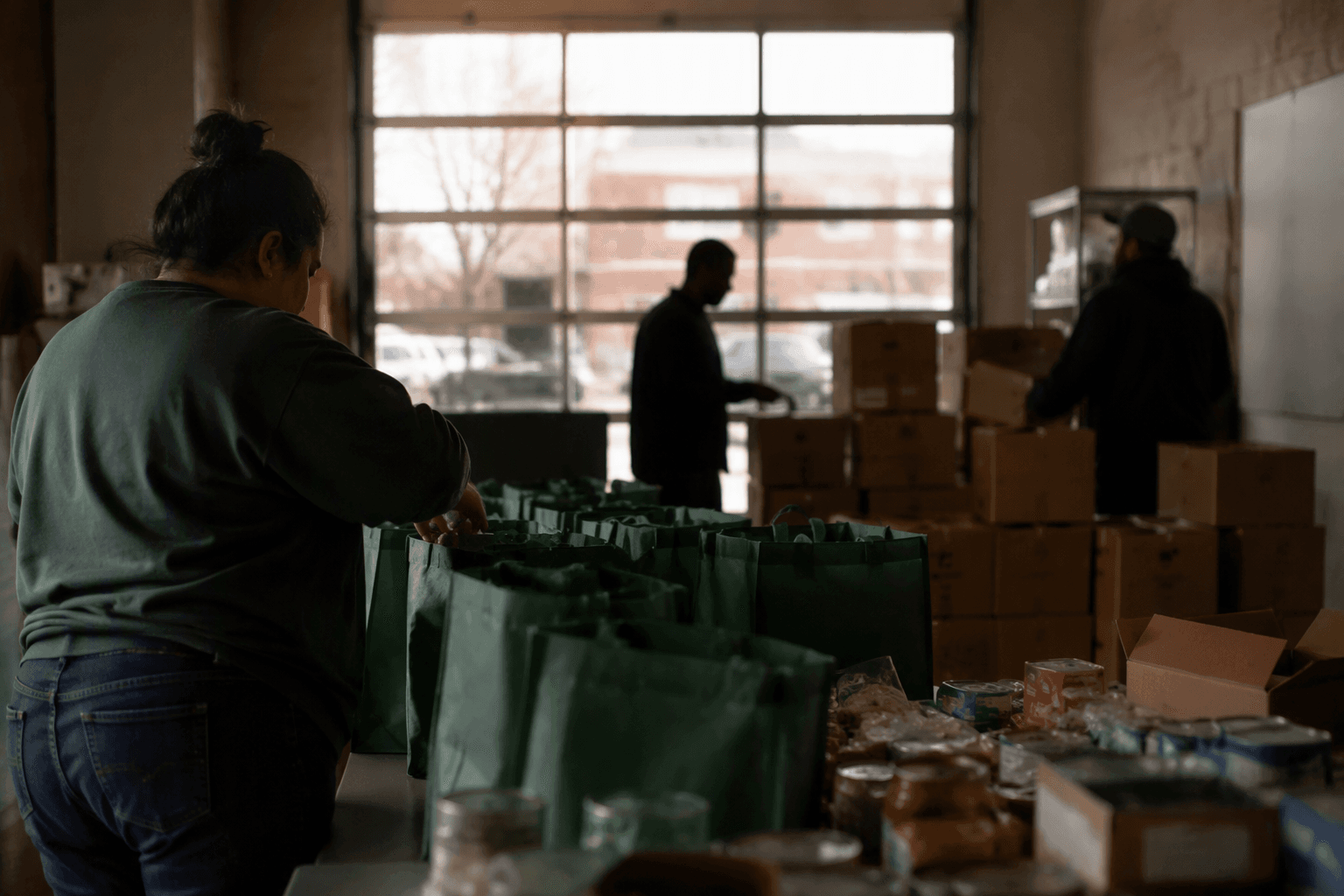
That structure matters because the work is already organized like a system. A Simple Gesture uses reusable green bags, scheduled pickups, and pantry delivery to move food from front porches to local food pantries. One local profile explains the model emerged because many donors could only give during business hours, while pantries were open at the same time, which made direct donation difficult. The pickup model solved a logistics problem, not just a generosity problem.
The scale is no longer local in the narrow sense. Chapter materials say the model has expanded to more than 60 or 65 communities nationwide. One affiliate page says A Simple Gesture has provided over 7 million meals, while A Simple Gesture-Michigan says it has more than 1,700 food donors and collects over 132,000 pounds of food each year. Those numbers point to a network that lives or dies on scheduling, volunteer reliability, route coordination, and pantry partnership quality.
What enterprise-level volunteer engagement would mean on the ground
For A Simple Gesture, the Service Enterprise lens shifts the key question from “How do we get more volunteers?” to “How do we design volunteer work so the organization produces more value with the same or fewer staff bottlenecks?” That is a different operational problem. It asks coordinators to segment volunteers by task, identify where skills matter most, and build a stronger handoff between donors, pickup teams, and pantry partners.
In practice, that could mean:
- clearer volunteer roles tied to route pickup, donor communication, pantry delivery, or chapter support
- better matching between volunteers and tasks, especially for people who can contribute specialized skills
- more reliable retention because volunteers see how their time fits into a broader service system
- less dependence on a few high-capacity staff members who otherwise end up patching holes in every stage of the process
That is the practical value of a Service Enterprise approach for a food-access nonprofit. It does not replace the mission. It makes the mission easier to sustain.
Why this matters for staffing, not just outreach
The biggest mistake nonprofits make with volunteer programs is treating them as separate from staffing. A Simple Gesture’s model shows why that is shortsighted. Volunteer recruitment, green bag route coordination, pantry delivery, and chapter expansion are not side tasks; they are the operating machinery of the organization.
In Greensboro, A Simple Gesture says it partners with dozens of local food pantries, offers volunteer pickup schedules, and even provides a pathway for people interested in starting a chapter in their own community. That tells you the organization already understands that volunteer coordination is a growth function. The Service Enterprise model would formalize that instinct by turning volunteer management into a strategic discipline with measurable outputs.
For staff, that means the program has to be designed around capacity, not convenience. A food-access nonprofit cannot scale by adding more names to a spreadsheet and hoping the system holds. It needs training, coaching, and certification standards that help volunteers do more than show up. It needs a structure that keeps donors engaged, routes efficient, and pantry partners confident that food will arrive when promised.
What conditions A Simple Gesture would need to replicate the model well
A Simple Gesture already has several ingredients that fit the Service Enterprise playbook: a repeatable pickup system, a clear community-facing ask, local pantry partnerships, and a chapter model that can travel across geographies. The remaining question is whether each chapter has the staffing, data discipline, and role clarity to convert volunteer energy into consistent throughput.
That is where the enterprise-level framework becomes most useful. A chapter in Reston, Virginia describes the program as a bi-monthly pickup system serving local pantries, which shows how the same model can be adapted to different community rhythms. But replication only works when the local operation can support scheduling, communication, and volunteer follow-through without losing the simplicity that makes the model attractive in the first place.
Service Enterprise does not promise magic. It promises structure. For A Simple Gesture, that may be the difference between a program that depends on heroic effort and one that can keep moving food, building trust, and expanding community reach as the network grows.
This article was produced by Prism’s automated news system from verified source data, official records, and press releases, then run through automated quality and moderation checks before publishing. The system is built and supervised by the people who set the standards it runs under. Read our full AI policy.
Did this article answer your question?