ReFED says logistics, storage barriers limit food rescue donations
The bottleneck in food rescue is logistics, not willingness: just 2.5% of surplus food was donated in 2024, and A Simple Gesture shows why routes, storage, and staffing matter.

The missing piece is capacity, not goodwill
The bluntest number in ReFED’s food rescue analysis is the one that explains almost everything else: only 2.5% of surplus food was donated in 2024. Producers donated just 1.6% of the surplus they generated, excluding gleaning, even as 70 million tons of surplus food moved through U.S. sectors and only 1.74 million tons made it into the donation stream. That gap is not mainly a story about whether people want to help. It is a story about whether the system can actually move food.
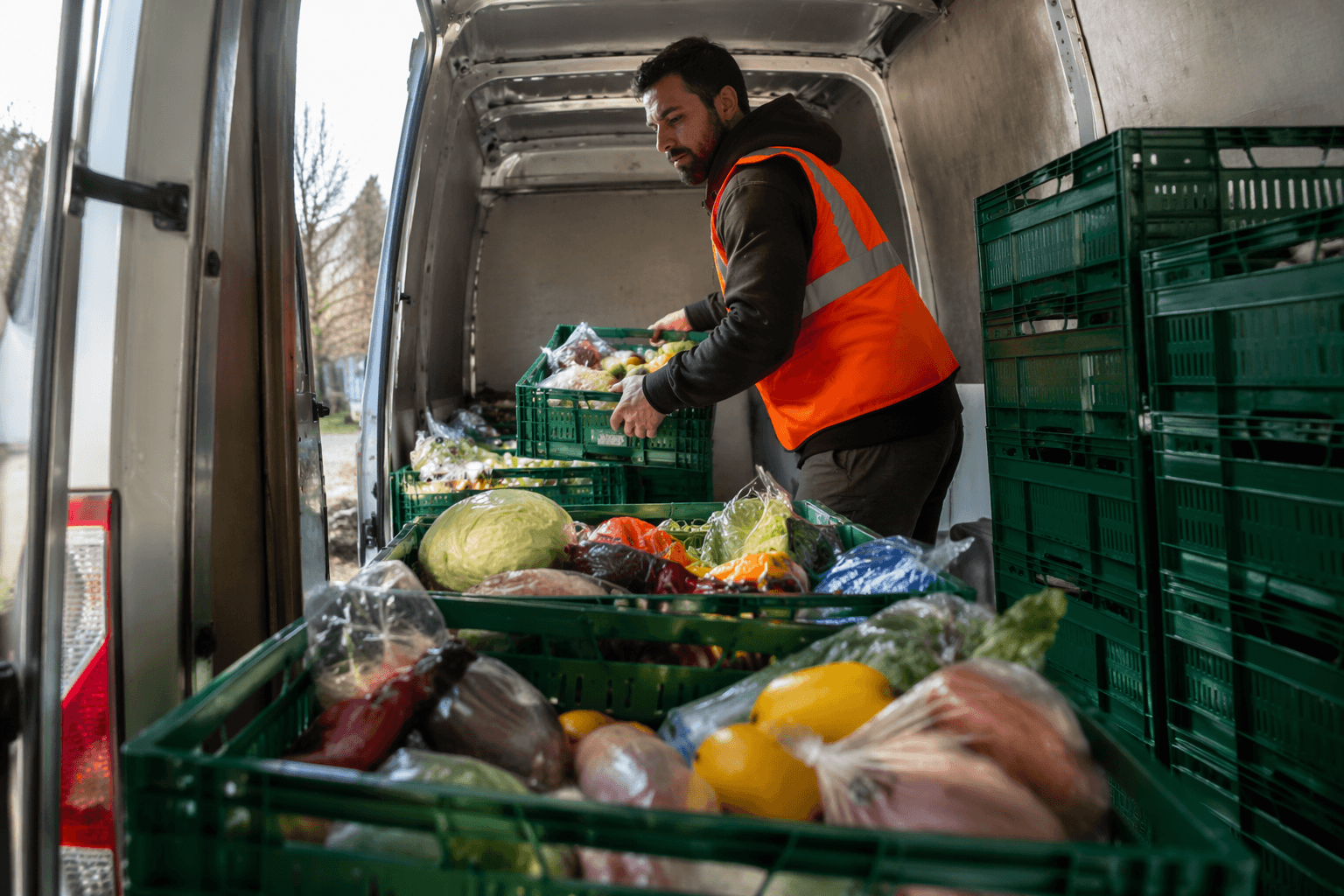
ReFED’s point is operational, and it matters for anyone running a doorstep collection network or a pantry partnership program. Food recovery falters when a route has no driver, when a donation cannot be cooled or stored quickly enough, or when staff do not have a fast way to match incoming food with a receiving nonprofit. In practice, that is why so much donated food ends up being processed or shelf-stable rather than fresh produce and other perishables. It is easier to move, easier to store, and less likely to spoil before it reaches a pantry shelf.
Why perishables still get left behind
The food that is easiest to rescue is often not the food communities most need. ReFED notes that distribution and logistics challenges are a major reason the donation stream skews toward processed, shelf-stable items. That creates a quiet but important distortion in the food rescue system: relief agencies often end up buying fruits, vegetables, and other perishables for distribution rather than relying on donated supply alone.
That is the hidden bottleneck A Simple Gesture staff already know from the ground level. A donation is only useful if it can be picked up on time, held safely, and routed to a partner that can use it before quality drops. The challenge is not simply collecting more boxes or adding more names to a volunteer list. It is building enough storage, transportation, staffing, and communication capacity so that fresh food does not get stranded between donor and pantry.
For coordinators, that means the most strategic work often looks mundane. Pickup timing, route spacing, donor communication, and the ability to absorb a small surge in volume are not back-office chores. They are the difference between a system that routinely rescues food and one that leaves a lot of usable supply on the table.
What ReFED says would actually unlock more recovery
ReFED’s answer is not a single silver bullet. It points to a stack of fixes that have to work together: expanded storage, more transportation capacity, enough staffing to handle the handoffs, and coordination technologies that make it easier for donors and recovery groups to communicate. It also emphasizes real-time or near-real-time data sharing so gaps can be spotted quickly and pickups can be matched before food goes to waste.
That matters because small donations can be deceptively expensive to recover. ReFED’s solution database says donations under 50 pounds are often costly to pick up and frequently need transportation coverage to make the economics work. In other words, the donation itself may be valuable, but the last mile can break the model unless a nonprofit has the routes, vehicles, and coordination tools to absorb it.
ReFED also argues that food rescue is still a traditionally volunteer-driven enterprise, but one that is increasingly relying on alternative business models, philanthropic grants, and policy change. Grants and tax incentives have historically helped untrap food in supply chains, and ReFED says policy still has a core role through stronger liability protections and better tax incentives. That is a useful reminder for nonprofit operators: scale does not come from mission language alone. It comes from the infrastructure around the mission.
Why this lands directly in A Simple Gesture’s wheelhouse
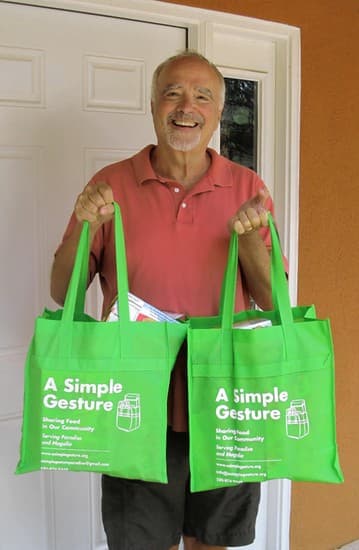
A Simple Gesture is built around the very problems ReFED identifies. The organization says it began in Paradise, California, in 2011, when Jonathan Trivers saw a town of about 35,000 people and 14,000 households that had food in circulation but no easy way to move it to the people who needed it most. From that insight came a model centered on recurring doorstep donations, volunteer drivers, and a network approach to recovery.
That model has real scale. A Simple Gesture says it now works with more than 1,700 food donors and numerous volunteer drivers who collect over 132,000 pounds of food each year. A Simple Gesture-Guilford County was established as a 501(c)(3) nonprofit in 2015, and the model has since been replicated by more than 70 chapters nationwide. Those numbers matter because they show this is not just a feel-good volunteer project. It is a logistics system that depends on reliability, route design, and partner trust.
The Food Recovery Program is where ReFED’s analysis and A Simple Gesture’s day-to-day work line up most clearly. The program is designed to rescue surplus food by matching food industry businesses with vetted nonprofits that serve the community. That kind of matching only works when the back end is strong enough to handle the front end: clean pickup schedules, predictable volunteer coverage, space to sort and store food, and communication that keeps donors and recipients in sync.
What stronger food rescue looks like on the ground
The practical lesson for A Simple Gesture teams is that every operational improvement has community impact attached to it. Better route efficiency means more reliable pickups. Better storage means more perishables can stay in play. Better staffing means fewer missed handoffs. Better coordination tools mean a small donation can be folded into a route instead of becoming too costly to recover.
That is especially important when food insecurity remains so widespread. ReFED says more than 47.9 million Americans were struggling with food insecurity in 2024. Food rescue still has to center their dignity and health, which means the goal is not just to divert waste but to move the right food to the right place with enough speed and consistency to matter.
The broader takeaway is simple: food rescue does not fail because people are indifferent. It fails when the system cannot absorb what donors are willing to give. For A Simple Gesture, that makes logistics a mission-critical function, not an administrative detail. The organizations that solve storage, transportation, staffing, and communication first will be the ones that unlock the next layer of recovery.
This article was produced by Prism’s automated news system from verified source data, official records, and press releases, then run through automated quality and moderation checks before publishing. The system is built and supervised by the people who set the standards it runs under. Read our full AI policy.
Did this article answer your question?