Refrigerated truck boosts Open Hands’ retail recovery and food access
A refrigerated truck turned Open Hands’ retail recovery into a colder, steadier supply chain, showing why transport can matter as much as volunteers.
The hidden lever inside food recovery
One refrigerated truck can do more than haul food. At Open Hands, it changes what can be rescued, how often pickups can happen and how much fresh food reaches families safely.
That is the practical lesson buried inside a Maryland Food Bank feature on Open Hands, the Pasadena nonprofit where retail recovery already supplies about 95 percent of the organization’s food. Until now, the missing piece was not demand or goodwill. It was transport. Volunteers and staff had been relying on personal vehicles and improvised hauling to move refrigerated products, a system that limited what they could accept and how reliably they could move it.
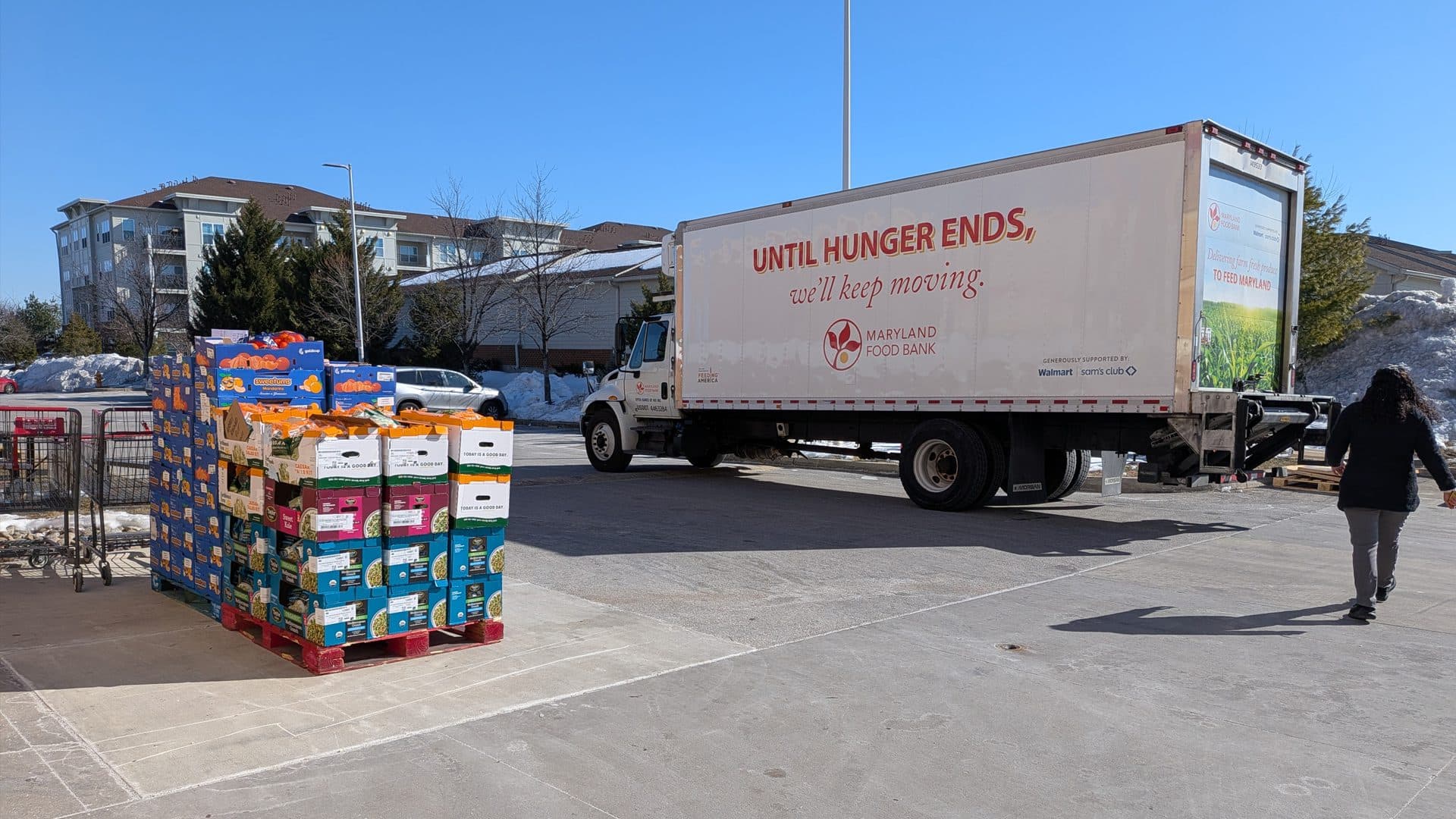
The new 24-foot refrigerated truck, nicknamed Larry Boy, was made possible by a $750,000 grant from Feeding America and Walmart. The truck is part of a broader support package for six Maryland Food Bank partners, and it signals a shift from makeshift recovery to infrastructure-backed recovery. For A Simple Gesture, the takeaway is straightforward: a food network does not scale only by recruiting more helpers. It scales when the cold chain, the vehicle fleet and the pickup system can carry the kind of food that families actually need.
What Larry Boy changes on the ground
Melissa Kurtzmiller, Open Hands’ executive director, said the organization serves roughly 250 to 275 neighbors at each of four weekly distributions, or about 1,100 to 1,200 people a week. That volume gives a sense of the stakes. When the food stream is mostly shelf-stable, the pantry can still operate. When refrigerated capacity arrives, the menu changes entirely.
A truck like Larry Boy means Open Hands can take in more fresh food, including produce, dairy and other perishable items that cannot sit around in a personal car while routes stretch across a morning or afternoon. It also lets the organization work with more retailers, because stores need confidence that their donated food will be picked up quickly and kept at the right temperature. In food recovery, that reliability is often the difference between a successful relationship and one that never gets off the ground.
The truck’s value goes beyond the actual load it carries. It gives staff and volunteers a dependable system to plan around. Instead of building pickup days around who happens to have a suitable vehicle, the organization can set routes with more certainty, reduce last-minute improvisation and protect food quality between the store and the distribution site.
Why the equipment matters to volunteers
For groups like A Simple Gesture, the Open Hands example is a reminder that volunteer energy is not the same thing as operational capacity. A strong volunteer base can open doors, but it cannot substitute for the right equipment when food must remain cold and safe.
That is especially true for recovery models that depend on donors scattered across neighborhoods, store partners and timed pickups. A refrigerated truck lowers the burden on volunteers who previously had to use personal cars, and it makes the work more sustainable. When volunteers are not asked to improvise transportation for chilled food, the organization can improve retention, reduce friction at the route level and make the role easier to repeat week after week.
The same principle applies to route coordination. A dependable refrigerated vehicle gives staff a more predictable window for pickups, which can ease scheduling and cut down on the kind of ad hoc decision-making that burns out part-time coordinators. The more the operation can standardize, the easier it becomes to train new people, protect food safety and deliver a consistent experience to retailers and neighbors alike.
A capital lesson for the whole recovery network
Maryland Food Bank has framed stronger infrastructure as part of its food-rescue strategy since 1979, with programs aimed at children, seniors and working families. The Open Hands truck fits that larger approach. Maryland Food Bank and its partners are treating refrigerated vans, freezers, forklifts, staffing, training and new technology as tools that can increase weekly pickups and expand the reach of the charitable food system.
That matters because donation volume alone does not determine impact. A pantry can have plenty of interest from donors and still fall short on fresh food if it lacks the right equipment. If a chapter wants more produce, dairy or other cold-chain items, it may need grants, vendor relationships or shared equipment rather than simply more volunteers. That is the kind of systems lesson that is easy to miss in a conversation about generosity, but obvious once you watch a pantry move from personal cars to a refrigerated truck.
The Open Hands case also shows why capital investments can have a strong return for nonprofits. If one truck unlocks more frequent pickups, more retailer participation and better food quality at distribution, it can multiply the impact of every hour spent fundraising or recruiting. For organizations trying to decide whether a vehicle, a freezer or another piece of shared equipment is worth the expense, the answer may depend less on the sticker price than on how many doors it opens across the network.
The bigger hunger picture in Maryland
The need is not small. Maryland Food Bank says 1 in 3 Marylanders face food insecurity, which helps explain why transport capacity matters so much. Feeding America’s Map the Meal Gap 2025 data estimates Maryland’s food insecurity rate at 13.3 percent in 2023, equal to 824,930 food-insecure people and an annual food budget shortfall of about $579.9 million.
Those numbers make the logistics question sharper. When a community already faces a deep food gap, every missed refrigerated pickup is a lost opportunity to move nutritious food into homes. Every truck that can preserve perishables extends the reach of the recovery system beyond dry goods and into the foods families most often struggle to afford.
The private-sector scale behind the Open Hands truck also shows how these systems are being built. Feeding America says Walmart and Sam’s Club have invested more than $240 million in hunger relief since 2005 and have donated more than 9 billion pounds of food to the network since 2006. In practice, that kind of support is what turns food rescue from a loose collection of volunteer efforts into an infrastructure question. Who has the vehicle? Who can keep it cold? Who can get the food out before it loses value?
For A Simple Gesture, the Open Hands story is not just about one nonprofit in Pasadena. It is a reminder that the strongest food recovery networks are built on a simple equation: volunteers bring the people power, but equipment determines how far that power can go.
Know something we missed? Have a correction or additional information?
Submit a Tip