Study finds client choice improves food pantry operations and experience
Client choice is proving to be an operations tool, not just a dignity fix, with better visits, less waste, and smoother pantry workflows.

Client choice is changing the math at pantry level
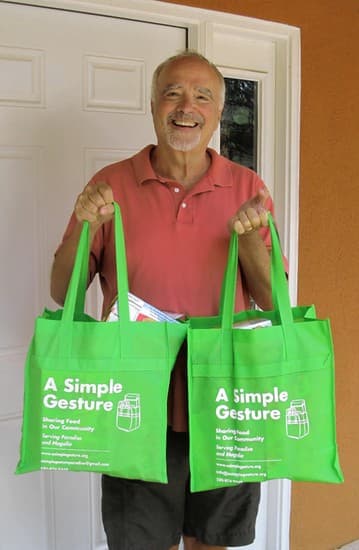
A growing body of pantry data points to the same conclusion: when neighbors can choose their food, the operation gets easier to run and the experience gets better to use. For A Simple Gesture, that matters because the green-bag model does not end at the doorstep, it feeds into a pantry system where sorting, shelf planning, and volunteer time all have to line up with what people actually want to take home.

Feeding America’s Child and Family Choice Program is the backbone of the latest evidence. NORC at the University of Chicago calls it the first rigorous assessment of increasing choice for food pantries and the families they serve, and the three-year evaluation was funded by the Morgan Stanley Foundation. The work ran in three rounds, covering 2021-2022, 2022-2023, and 2023-2024, with Feeding America and More Than Food Consulting helping to build the case for what choice looks like in practice.
How the choice model was built
This was not a vague conversation about dignity. The Choice Capacity Institute used ten monthly virtual sessions in 2021 to build a shared language around choice and define four levels of choice, from no choice at all to full grocery-store-style selection. That continuum matters because it gives pantry leaders a way to move in stages instead of treating client choice as an all-or-nothing overhaul.
Feeding America’s guidance is explicit that choice can be adapted to pantry size. A smaller partner does not need a supermarket floor to offer a better experience, and the toolkit materials say choice can be scaled from a limited set of options to a more complete shopping model. That flexibility is one reason the research is useful for a network like A Simple Gesture, where partners can vary widely in space, staffing, and throughput.
What the numbers showed
The year-one report gives a clear look at the hesitation many pantries feel before changing their model. In February 2022, NORC fielded a survey of 138 food pantries across 28 food banks, with 90 completing it and the effective sample adjusted to 111 pantries. The biggest barriers were familiar to anyone who has managed a pantry floor: limited staff and volunteer capacity, limited space, limited time, and the belief that pre-packed bags are more efficient.
The later rounds pushed back on that assumption. In year two, Feeding America selected 30 new food banks for the evaluation, and researchers collected pre- and post-surveys from 98 pantry directors and more than 4,000 neighbors using 150 partner pantries. About one-third of the directors said they increased choice and saw more efficient operations, a stronger sense of community, and higher staff and volunteer satisfaction.
That last piece is the operational signal A Simple Gesture should care about most. If staff and volunteers feel less friction, retention gets easier. If the pantry floor runs more smoothly, throughput improves. And if neighbors feel more satisfied, they are more likely to come back when they need help again.
Why clients choosing their food changes the workflow
The research also shows that client choice is not just a feeling-good perk. Neighbors using full-choice pantries reported a more satisfying pantry experience, greater food diversity, and less food waste at home. In practical terms, that means a pantry’s inventory is more likely to match what households will actually use, rather than what volunteers or donors assumed they needed.
That has direct implications for food recovery work. A green-bag network can collect plenty of food, but if partner pantries are stuck with a distribution model that creates mismatch, the system loses efficiency downstream. Choice helps turn recovered food into food that gets taken, used, and appreciated, which is a better return on every volunteer route and every donated bag.
What changed for skeptics
The clearest proof that the model can win people over comes from McDonald Mission Center, part of Second Harvest Food Bank of Northeast Tennessee. It was among the skeptics at first, then became a convert after seeing the benefits firsthand. That shift matters because many pantry leaders are not resisting change out of ideology, they are responding to real constraints and the fear that more choice will slow everything down.
The study suggests those fears are manageable. Choice was not limited to one type of pantry or one kind of neighborhood. It worked across settings, and the partners involved in the evaluation kept finding that the barriers were real but not fatal. Once pantries had a shared framework and a tested implementation path, the model became more practical than many had expected.
What A Simple Gesture can pilot now
For A Simple Gesture, the most useful takeaway is not to chase a perfect shopping-floor model everywhere. It is to identify where choice can be added without breaking the pickup and pantry handoff that keeps the system moving.
- A limited-choice lane for fast-moving items, so neighbors still decide among several useful options without slowing the line.
A realistic pilot during high-demand periods could include:
- A hybrid model that keeps curbside or drive-through distribution available when staffing is tight, while restoring choice where space allows.
- Route-level coordination with pantry partners so donated goods are sorted with client-choice shelves in mind, not just stacked by arrival order.
- Volunteer training that explains why choice is being used, since satisfaction improves when staff and volunteers understand the workflow rather than just the policy.
- Simple tracking of waste, repeat visits, and satisfaction, so the organization can see whether choice is improving the actual operation and not just the feel of it.
The point is not to romanticize shopping carts in a pantry. It is to recognize that when clients get more say, the system often wastes less, fits better, and earns more trust. For A Simple Gesture and its partners, that makes client choice less like a philosophical upgrade and more like a measurable operating strategy.
This article was produced by Prism’s automated news system from verified source data, official records, and press releases, then run through automated quality and moderation checks before publishing. The system is built and supervised by the people who set the standards it runs under. Read our full AI policy.
Did this article answer your question?