U.S. food bank revenue rises nearly $2 billion to almost $18 billion
Food-bank revenue climbed to almost $18 billion, but the real story is how public funding and food rescue are expanding capacity across the network.
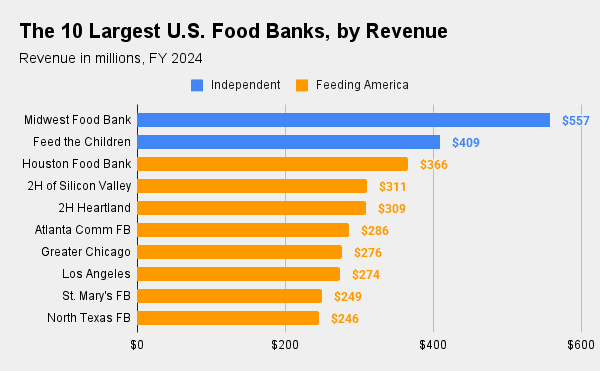
Food banks moved far more money through the system in fiscal 2024, but the gain is less about earnings than about scale. Food Bank News’ 2025 ranking put revenue for the top 300 U.S. food banks at almost $18 billion, up by nearly $2 billion after two years clustered around $16 billion. That jump points to a sector that is still growing, but now through a different operating model: more government support, more foundation and individual giving, and more food rescue flowing through increasingly sophisticated logistics.
For A Simple Gesture staff and volunteers, that shift matters because the bottleneck is no longer just generosity. It is execution. Feeding America, a network of 200 food banks, reported rescuing 4.1 billion pounds of safe, healthy food in fiscal 2024, including more than 3.5 billion pounds of produce, protein, milk and dairy products. The network said that same year it supported access to 5.9 billion meals, with its fiscal year running from July 1, 2023 through June 30, 2024. Food Bank News also noted that Feeding America kept pushing toward an additional 1 billion pounds of recovered food annually through its Food Rescue Challenge.
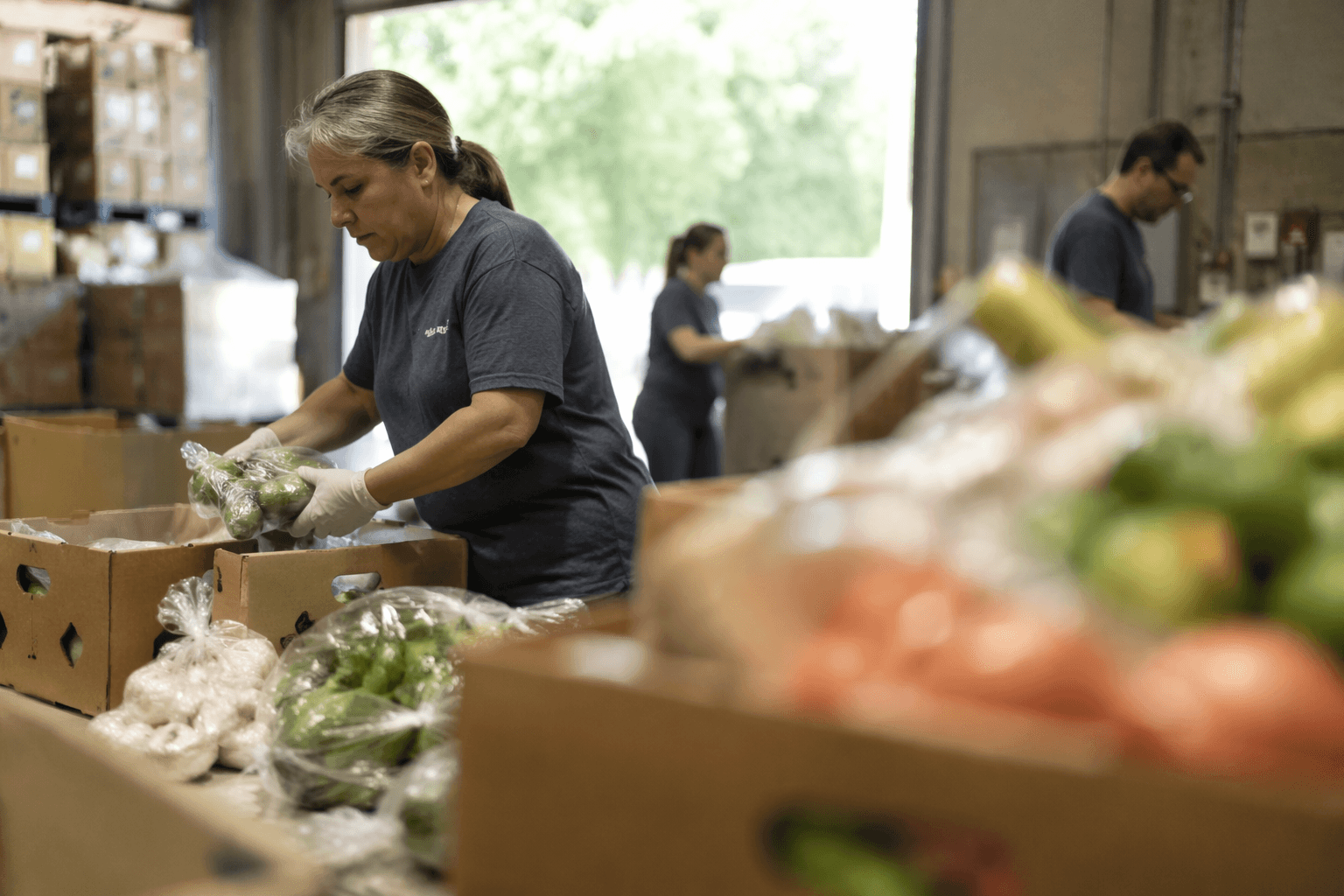
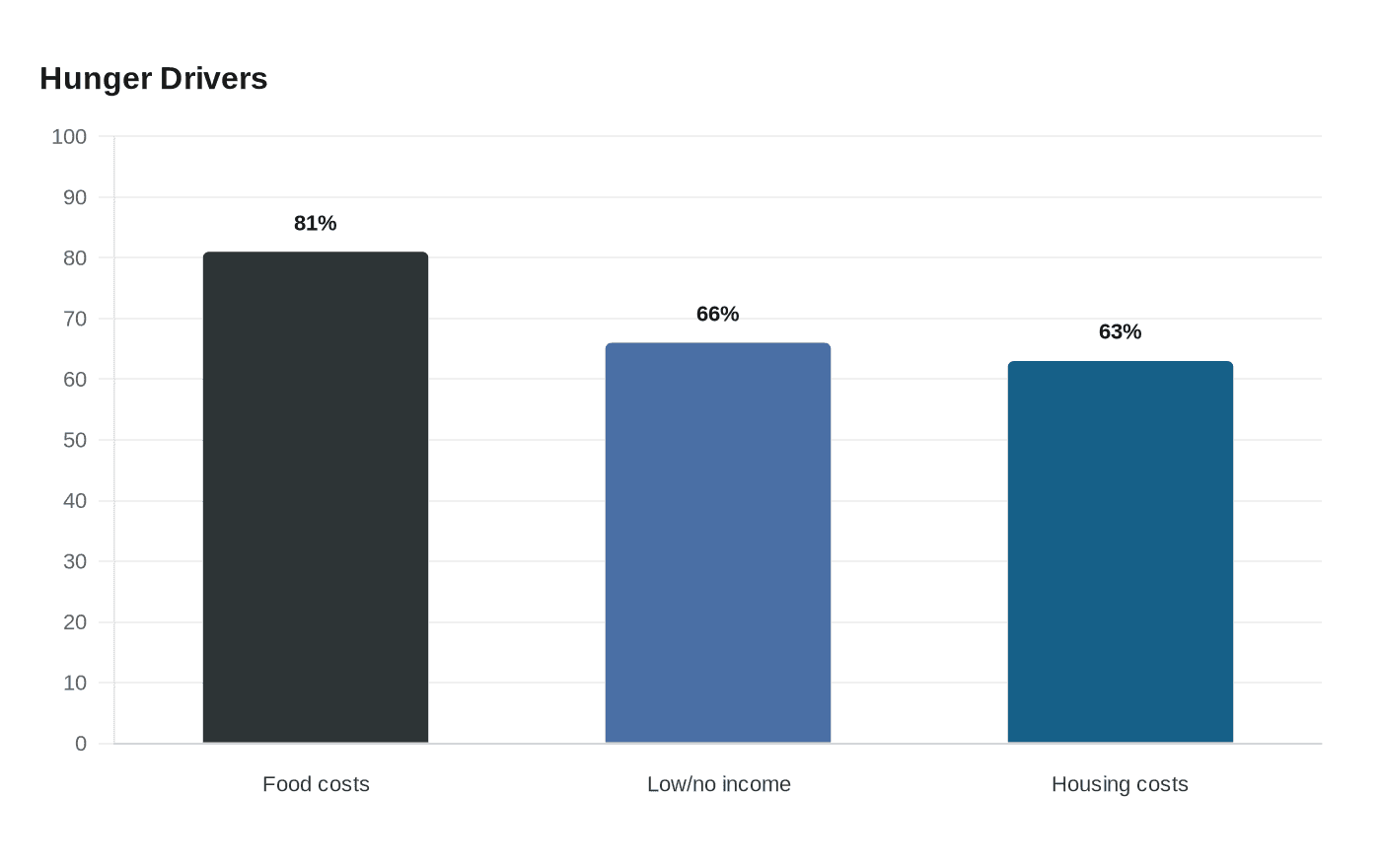
That kind of output explains why local groups are pouring effort into pickup routes, pantry partnerships, and routing software. Bigger budgets can buy more capacity, but the capacity is increasingly networked: TEFAP support, the Local Food Purchase Assistance program, rescued food, and private donations all reinforce one another. Feeding America says each $1 donated provides at least 10 meals, and it estimates 48 million people face hunger in the United States. Its 2024 Elevating Voices report shows why demand has stayed high even as the broader economy has improved: people facing hunger pointed to rising food costs at 81 percent, low income or no income at 66 percent, and housing costs at 63 percent as the main drivers of food insecurity.
That is a useful benchmark for A Simple Gesture, which has operated since 2011 and says its Guilford County chapter became a 501(c)(3) in 2015. The organization describes itself as a near zero-cost program and says one dollar converts to more than $30 of food going to food banks and pantries. One chapter network says the model now reaches more than 65 communities, with more than 1,700 food donors and over 132,000 pounds collected each year. For a neighborhood food-recovery group, the message is clear: the competitive advantage is not just collecting more, but making the system simple enough that donors stay involved, volunteers keep showing up, and pantry partners can count on steady deliveries.
This article was produced by Prism’s automated news system from verified source data, official records, and press releases, then run through automated quality and moderation checks before publishing. The system is built and supervised by the people who set the standards it runs under. Read our full AI policy.
Know something we missed? Have a correction or additional information?
Submit a Tip