USDA explains farm to food bank projects for food recovery
Farm surplus becomes a scheduled supply line when TEFAP funding covers harvest, packing, and transport, giving food banks steadier inventory and fresher meals.
From ad hoc donations to scheduled supply
The shift in farm-to-food-bank work is practical: food banks stop relying on occasional surplus and start receiving food through planned, funded logistics. Section 4018(b) of the Agriculture Improvement Act of 2018 amended the Emergency Food Assistance Act so TEFAP state agencies can pay for projects that harvest, process, package, or transport commodities donated by agricultural producers, processors, or distributors.
That matters because USDA is not describing a side program, it is describing an infrastructure model. TEFAP itself is a federal program that helps supplement the diets of people with low income by providing emergency food assistance at no cost, and USDA says farm-to-food-bank projects serve three goals at once: reduce food waste, provide food to people in need, and build relationships between agriculture and emergency feeding organizations.
Why the federal structure changes the work
The legal framework turned a broad idea into something states can administer and fund. The Farm Bill that included Section 4018 was signed on December 20, 2018, and USDA later codified the TEFAP changes in a final rule published in October 2019, placing the requirements in 7 CFR part 251. That is the difference between a good intention and a repeatable operating system.
For food recovery groups, that means farm partnerships are not just another donation stream. They require harvest timing, packaging standards, transportation planning, and enough trust between partners to move product quickly before quality declines. In other words, the work looks more like supply-chain coordination than one-off charity.
The scale of waste, and the size of the opportunity
USDA estimates that 30% to 40% of the U.S. food supply goes to waste, about 133 billion pounds valued at $161 billion in 2010. Against that backdrop, food recovery is not a small efficiency tweak. It is one of the few ways to move food that already exists into a system built to distribute it to families who need it.

Feeding America’s network shows the scale of what organized recovery can do. It says it rescued 4.1 billion pounds of food in fiscal year 2024, and it also cites 4.3 billion pounds of food and groceries in the last year listed on its site. USDA’s National Institute of Food and Agriculture says food recovery can deliver more fresh, frozen, dried, or canned produce to emergency food organizations, and that it can create health and economic benefits for food-insecure households. The policy case is straightforward: the more predictable the pipeline, the more usable the food.
What the funding is actually for
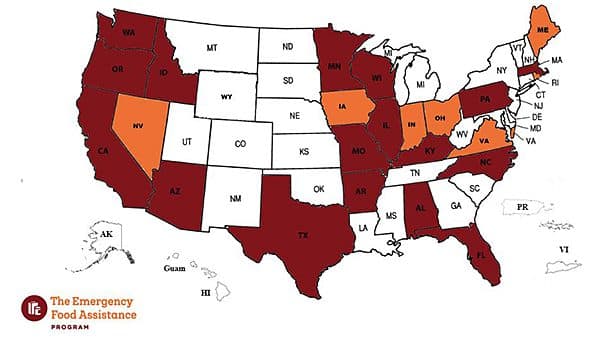
USDA has continued to treat farm-to-food-bank projects as an active part of TEFAP, not a legacy idea. The agency announced $8 million in TEFAP Farm to Food Bank project funding for fiscal year 2026, and it says 28 state agencies received farm-to-food-bank project awards in fiscal year 2023.
That matters for local operators because state-level awards are what make the pickup, sorting, and transport work possible. Without that layer, farms may still donate, but the system becomes more fragile, more dependent on volunteer improvisation, and less able to guarantee that food moves on time.
Why this fits A Simple Gesture’s operating model
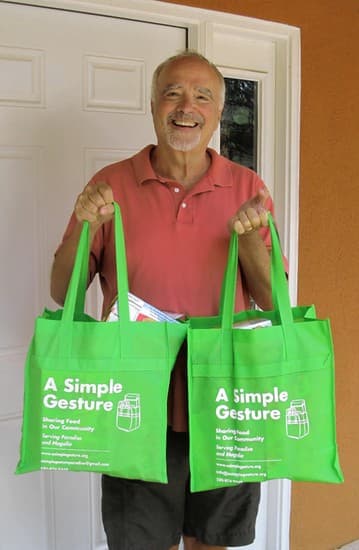
A Simple Gesture already works in the language of logistics. It says it partners with dozens of local food pantries to end hunger by making donations easy and convenient, and its Food Recovery effort rescues edible food from businesses and delivers it to local nonprofits. That is the same basic logic USDA is describing at the farm level: take food that would otherwise be wasted and move it through a reliable channel to agencies that can use it.
The organization’s scale shows why formalized supply matters. As of December 2025, A Simple Gesture reported more than 8,000,000 child-size meals donated, $13,000,000 in donated food value, 75+ pantry partners, 3,900+ recurring food donors, and 200 monthly volunteers. Those numbers point to a system that depends on consistency, not just goodwill.

What changes for staff and volunteers when supply becomes predictable
When food recovery is structured as a partnership, the operational burden shifts in useful ways. Pantry partners can plan inventory with more confidence, volunteers can be assigned around recurring pickup routes, and coordinators can think in terms of steady volume instead of rescue-only urgency. That is especially important for an organization like A Simple Gesture, where neighborhood pickups, corporate pickups, and timely food recovery pickups all sit inside the same coordination model.
A formal farm-to-food-bank pipeline also widens the donor base beyond households. For a group built around green bag collections, that is strategically important: household giving remains the backbone, but farm partnerships can add seasonal produce, fill gaps when shelf-stable donations slow down, and strengthen relationships with food pantries that need a broader mix of products. The result is a more dependable supply chain, not a one-time burst of generosity.
Why the public-system view matters
The real lesson in USDA’s explanation is that food recovery is becoming public infrastructure. The goal is not only to save surplus crops from waste, but to turn them into dependable inputs for emergency feeding organizations that can plan around volume, timing, and quality. That is a better fit for the realities of hunger relief than a donation model that depends on luck.
For A Simple Gesture, the policy backdrop confirms something its own numbers already suggest: the strongest food recovery organizations are not just collecting food, they are building logistics networks. Farm-to-food-bank funding gives that network a formal channel, and once the channel exists, every pantry route, every recovery pickup, and every meal served can move with a little more certainty.
This article was produced by Prism’s automated news system from verified source data, official records, and press releases, then run through automated quality and moderation checks before publishing. The system is built and supervised by the people who set the standards it runs under. Read our full AI policy.
Did this article answer your question?