USDA Says Food Rescue Cuts Waste, Boosts Security and Prosperity
USDA’s language gives food recovery teams a harder edge: less waste, more meals, and a measurable case for donors, funders, and volunteers.
Why USDA’s frame matters to food recovery teams
USDA puts food rescue in plain business terms: when food is tossed aside, the country loses opportunities for improved food security, economic growth, and environmental prosperity. That matters to A Simple Gesture because the work is not just about moving surplus food from one place to another. It is about proving that every pickup, pantry delivery, and business partnership creates value on two fronts: fewer edible pounds in the trash stream and more meals in the community.
For staff and coordinators, that is more than messaging polish. It gives the organization a language that speaks differently to every partner without changing the mission. Household donors can hear neighbor-to-neighbor care. Business donors can hear waste reduction and operational responsibility. Pantry partners can hear reliability, timing, and a stronger supply line.
The numbers behind the problem
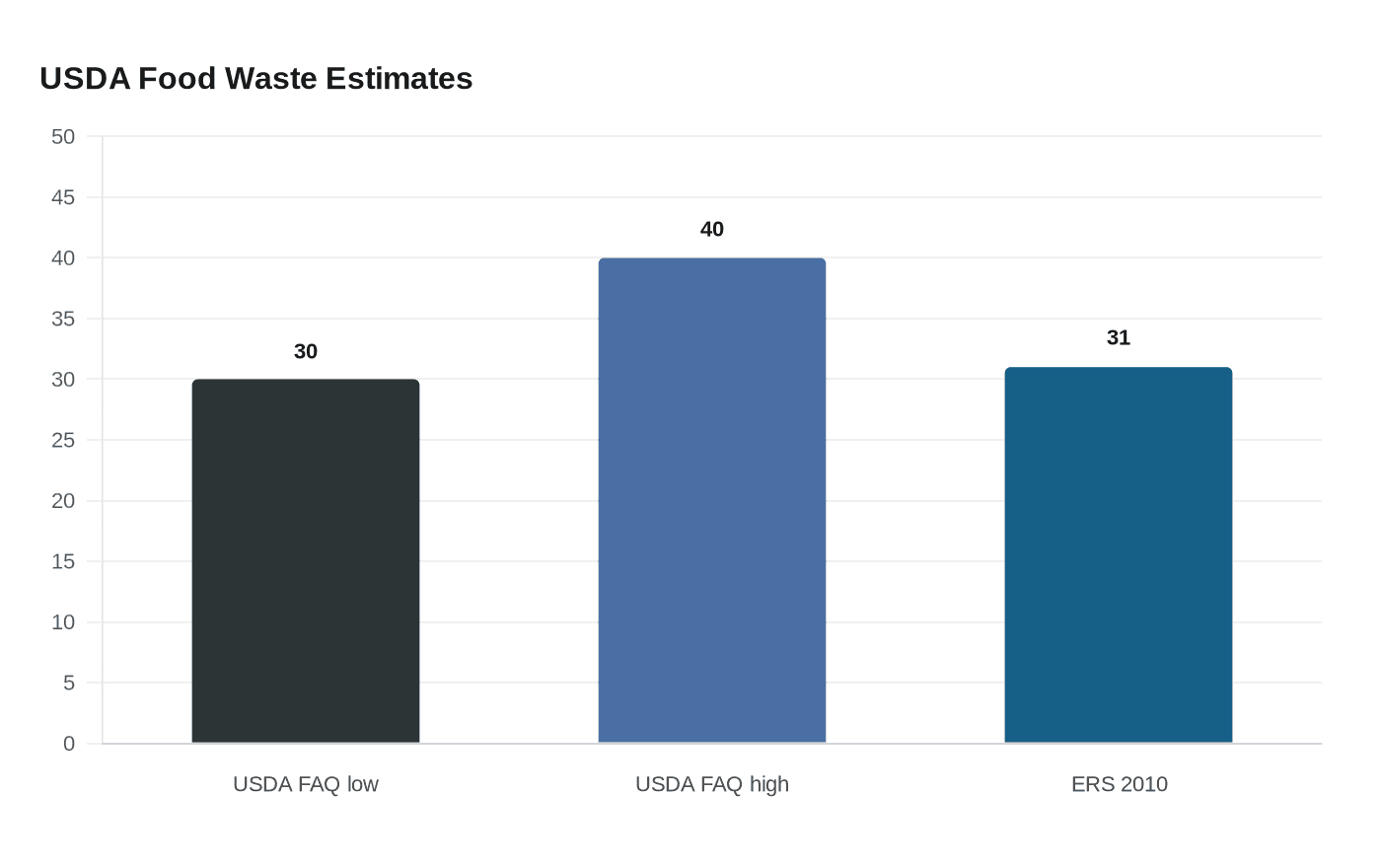
The federal numbers are large enough to make the case on their own. USDA says more than one-third of all available food in the United States goes uneaten through loss or waste. Its food-waste FAQ estimates that waste at 30% to 40% of the food supply, based on about 133 billion pounds and $161 billion worth of food wasted in 2010.
USDA’s Economic Research Service gives the same problem a tighter measurement: 133 billion pounds, or 31% of the 430 billion pounds of available food supply at the retail and consumer levels, went uneaten in 2010. The U.S. Environmental Protection Agency adds the operational punch line: preventing wasted food is the most environmentally beneficial option on the Wasted Food Scale.
That combination is useful for a food recovery nonprofit because it shifts the conversation away from soft goodwill and toward accountability. If an organization can say it is recovering edible food, routing it to people, and keeping it out of landfills, it is speaking in the same terms government agencies use to define the problem.
What donation really covers
USDA’s guidance is broader than many casual donors realize. Wholesome food donations of nonperishable items and unspoiled perishable items can divert waste from landfills and stock food banks, soup kitchens, pantries, and shelters. USDA also says perishable prepared foods from restaurants, caterers, corporate dining rooms, college campuses, and hotels can be donated if they are handled properly.
That matters for A Simple Gesture’s Food Recovery Program, which matches food-industry businesses with vetted nonprofits. For coordinators, the point is not simply that there is surplus food available. The point is that there is a structured pathway to recover it, but only if timing, handling, and partner vetting are taken seriously. A donation program that ignores those rules risks turning a promising supply stream into a liability.
How A Simple Gesture turns language into operations
A Simple Gesture’s Guilford County site already operates in the register USDA describes. It says the organization partners with dozens of local food pantries and makes food donations easy and convenient for donors. It also says its Food Recovery Program matches food-industry businesses with vetted nonprofits, which is the kind of detail that helps a coordinator explain why a pickup route or pantry relationship is not just busywork but part of a larger system.
The scale is notable. A Simple Gesture says it has more than 1,700 food donors and numerous volunteer drivers who collect over 132,000 pounds of food each year. Its Guilford County impact page says that as of December 2025 it had donated over 8,000,000 child-size meals, valued at $13,000,000, through 75+ pantry partners, 3,900+ recurring food donors, and 200 monthly volunteers.
Those are the numbers that can anchor a donor conversation or a grant application. A pantry partner can see stability in the 75-plus partner count. A volunteer manager can point to the 200 monthly volunteers as proof that the model has staying power. A business donor can hear that 132,000 pounds a year is not abstract charity but a visible diversion from waste.
What this means for volunteer recruitment and retention
Food recovery organizations often lose momentum when the mission sounds noble but the work sounds vague. USDA’s framing helps prevent that. It gives coordinators a way to explain that a pickup route is not just a feel-good errand, it is a measurable intervention in food security and waste reduction. That can make onboarding more concrete and retention easier because volunteers can see the operational consequence of their time.
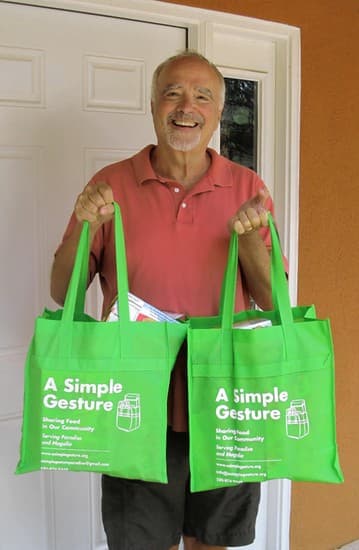
For A Simple Gesture, the green bag model already lowers the friction for household donors, and the recovery program extends the model beyond homes into the food industry. That dual approach is important: one stream helps keep recurring household participation alive, while the other opens the door to larger and often more irregular sources of surplus. In both cases, the work depends on dependable follow-through, not just enthusiasm.
Why the environmental frame should stay grounded
The cleanest environmental story here is not the broad promise of sustainability. It is the avoided waste from food that is still fit to eat. EPA’s Wasted Food Scale makes that hierarchy clear, and USDA’s donation guidance gives it practical form. Rescue the food first. Donate it in good condition. Keep edible food moving to pantries, soup kitchens, shelters, and other feeding partners.
That is where the environmental and community cases meet. EPA’s food donation guidance says donation feeds people, not landfills, supports local communities, and saves the resources that went into producing the food. For A Simple Gesture, that message can sharpen board discussions and donor meetings because it ties a meal delivered in Greensboro or Guilford County to a larger system of avoided waste.
From Paradise to a replicable model
A Simple Gesture says it was founded in Paradise, California, by Jonathan and Karen Trivers, then spread to communities across the country. That history matters because it shows how a grassroots pickup model can scale without losing its local identity. The organization’s Guilford County work is rooted in neighborhood logistics, but the USDA framework gives it a national policy language that makes the model easier to defend, fund, and replicate.
The strongest takeaway for staff is simple: the mission is not only to feed people who need food. It is to prove that food recovery can deliver measurable value to partners, donors, volunteers, and the systems around them. USDA and EPA both give that case weight, and A Simple Gesture already has the numbers to make it real.
This article was produced by Prism’s automated news system from verified source data, official records, and press releases, then run through automated quality and moderation checks before publishing. The system is built and supervised by the people who set the standards it runs under. Read our full AI policy.
Did this article answer your question?