USDA updates donation guidance for meat, poultry and egg products
USDA's updated guide gives A Simple Gesture a cleaner road map for meat, poultry and egg donations. Fewer label snags could mean more protein on pantry shelves.
.webp%3Ft%3D1742564842&w=1920&q=75)
A clearer path for donated protein
USDA's updated donation guide gives food recovery teams a cleaner road map for meat, poultry and egg products at a time when FSIS says food waste still accounts for 30% to 40% of the food supply. For A Simple Gesture, the practical payoff is simple: fewer rejected loads, fewer back-and-forth calls with donors, and more protein reaching pantry partners instead of getting stuck in a compliance gray zone.
FSIS says the May 2024 guideline, FSIS-GD-2024-0004, replaces the December 2020 version and is meant to help both donating establishments and nonprofit recipients. It covers the recurring questions that usually decide whether a donation moves smoothly or gets turned away, including which products are eligible, how they should be labeled, and how products made under exemption rules should be handled. FSIS also ties the guidance to 9 CFR 303.1, 317.2, 381.10, 412, 441 and 590.100, while noting that the document is guidance rather than law unless incorporated elsewhere.
Why this matters inside A Simple Gesture
A Simple Gesture has built a system since 2015 around Guilford County doorstep green-bag pickups, surplus-food recovery from businesses, and SHARE school fridges. The organization says its Food Recovery Program already rescues edible food from restaurants, event venues, grocery stores and other businesses, while its SHARE refrigerators collect unopened, unwrapped food from school nutrition programs. That means protein donations are not just a nutrition upgrade, they are an operational test of whether a donation belongs in a curbside collection route, a refrigerated recovery run, or a same-state partner handoff.
The scale explains why the guidance matters. By December 2025, A Simple Gesture said it had helped provide more than 8,000,000 child-size meals and $13,000,000 in donated food value, backed by more than 75 pantry partners, 3,900-plus recurring donors and about 200 monthly volunteers. A protein donation that clears USDA's rules can do real nutritional work at that scale, but a donation that fails on labeling or sourcing can consume a driver, a coordinator and a pantry partner's limited receiving space.
What usually clears the line
FSIS says federally inspected and passed meat, poultry and egg products may always be donated when they are safe, wholesome and not misbranded. The agency also says sample products can be donated because they are inspected and found wholesome, and the November 2024 webinar on the updated guide said products intended for export may be donated if they are safe and wholesome, though those shipments typically need temporary label approval.
Misbranded and economically adulterated products are another common misconception. FSIS says those products can be donated without temporary label approval from the Labeling and Program Delivery Staff if the label does not contain undeclared ingredients of public health concern. Historically, those donations were tied to a temporary approval step and a "Not for Sale" statement, which is why labels still deserve a close look before anything leaves the dock.
What still gets bounced
Not every near-expiration item or odd-label product is eligible. FSIS says state-inspected meat and poultry products cannot be distributed outside the state, and some retail-exempt or other intrastate-only poultry products can be donated only within that state. By contrast, meat or poultry produced under personal-use or custom exemptions cannot be donated at all, because those products are limited to the owner's household use.
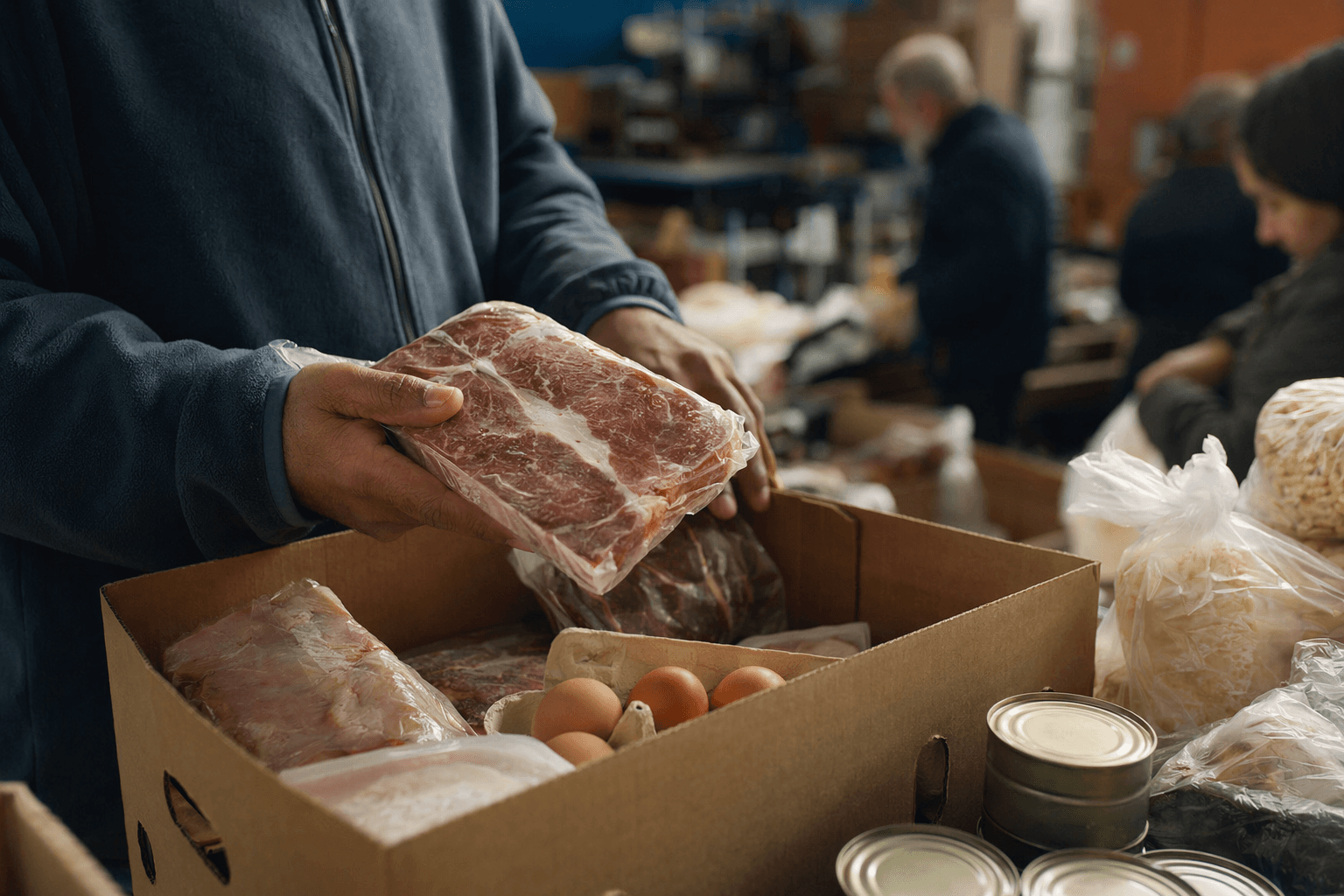
Date labels are another place where donors get tripped up. FSIS said in its November 2024 webinar that producers can donate items past the "best if used by" or "sell by" date, and the agency's food product dating guidance says food can still be safe past the date on the label if it is handled properly. In practice, that means the date stamp is not the final test, wholesomeness is.
A practical acceptance checklist for coordinators and donors
Before a pickup is scheduled, the fastest way to avoid rejection is to sort the product into one of four bins:
- Green-light for recovery: federally inspected and passed meat, poultry or egg products that are safe, wholesome and not misbranded.
- Needs label review: misbranded or economically adulterated products, and export-intended products that may need temporary label approval or other documentation.
- Stay inside state lines: state-inspected products and certain retail-exempt poultry products that can be donated only intrastate.
- Do not accept: personal-use or custom-exempt meat and poultry products, or anything otherwise adulterated.
FSIS says the updated webinar also covers shipping, general handling and products produced under inspection exemptions, which is a reminder that the compliance burden does not end once a donor says yes. For A Simple Gesture, that means the food recovery lane is where the process work matters most: drivers need clear instructions, pantry partners need predictable arrival windows, and volunteer recruitment has to match the kind of handling the product requires. The group already looks for drivers who can lift 20-pound boxes, use a smartphone, drive a clean personal car and show up in closed-toe shoes, which is exactly the kind of route discipline protein recovery demands.
The bigger lesson is that USDA's update is not about turning a nonprofit into a regulator. It is about giving food recovery staff a cleaner decision tree so wholesome animal-protein donations do not get lost to avoidable label, shipment or jurisdiction mistakes. In a countywide network as large as A Simple Gesture's, that kind of clarity can translate directly into more meals, less waste and less burden on the pantry partners who receive the final load.
This article was produced by Prism’s automated news system from verified source data, official records, and press releases, then run through automated quality and moderation checks before publishing. The system is built and supervised by the people who set the standards it runs under. Read our full AI policy.
Did this article answer your question?