Big Lots associates need tech that cuts manual work, not adds it
Big Lots’ comeback will hinge on whether AI clears away manual work, or just gives already stretched associates one more system to manage.
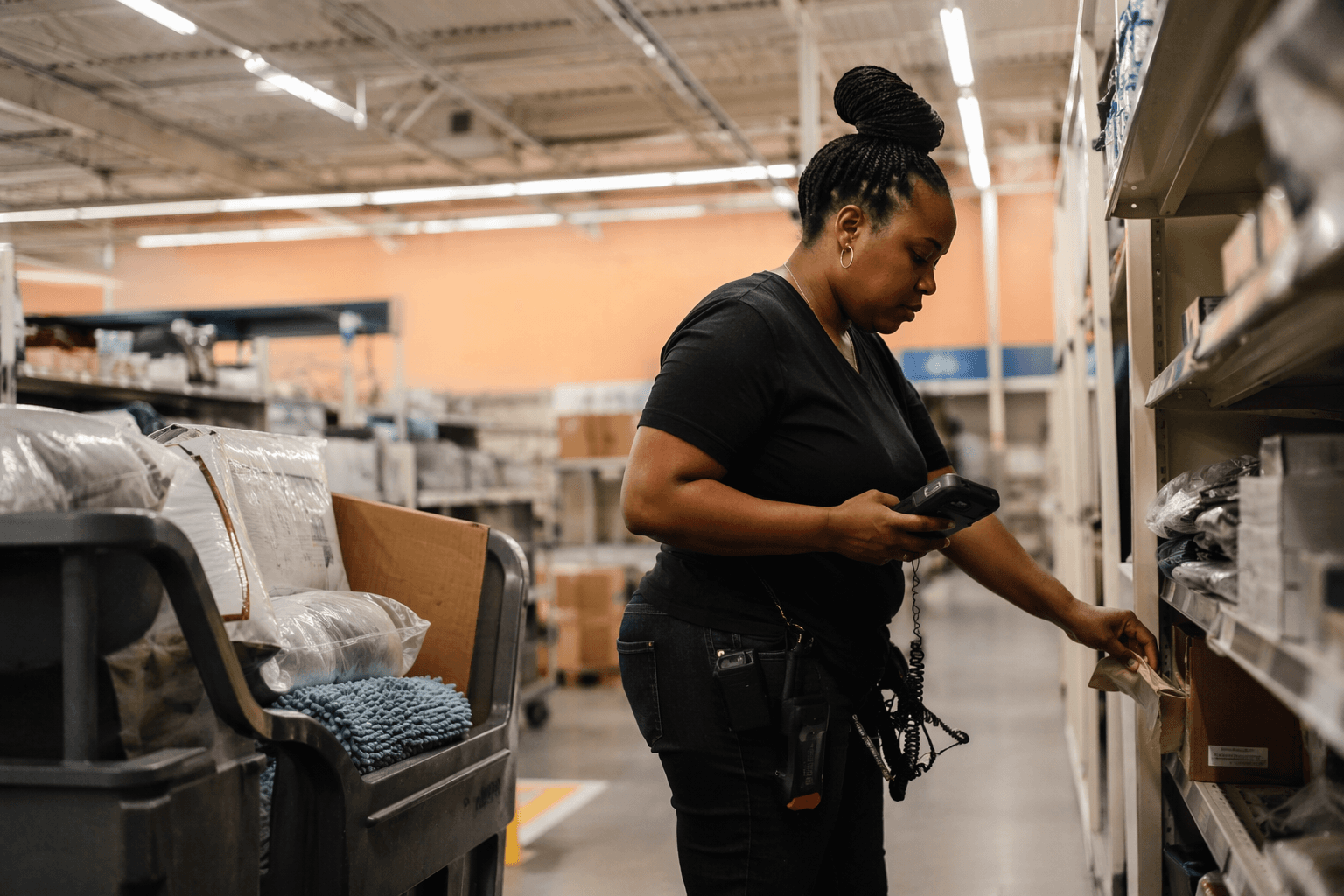
Big Lots’ rebound will not be decided by the software pitch. It will be decided on the sales floor, where a tool either saves time or becomes another screen associates have to babysit.
That is the real lesson from a new retail analysis focused on the associate gap. More than half of the retailers surveyed said workers spend two to three hours of every shift on manual tasks such as checking inventory, updating spreadsheets, reconciling errors, processing invoices, and handling unexpected issues. For Big Lots, where lean teams have long been asked to do more with less, that is not a theory. It is the day-to-day question of whether a shift goes to customers or to cleanup.
The real test is whether the tool removes work
Retail executives increasingly say manual labor is holding back operational goals, and many still rely heavily on manual interventions even when the sales pitch says technology should streamline the job. That gap matters because AI is only useful if it sits between back-end systems and the store team in a way that actually reduces friction. The promise is faster issue resolution, fewer repetitive tasks, and more time on the sales floor.
For Big Lots associates, the practical test is simple: does the new tool help stock faster, find inventory more quickly, or answer customers with more confidence? If the answer is no, then the technology is not removing work. It is just moving paperwork into a different format.
That distinction matters more in a chain like Big Lots than in a well-staffed prototype store. The company has spent the past year moving through bankruptcy, ownership change, closures, and a reset of its footprint. In that environment, every extra step is expensive, and every added system competes with the basics of running the store.
What associates already carry on the shift
Big Lots’ own job postings show how much of the labor burden still sits on frontline teams. Retail store associate and stocker roles include maintaining store appearance, doing daily front-end maintenance, replenishing merchandise and supplies, and keeping floor safety intact. That is already a broad job description before technology enters the picture.
So when corporate teams talk about automation, the frontline reality is not abstract. A tool that can surface inventory faster, reduce duplicate data entry, or cut down on error reconciliation can help associates stay in those core responsibilities. A tool that demands extra logins, manual overrides, or constant verification creates the opposite effect. It takes the worker farther away from the customer, not closer.
That is why the most useful retail AI is not the kind that sounds impressive in a presentation. It is the kind that removes the low-value work that clogs a shift, especially in stores where staffing is tight and labor budgets are fixed.
Why adoption is the whole story
The biggest mistake retailers make is treating launch day as the finish line. In reality, adoption is the product. If associates are not trained, not staffed, and not given time to learn the tool before it goes live, the system may technically exist while the store still runs the old way.
The analysis behind this story makes that point plainly: the strongest retail tech rollouts involve associates in testing, feedback, and training before a full launch. That is not a nice-to-have. It is what keeps a new platform from becoming one more obligation for managers and floor staff to absorb.
For Big Lots, that means store leaders should be asking a few specific questions before any AI rollout becomes permanent:

- Does it cut the time spent on inventory checks, spreadsheets, and error correction?
- Does it reduce the number of manual handoffs between systems?
- Does it help associates solve customer issues faster on the floor?
- Does it fit the pace of a shift where the same person may be stocking, cleaning, and covering the front end?
If the tool cannot answer those questions in the affirmative, it is not solving the associate gap. It is adding to it.
Big Lots’ bankruptcy reset raises the stakes
The pressure around technology is sharper because Big Lots is rebuilding after a brutal stretch. The company filed for Chapter 11 bankruptcy on September 9, 2024, in a case jointly administered under Case No. 24-11967 in the U.S. Bankruptcy Court for the District of Delaware. At the time, CNBC reported that Big Lots had agreed to sell its business to Nexus Capital Management for about $760 million, while Forbes reported the chain was putting everything in its roughly 900 stores on sale as it prepared for a possible shutdown.

That path changed again when the Nexus deal fell through and Big Lots announced in December 2024 that it would begin going-out-of-business sales at its remaining stores. Then came the next reset: the company later said it had been purchased out of bankruptcy in 2025 by Variety Wholesalers, which brings more than 70 years of discount retail experience. Big Lots says the revived brand will operate 219 stores in 15 states, and its store locator currently lists 219 locations.
That history is not just background. It explains why workers may be skeptical of any new technology that arrives wrapped in turnaround language. After layoffs, closures, and ownership changes, associates have seen how quickly strategy can shift. That makes trust, training, and frontline usefulness the deciding factors in whether a new system is seen as support or as another corporate experiment.
What a useful rollout should look like at store level
The best Big Lots technology will feel less like a pilot program and more like a practical tool associates can use without stopping the flow of the shift. It should shorten the path from problem to answer, not lengthen it with more manual checks. It should also respect the reality that store execution and technology strategy are the same conversation.
That means rollout plans need to be built around the actual work associates do now, not around an idealized version of retail. A good deployment should leave workers with more time for stocking, customer help, and floor readiness, not less. It should also reduce the need to cross-reference systems or recover from errors by hand.
In other words, Big Lots does not need AI that sounds clever in a memo. It needs AI that makes a lean team feel less stretched, a customer question easier to answer, and a shift less dependent on manual cleanup. In a company still proving its recovery, the tools that matter will be the ones that disappear into the work and make the work easier.
This article was produced by Prism’s automated news system from verified source data, official records, and press releases, then run through automated quality and moderation checks before publishing. The system is built and supervised by the people who set the standards it runs under. Read our full AI policy.
Did this article answer your question?