Big Lots interview tips focus on retail skills and customer service
Big Lots interviews are really floor tests: managers want proof you can handle a crowded register, a freight rush, and customer problems without losing control.
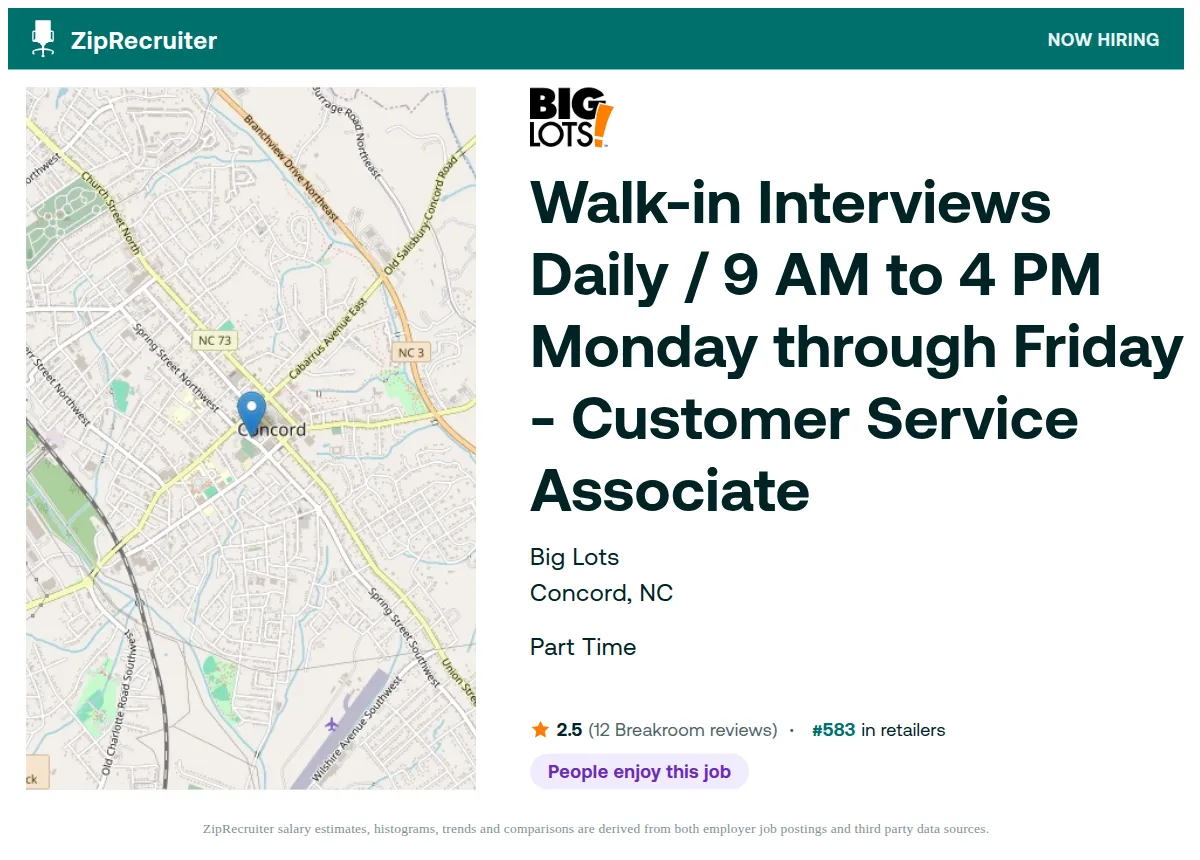
A backed-up checkout line is exactly the kind of Big Lots scenario managers are testing for in an interview. They are not only listening for customer service language, they are watching for whether you can stay organized, think fast, and work well with others when the store gets busy.
What the interview is really testing
Interviews are a chance to sell your skills and abilities while also figuring out whether the job and company fit you. At Big Lots, retail interviews often center on general experience, customer service skill, and in-store scenarios, not just a polished résumé. Employers also observe personality, so the way you explain pressure, teamwork, and problem solving can matter as much as the exact words you use.
For a Big Lots role, that means the strongest answers are specific. If the question is about handling a difficult customer, the manager wants to hear how you kept the transaction moving, protected the line, and still solved the problem. If the question is about teamwork, they want proof that you can communicate clearly with cashiers, stockers, and supervisors when tasks pile up.
Know the company before you walk in
Big Lots has made its current identity part of the interview story. Its mission is to deliver great value on ever-changing selections of discretionary and everyday items, and its vision is a world where everyone can access affordable, quality, brand-name items every day. This is value retail, and the job is about helping shoppers save money without slowing down the floor.
The current company was purchased out of bankruptcy in 2025 by Variety Wholesalers, which brings more than 70 years of discount retail experience to the brand. The new business will operate 219 stores in 15 states, and its store locator lists 219 locations. At the same time, the jobs page lists store opportunities in more than 220 stores across 17 states, a sign that recruiting is still broad as the company rebuilds around its smaller store base.
This is not a luxury showroom model. It is a value-driven, treasure-hunt retail environment where shoppers expect deals on furniture, home décor, groceries, apparel, and everyday essentials, and where workers have to keep checkout, freight, and customer service moving at the same time.
How to answer the questions managers ask most
A strong answer to why you want the job should connect your experience to Big Lots’ pace and purpose. You can say that you like value retail because it combines customer service with real operational work, and that you enjoy helping people find what they need while keeping the store organized and the line moving. That tells the interviewer you understand the job is physical, people-heavy, and built around efficiency.

When asked how you would handle a busy line at register, the best response is practical. Explain that you would stay calm, acknowledge waiting customers, finish each transaction accurately, and call for help early if the line started growing. Managers are listening for someone who does not freeze when pressure builds and who knows when to communicate instead of trying to manage everything alone.
If the question turns to freight or stocking, show that you understand priorities. A useful answer is that you would sort urgent tasks first, keep an eye on safety, communicate with the team about what arrived, and make sure the floor stays shoppable while freight is being worked. Big Lots stores move through a mix of discretionary and everyday items, so being able to organize quickly is part of the job, not an extra skill.
If you are asked about a difficult customer, focus on de-escalation and follow-through. Describe how you would listen, restate the issue, keep your tone steady, and move toward a solution without letting the interaction spill over into the rest of the line.
If you do not have much retail experience
Applicants can use examples from jobs, volunteer work, and other activities if they do not have a long work history. That is especially helpful for entry-level Big Lots candidates, because managers do not expect everyone to have years on a register. What they do expect is evidence that you can show up, learn fast, and work with other people in a structured setting.
You can build answers from school projects, sports, volunteer work, or any setting where you had to stay organized and communicate. If you helped at an event, handled a school fundraiser, or covered a team role under pressure, that can become proof that you can manage a busy shift.
Dress, questions, and follow-up still matter
Research the company, dress appropriately, ask thoughtful questions, and follow up after the interview. Retail attire can range from business professional to casual depending on the store culture, but dressing appropriately still matters. For Big Lots, that means neat, polished, and job-ready is the safest lane, even if the store environment itself is relaxed.
Your questions should make it clear that you are thinking about the actual work. Ask about training on register and customer service, how the store handles peak traffic, what teamwork looks like during freight, and what success looks like in the first few weeks. Those are the kinds of questions that signal you understand the pace of the floor and want to be useful quickly.
This article was produced by Prism’s automated news system from verified source data, official records, and press releases, then run through automated quality and moderation checks before publishing. The system is built and supervised by the people who set the standards it runs under. Read our full AI policy.
Did this article answer your question?