Big Lots needs a clearer brand identity to guide store decisions
Big Lots’ shrinking footprint makes brand clarity a survival issue. When every aisle has to prove value, the basics decide whether stores feel focused or confused.

Big Lots is in the kind of value business where the basics do not sit in the background. When a chain sells furniture, home décor, groceries, apparel and other bargain-priced goods under one roof, every store visit has to answer a simple question fast: is this a treasure hunt, a household-basics stop, or a furniture destination? If that answer is fuzzy, the customer experience gets fuzzy too, and workers are left trying to explain a store that has not clearly explained itself.
That is why the National Retail Federation’s Five to Thrive framework lands so directly at Big Lots. The guide’s message is that a retailer’s brand DNA should shape assortment, marketing and hiring decisions, because a store that does not know what it stands for tends to make inconsistent choices. For Big Lots associates, that is not theory. It is what determines which items belong on the front tables, how signage should read, and whether a department feels like a deal or just a pile of product.

What brand DNA looks like on the sales floor
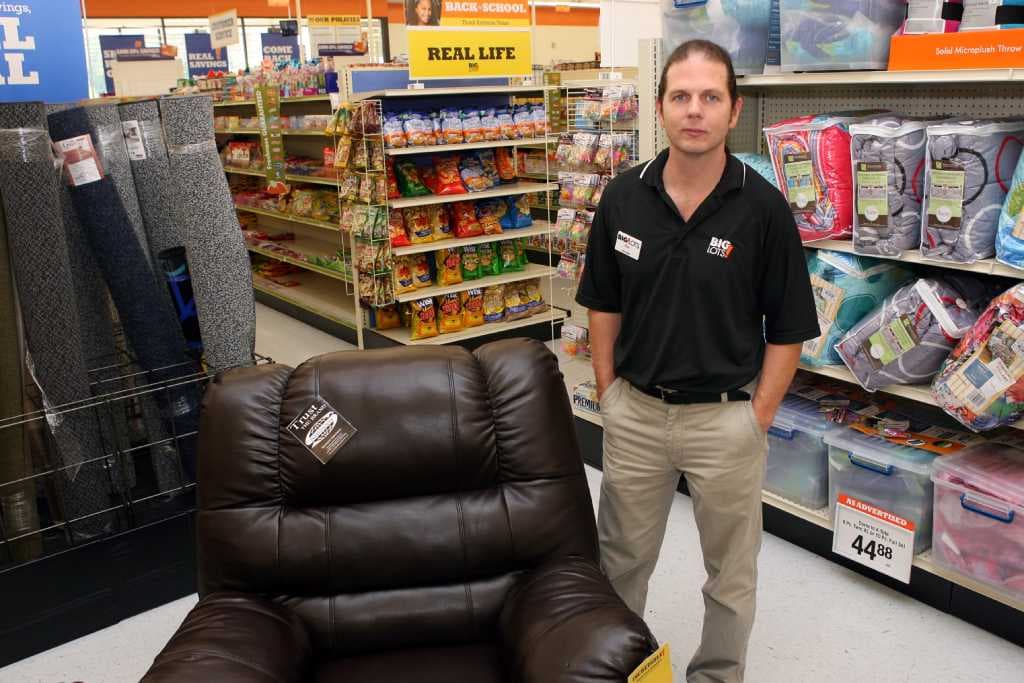
A strong brand identity only matters if shoppers can see it in the store. At Big Lots, that means the value promise has to show up in cleanliness, recovery, accurate pricing and smart category prioritization, not just in a logo or a slogan. A good department is not merely full of inventory; it is easy to understand, easy to shop and easy to trust.
That is especially important because Big Lots’ own mission language points toward a very specific promise: great deals on furniture, home essentials and more. If that is the promise, then the floor has to reinforce it aisle by aisle. Associates need a clear sense of which categories define the store, which ones drive repeat trips, and which ones support the overall value message without muddying it.
The NRF advice also makes hiring a store-level issue. If brand DNA drives who gets hired, then Big Lots needs people who can explain the chain’s closeout-style value proposition, keep departments tight, and help customers understand why one visit should lead to another. In practice, that means the job is not only about stocking product. It is about turning a mixed assortment into a coherent shopping trip.
Why the company’s recent history makes the lesson sharper
Big Lots’ own turnaround story shows why brand clarity matters so much when trust is under strain. The company entered voluntary Chapter 11 proceedings on September 9, 2024, in the U.S. Bankruptcy Court for the District of Delaware as Former BL Stores, Inc. and its subsidiaries. The case began with an initial plan that included a $620 million sale to Nexus Capital Management and $707.5 million in financing to keep operations going during restructuring.
That path did not hold. Big Lots later shifted into going-out-of-business sales before a subsequent transaction kept some stores alive under new ownership. In January 2025, assets including stores, distribution centers and intellectual property were sold to Gordon Brothers Retail Partners, and reports said that deal could preserve between 200 and 400 Big Lots locations. When a retailer moves from a sale plan to liquidation and then back toward a partial rescue, the need for a consistent identity becomes even more urgent.
For workers, the point is straightforward: customers do not just buy price, they buy confidence. A closeout retailer can survive surprises in the box if the store itself still feels dependable, but that dependability has to be visible in every shift, every sign and every reset. The more turbulent the corporate story gets, the more the store has to feel steady.
The scale of the pressure behind the message
The numbers explain why this is not a small branding exercise. Big Lots had 1,116 U.S. locations as of late November 2024, but its live store locator now shows 219 locations. That kind of contraction changes how every remaining store functions, because fewer locations mean more pressure on each one to represent the chain well and keep customers coming back.
The financial picture was strained too. Big Lots reported fiscal 2023 net sales of $4.72 billion, down 14% from the prior year, along with a net loss of $481.9 million. One trade report also said furniture sales, the company’s largest merchandise category, fell to about $1.2 billion in fiscal 2023, down 16% from fiscal 2022. The company also had 29,512,551 common shares outstanding as of April 12, 2024, another reminder of how closely investors were watching the business before the restructuring pressure hit full force.
That mix of shrinking stores, falling sales and a weakened furniture base makes brand clarity more than a slogan. If customers cannot quickly tell whether Big Lots is the best place for affordable furniture, household basics or opportunistic bargain buys, then the chain gives up the one thing a value retailer cannot afford to lose: a clear reason to return.
What consistency should look like now
The practical takeaway for Big Lots is not complicated, even if execution is hard. If the brand promise is affordable, quality items at good value, then every part of the store has to support that promise in a repeatable way. That means focused assortment decisions, cleaner execution on pricing and presentation, and a sharper answer to what each department is supposed to do for the shopper.
In plain store terms, the basics should look like this:
- Front-end messaging that tells customers what kind of store they are walking into.
- Departments that feel edited, not random, so shoppers can tell where the best value lives.
- Pricing that is accurate and easy to spot, because value loses meaning when tickets confuse people.
- Recovery and cleanliness that make a bargain chain look dependable rather than chaotic.
- Hiring and training that reinforce the same point of view across every shift.
Big Lots does not need more noise to solve its problem. It needs a tighter story that shows up in the aisles, in the backroom and in every customer conversation. In a value chain under pressure, clear brand identity and consistent basics are not marketing polish. They are the operating system that keeps the store understandable enough to survive.
This article was produced by Prism’s automated news system from verified source data, official records, and press releases, then run through automated quality and moderation checks before publishing. The system is built and supervised by the people who set the standards it runs under. Read our full AI policy.
Know something we missed? Have a correction or additional information?
Submit a Tip