Big Lots planograms keep treasure-hunt stores organized and shoppable
At Big Lots, planograms are the difference between a fast, shoppable floor and a messy treasure hunt. They shape recovery, restocks, and whether bargain hunts turn into sales.

At Big Lots, one aisle can feel fresh and the next chaotic if closeouts, bargain price points, and a rotating mix of goods are not laid out with discipline. That is where planograms matter: they tell associates where products belong, how much space each item gets, and how the store stays easy to shop when the assortment keeps shifting.
Planograms are the operating system behind the floor
A planogram maps retail store layout, using sales data and consumer psychology to guide product locations and manage floor space. In plain terms, that means the shelf is not just filled, it is planned. For Big Lots, where the mix can swing from everyday consumables to housewares, toys, and seasonal goods, that kind of structure keeps the sales floor from turning into a guessing game.
The payoff shows up in the work itself. A clear planogram tells associates where the hero items sit, which products deserve more facings, and what belongs near the front, back, or checkout area. It also makes recovery faster because every item has a home. In its 2026 planogram guide, Shopify says planograms can help inventory management and reduce restocking time by up to 30%, which matters on a floor that gets reset often.
Why visual standards matter so much at Big Lots
Big Lots says its concept combines the “treasure hunt shopping experience” with closeouts and “unbeatable bargains.” That model works in the store’s favor only if the floor still looks intentional. A shopper should feel like there are surprises, not confusion. When the layout is clean, the store reads as organized and full of opportunity. When it is not, the same bargain mix can feel disjointed and harder to trust.
That is especially important now that Variety Wholesalers says it brought more than 70 years of discount retail experience to the brand after purchasing Big Lots out of bankruptcy in 2025. Big Lots says the new company will operate 219 stores in 15 states across the Midwest, Southeast, and Mid-Atlantic. With that kind of footprint, one store’s bad execution can quickly become a brand-wide problem, while a consistent visual standard helps the chain feel familiar from one market to the next.
What good execution changes for workers on the floor
For associates, a strong planogram cuts down on constant customer interruptions because shoppers can find what they need without chasing a worker for every answer. It also improves handoffs between shifts. If the closing team leaves a department recovered to plan, the morning crew starts from a known baseline instead of spending the first hour undoing damage and relabeling the floor.
That matters in a value chain where labor has to stretch across big, mixed departments. Big Lots’ assortment includes everyday consumables, housewares, toys, and seasonal goods, which means the floor can move from practical fill-in items to promotional displays in the same day. When each section has a clear map, replenishment gets quicker, recovery gets simpler, and the store spends less time looking picked over.
Where planograms do the most work
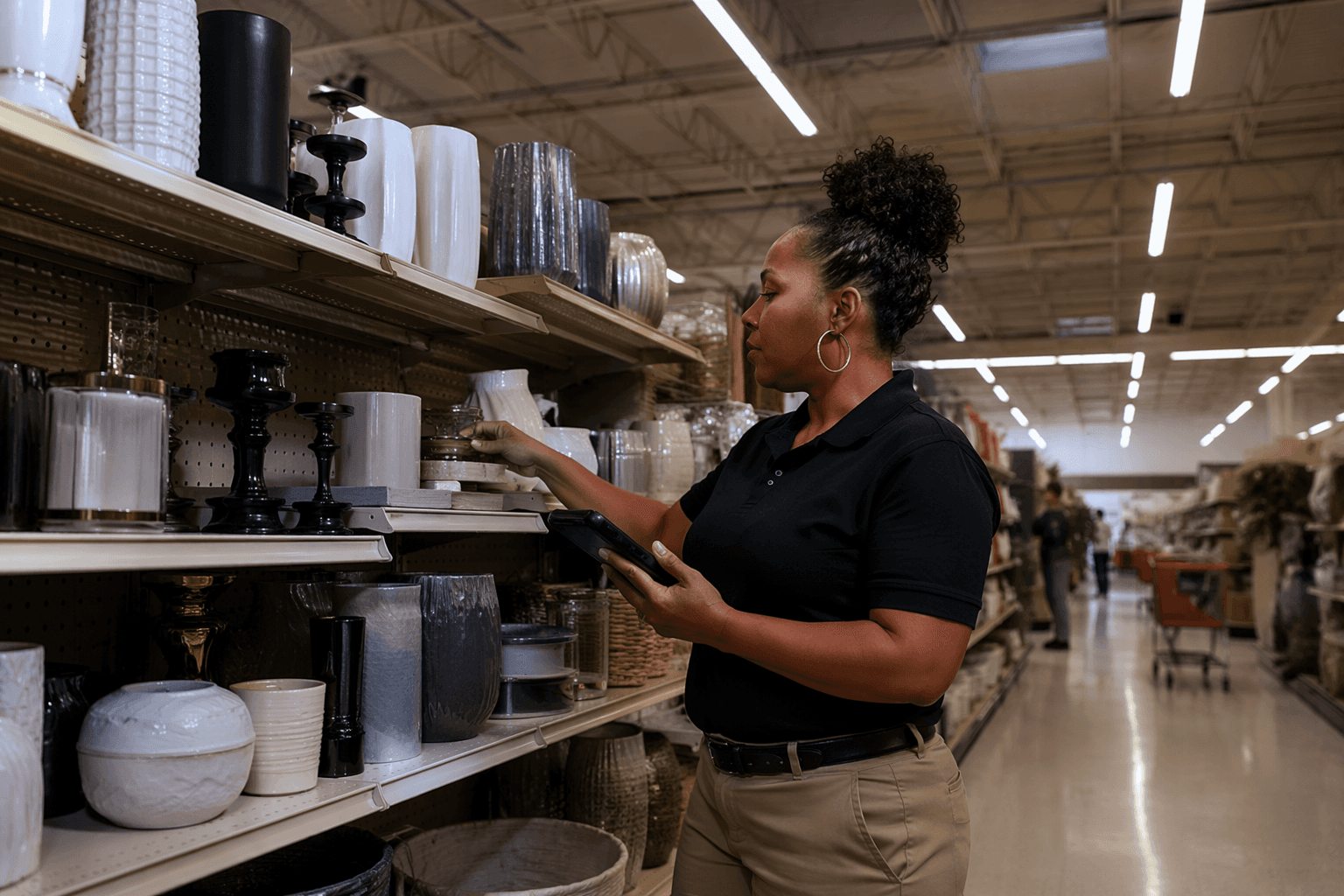
The biggest gains usually show up in the most changeable areas. Seasonal sets need to move before they go stale. Consumables need to stay full enough to signal value. Furniture and home décor need enough structure to make browsing feel easy rather than overwhelming. In every one of those zones, the planogram helps determine how much space a product gets and whether the display still looks like something a customer can shop in one pass.
NRF retail fundamentals guidance recommends using props, signage, lighting, and product placement to highlight new arrivals or hero items. For Big Lots, that means the floor should do more than hold inventory. It should tell shoppers where to look first, what is new, and what is worth grabbing now.
The guidance also recommends placing best-selling items toward the back of the store to draw customers through the space and using the cash wrap for impulse sales to increase basket size. That is practical advice for a treasure-hunt format. If the floor is mapped well, the shopper keeps moving, sees more departments, and has more chances to add a seasonal item, an extra housewares piece, or a small consumable to the basket.
How planograms affect conversion, not just neatness
A clean feature display can move product before it goes stale. A messy rack can hide good merchandise, slow down decision-making, and weaken conversion. Visual standards connect directly to sales performance. The shelf has to do part of the selling by making value obvious, and the display has to make the store look worth exploring.
At Big Lots, that point is especially sharp because the brand sells itself on finding unexpected bargains. If the presentation is sloppy, the message gets undercut.
The worker-level payoff of a disciplined floor
Strong visual standards save time in the parts of the job that repeat all day. Associates spend less time recovering the same aisle twice. Replenishment teams spend less time searching for a home for each item. Shift changes become smoother because the next team can see where the floor stands and what needs attention first.
This article was produced by Prism’s automated news system from verified source data, official records, and press releases, then run through automated quality and moderation checks before publishing. The system is built and supervised by the people who set the standards it runs under. Read our full AI policy.
Did this article answer your question?