Big Lots workers can use seasonality to anticipate demand shifts
Big Lots’ busiest stretches follow the retail calendar, and knowing when patio, back-to-school, and holiday goods land can help crews brace for the rush.

Seasonality is the workload forecast
At Big Lots, the calendar is not just a marketing tool. It is a map of when freight piles up, when the sales floor gets crowded, and when a normal shift turns into a sprint. Solink’s retail seasonality framework captures that reality neatly: sales patterns are not random, they move in predictable waves that store teams can learn to read.
May is a good example. Spring and early summer bring patio furniture, outdoor living, graduation gifts, Mother’s Day, Memorial Day, and the first real burst of summer recreation traffic. Later in the year, the mix swings toward back-to-school, Halloween, holiday decor, and winter home goods. That shift changes truck volume, labor planning, front-end traffic, and the amount of customer service the store needs from one week to the next.
Big Lots already builds around the calendar
Big Lots’ own filings show that seasonality is baked into the business. The company says its Seasonal category includes lawn & garden, summer, Christmas, and other holiday departments. In its fiscal 2024 10-K, Big Lots said that category saw lower sales and net comps, with the lawn & garden department doing much of the damage because those sales depend heavily on large-ticket items.
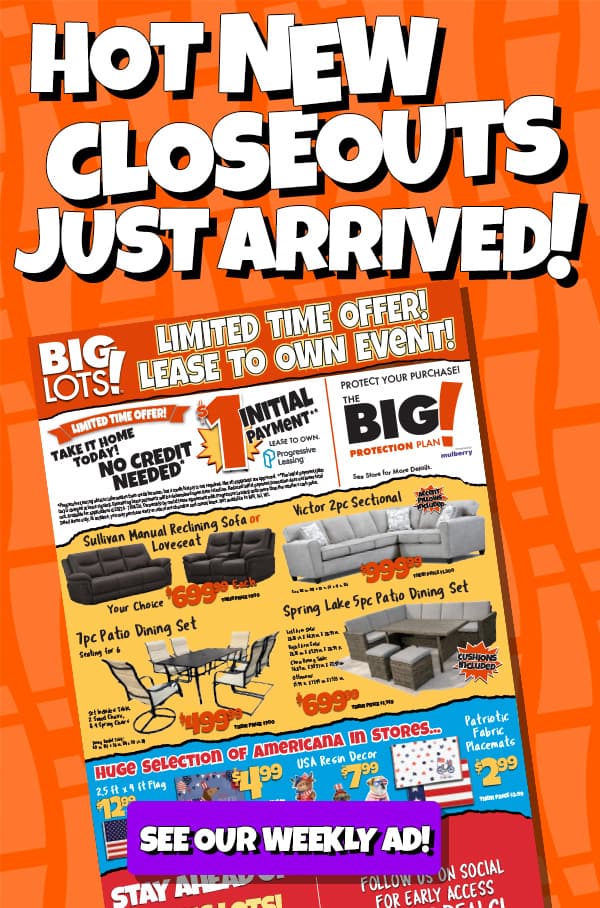
That matters on the floor because seasonal timing drives execution. A patio set, a lawn item, or a Christmas display is only useful if it lands before customers are ready to buy it. Big Lots has acted on that reality with campaigns that line up inventory and promotions to the calendar, including the launch of a Holiday Shop and a one-day Falloweenmas event on November 1, 2024. The company also pushed a new patio collection in late January 2024, showing how warm-weather assortments have to arrive early, well before peak demand.
Back-to-campus merchandising fits the same pattern. Big Lots has used college essentials and dorm decor to capture shoppers as the school year approaches, which is another reminder that seasonal demand is not limited to weather. It is tied to life events, school calendars, and holiday habits that can change a store’s traffic and mix almost overnight.
What the calendar changes on the floor
The biggest operational effect of seasonality is that it changes what a normal day looks like. In a patio or outdoor-heavy stretch, freight volume rises and the backroom fills faster because large items take up more space and take longer to move. On the sales floor, recovery standards get tougher because more bulky product means more resets, more open space to protect, and more attention needed to keep seasonal displays shoppable.
The same logic applies when the store moves into back-to-school, Halloween, and holiday periods. College essentials and dorm decor can create sharp, short-lived demand spikes, while Halloween and Christmas assortments often bring heavier customer traffic and more merchandising pressure as displays have to be refreshed quickly. The harder the seasonal push, the more important it becomes to have the right people scheduled at the right time, especially on the front end and in departments that carry seasonal goods.
Late shipments are a problem in any retail environment, but they are especially costly in seasonal retail. If a spring patio shipment arrives after the warm weather window opens, or if holiday decor lands after shoppers have already moved on, the store can be left with inventory that no longer matches demand. That is why managers watch the calendar so closely: the job is not just to stock product, but to make sure the right product reaches the floor before the selling moment passes.
A chain size that makes timing matter even more
Big Lots is not a small, local operation that can adjust slowly. As of May 4, 2024, the company said it operated 1,392 stores in 48 states and also ran an e-commerce platform. Its broader mix includes furniture, home decor, mattresses, and everyday essentials, so seasonal swings affect more than one corner of the business at a time.
That scale made the pressure sharper in 2024. Big Lots filed for Chapter 11 bankruptcy on September 9, 2024, after years of declining sales and store closures. Reuters and CNBC reported that the filing came after high interest rates and a sluggish housing market slowed demand for its low-priced furniture and decor. When a retailer is already under that kind of strain, missed seasonal bets become harder to absorb, because there is less room for inventory that arrives too early, too late, or in the wrong quantity.
How to read the year from inside the store
The most useful way to think about seasonality at Big Lots is as a sequence of work waves. Early spring usually leans into patio and outdoor living, which means heavier freight and more space devoted to large items. Late summer brings back-to-campus and dorm decor, which shifts attention toward smaller essentials and faster turnover. Fall and winter then push the store into Halloween, Holiday Shop, and Christmas assortments, where traffic, markdowns, and display maintenance all pick up at once.
The weeks around those transitions are often the most demanding. Stores have to move fast enough to capitalize on demand while also staying organized enough to keep the floor recoverable and the front end moving. That is why seasonality is more than a merchandising concept at Big Lots. It is a practical guide to when the work gets harder, which departments will need extra hands, and how the year’s biggest selling windows can either help the store or expose every weakness in its execution.
At Big Lots, the calendar is the first warning system. The crews that read it well are the ones most likely to stay ahead of the truck, the traffic, and the next seasonal reset.
This article was produced by Prism’s automated news system from verified source data, official records, and press releases, then run through automated quality and moderation checks before publishing. The system is built and supervised by the people who set the standards it runs under. Read our full AI policy.
Did this article answer your question?