Big Lots workers need accommodations, EEOC says employers must consider requests
A stool at the register or a lighter lifting limit can be a legal accommodation, not a favor. Big Lots workers have EEOC-backed rights even as the chain reshapes its stores.

A cashier who cannot stand for an entire shift, a stockroom worker with a lifting restriction, or an associate who needs a modified schedule should not have to guess whether asking for help is allowed. Under the Americans with Disabilities Act, employers with 15 or more employees must consider reasonable accommodation requests, and the EEOC requires them to look for a workable change, not shut the conversation down. At Big Lots, where the job can swing from register work to stocking to customer service in the same day, that process matters on the sales floor and behind the scenes.
What a reasonable accommodation really means
The EEOC defines reasonable accommodation as a change or adjustment to a job or work environment that lets a qualified applicant or employee with a disability participate in the application process, do essential job functions, or enjoy the same benefits of employment as other workers. That can include job restructuring, leave, modified or part-time schedules, workplace policy changes, and reassignment. The legal standard is built around an interactive process, which means the employer and worker are supposed to talk through the barrier and possible fixes before assuming the answer is no.
Workers often think an accommodation has to be dramatic to count. In practice, the fix can be ordinary: a stool at a register, a different start time, a temporary lifting cap, or a change in who handles heavier stock. The question is whether the worker can keep doing the essential parts of the job safely and effectively with a change in how the work is organized.
How that plays out in a Big Lots store
Big Lots’ careers page states that employment and advancement opportunities are offered to qualified individuals regardless of disability and other protected traits. That promise lands differently in a store that sells furniture, home décor, groceries, apparel, and seasonal goods, because those categories create a mix of physical tasks that can shift hour by hour. One associate may ring up customers in the morning, unload product in the afternoon, and help with merchandising before closing.
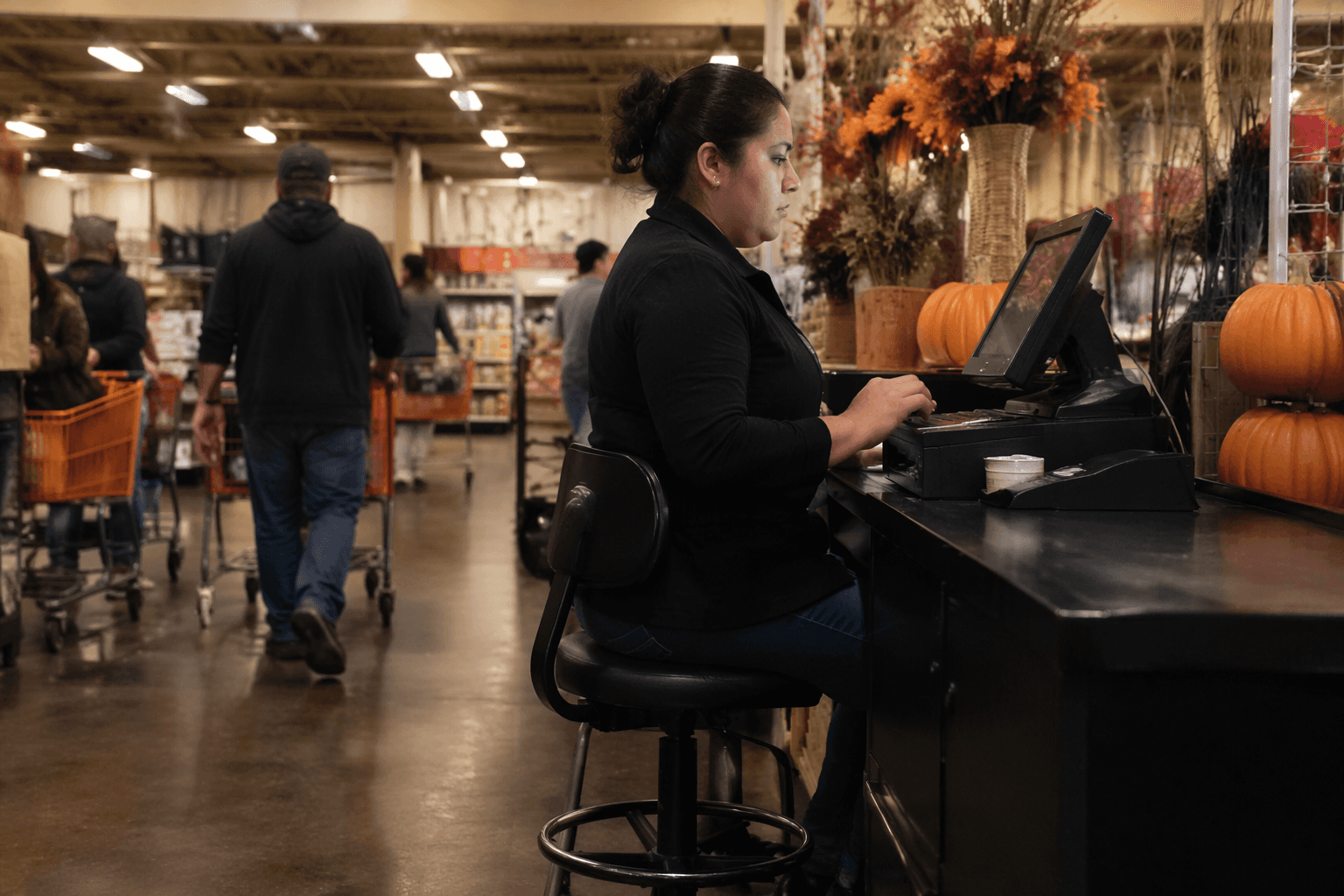
A worker with a back injury may need a lifting restriction in the stockroom. Someone with a pregnancy-related limitation may need a modified schedule or a different assignment away from heavy freight. A cashier who cannot stand for long stretches may need a stool or a seated position at the register. For some workers, assistive technology or a change in how tasks are assigned can make the difference between staying on the job and being pushed out of it.
EEOC resource materials cover telework, pregnancy-related limitations, visual disabilities, hearing disabilities, and other accommodation issues.
How the interactive process should work
The best time to raise a need is early, before missed shifts, discipline, or a performance write-up turns the issue into a bigger problem. Workers do not need to frame the request as a legal dispute. It is usually more useful to say what task is hard, what restriction exists, and what kind of adjustment would help.
- “I can do register work, but I need a stool because I cannot stand for an entire shift.”
- “I can stock smaller items, but I have a 25-pound lifting limit.”
- “I can keep my hours if my schedule starts later during treatment.”
- “I need a reassignment away from a task that requires repetitive overhead reaching.”
For Big Lots workers, a clear request might sound like this:
The EEOC advises employers to identify a specific person or people responsible for handling accommodation requests and to respond promptly and effectively. If a solution takes time, workers should be kept informed rather than left in the dark. That is especially important in a retail setting, where managers may rotate, stores may be short-staffed, and task coverage can change by the hour.
Managers should not let the request sit until the issue becomes a write-up. They should look at whether the essential functions can be preserved with a different schedule, a change in duties, or a different tool. If a proposed accommodation would create an undue hardship, the employer still has to evaluate that claim seriously and explain why, not merely rely on habit or convenience.
Why Big Lots’ restructuring matters on the ground
Big Lots filed for Chapter 11 bankruptcy on September 9, 2024, in Delaware. Variety Wholesalers acquired 219 Big Lots stores out of bankruptcy, and Big Lots says the post-bankruptcy chain will operate 219 stores in 15 states across the Midwest, Southeast, and Mid-Atlantic. Stores reopened in waves in April 2025, and a 78-store reopening wave was completed in June 2025.
That kind of turnaround affects accommodation requests in real time. Restructuring can mean changing staffing levels, shifting responsibilities, rewriting schedules, or leaning harder on a smaller group of workers. It can also create confusion about who has the authority to approve a request, especially when a store is reopening or reorganizing. In that setting, a worker asking for modified duties or a changed schedule needs a clear process, not a shrug.
The footprint now stretches across Florida, Georgia, Kentucky, North Carolina, Ohio, Pennsylvania, South Carolina, Tennessee, Virginia, and other states in the chain’s new operating map.
Why the company’s past EEOC case still matters
Big Lots has faced disability-related enforcement before. In November 2019, the company settled an EEOC disability discrimination and retaliation suit involving a West Virginia store for $100,000 and agreed to equitable relief.
This article was produced by Prism’s automated news system from verified source data, official records, and press releases, then run through automated quality and moderation checks before publishing. The system is built and supervised by the people who set the standards it runs under. Read our full AI policy.
Did this article answer your question?