Big Lots workers track sales using NRF's 4-5-4 retail calendar
Big Lots’ sales calendar runs on retail time, not the wall calendar. NRF’s 4-5-4 system explains why a strong week, a weak month and a 53rd week can tell different stories.
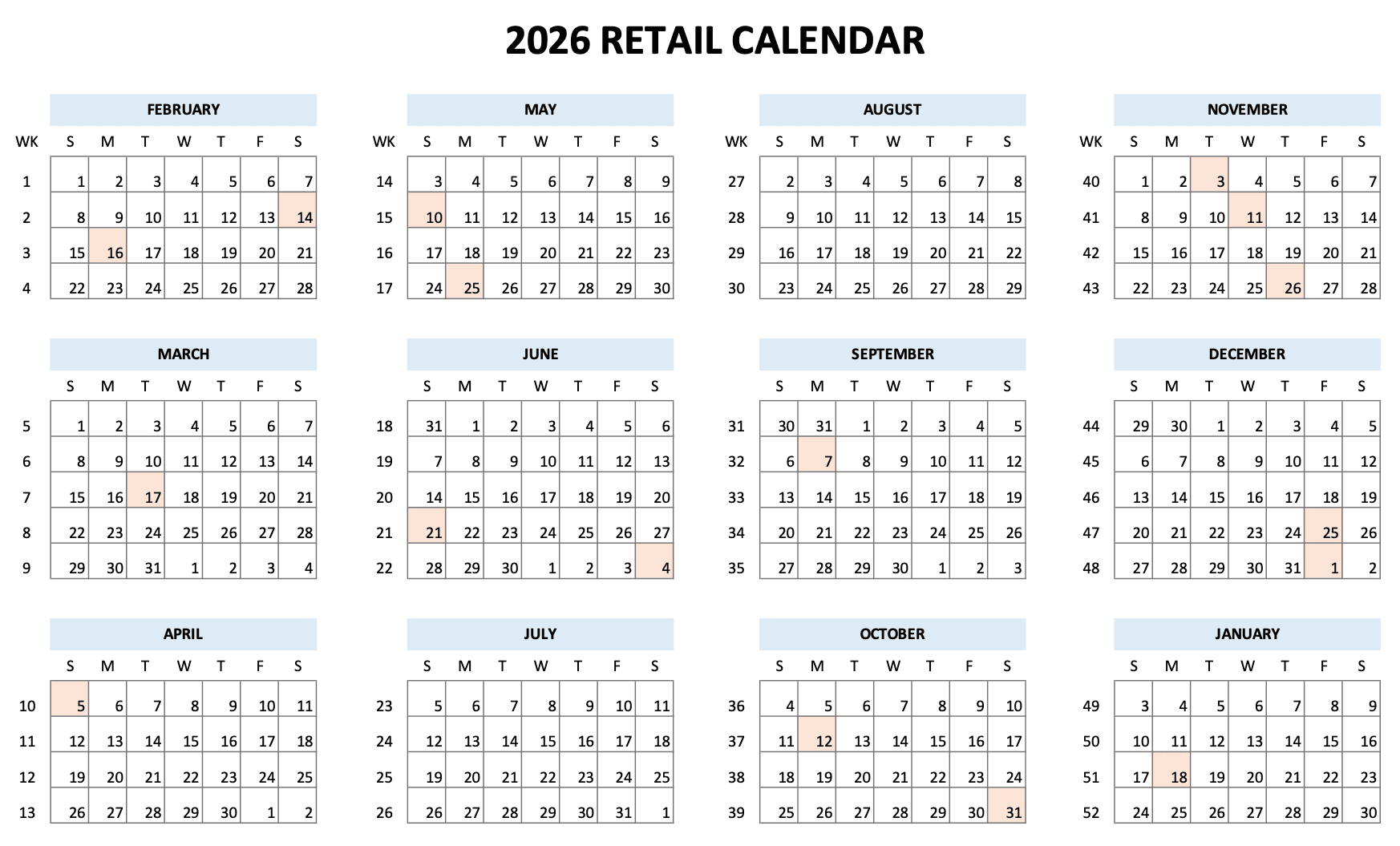
Big Lots workers do not just track sales by the month printed on a wall calendar. They are living inside a retail calendar that can make the same stretch of time look better or worse depending on where Saturdays, Sundays and holidays land.
That is why the National Retail Federation’s 4-5-4 calendar matters so much inside a chain like Big Lots. It is a quiet operating system for store life, shaping how leaders read traffic, how promotions are judged and how a sales trend gets translated into a decision about staffing, markdowns or next year’s inventory.

How the 4-5-4 calendar works
The NRF’s 4-5-4 calendar divides the year into months using a four-week, five-week, four-week pattern. The point is not cosmetic. It is designed to improve sales comparability between years by lining up the same number of Saturdays and Sundays in comparable months, so retailers can compare like days to like days.
That matters because retail does not move on the same rhythm as the rest of the calendar world. A five-week month can inflate sales totals, a holiday that shifts from one week to another can warp year-over-year comparisons, and a manager who reads those numbers too literally can draw the wrong conclusion about performance. NRF describes the calendar as a voluntary guide for the retail industry, but in practice it works like a common language for anyone trying to understand whether a store actually improved or simply benefited from better timing.
NRF’s holiday tracking shows why this calendar logic keeps mattering. Its 2025 holiday forecast says November and December retail sales are expected to rise 3.7% to 4.2% over 2024, reaching roughly $1.01 trillion to $1.02 trillion. When the busiest shopping season moves around the calendar, retailers need a system that separates real momentum from timing noise.
Why it changes the way Big Lots stores feel
For Big Lots, the 4-5-4 framework helps explain why store leaders talk about a week being strong or weak in a way that can sound disconnected from ordinary calendar life. Seasonal spikes such as summer, back-to-school and holiday shopping have to be measured in retail time, not just by the date on the wall, because the business is comparing similar selling days rather than neat monthly blocks.
That lens matters even more in a value chain built around closeouts and seasonal buys. Big Lots depends on quickly moving merchandise, and the calendar helps determine whether a promotion really worked, whether a freight push landed at the right time and whether a result can be repeated next year. In a store where the mix can change fast, calendar discipline is part of how management decides what deserves another order and what should be marked down before it goes stale.
The result is a different kind of pressure on the sales floor. A month that looks ordinary on paper can still carry a heavy weekend load, and a stretch that seems short to a non-retail manager may actually be packed with the comparable shopping days that matter most. That is one reason retail leaders lean on the 4-5-4 structure when they talk about promotions, freight timing and monthly performance.
Big Lots has its own fiscal rhythm
Big Lots adds another layer to the calendar problem. In its SEC filings, the company says its fiscal year ends on the Saturday nearest to January 31, which means some years have 52 weeks and some have 53. Big Lots said fiscal 2023 had 53 weeks, while fiscal 2022 and 2021 had 52 weeks.
The company later said fiscal 2024 ran for 52 weeks from February 4, 2024, through February 1, 2025. Its first quarter of fiscal 2024 ended May 4, 2024, and was a 13-week period. Those dates matter because they show how Big Lots measures performance in a frame that does not always match the normal calendar year consumers use.
At the time, Big Lots operated 1,392 stores and an e-commerce platform, according to its annual report dated February 3, 2024. That scale makes calendar alignment more than an accounting quirk. When a chain that large is trying to compare stores, regions and seasons, the difference between a 52-week and 53-week year can change how leadership tells the story of performance.
When the extra week changes the scoreboard
Big Lots has already shown how much one extra week can matter. In its March 2024 earnings release, the company said the net impact of the 53rd week, offset by a net decrease in store count, contributed about 140 basis points of sales growth compared with the fourth quarter of 2022. One retail-industry report said the extra week contributed about $67 million in sales.
That is exactly the kind of distortion the 4-5-4 approach is meant to control for. If a manager or investor sees a jump in sales without noticing the extra week, the result can look stronger than it really was. If they miss the store count decline, the picture gets distorted in the opposite direction, because fewer stores can mask underlying sales pressure even when the calendar provides a lift.
For workers, this is not abstract accounting. It changes how success is judged, how aggressive a store feels going into a weekend and how much pressure lands on the team when comparisons tighten. A 53-week year can make one quarter look unusually healthy, while the next year can feel harsher simply because the comparison got harder.
Why the timing pressure got sharper
All of this became more consequential after Big Lots filed for Chapter 11 bankruptcy on September 9, 2024. Once a company is under that kind of strain, calendar-driven comparisons stop being a technical detail and become part of the fight over whether stores are holding up or sliding.
In that setting, the 4-5-4 calendar is more than retail jargon. It is one of the tools that can show whether a surge came from real demand or from the calendar doing the heavy lifting. For Big Lots workers, that makes the hidden rhythm of the business easier to read: the month on the calendar is not always the month the store is really living through.
This article was produced by Prism’s automated news system from verified source data, official records, and press releases, then run through automated quality and moderation checks before publishing. The system is built and supervised by the people who set the standards it runs under. Read our full AI policy.
Know something we missed? Have a correction or additional information?
Submit a Tip