BLS data shows retail compensation costs at $26.41 an hour
Retail wages and benefits are still climbing, and Big Lots' restructuring leaves less room to absorb the cost. The result is tighter labor budgets and more pressure on store productivity.

Retail payroll planning is getting harder because labor is not just a line item at Big Lots, it is the line item that shapes the whole store. The U.S. Bureau of Labor Statistics said private industry compensation averaged $46.60 per hour worked in March 2026, while retail trade workers averaged $26.41 per hour in December 2025. For a company still working through Chapter 11, that gap helps explain why managers keep watching hours, schedules and productivity so closely.
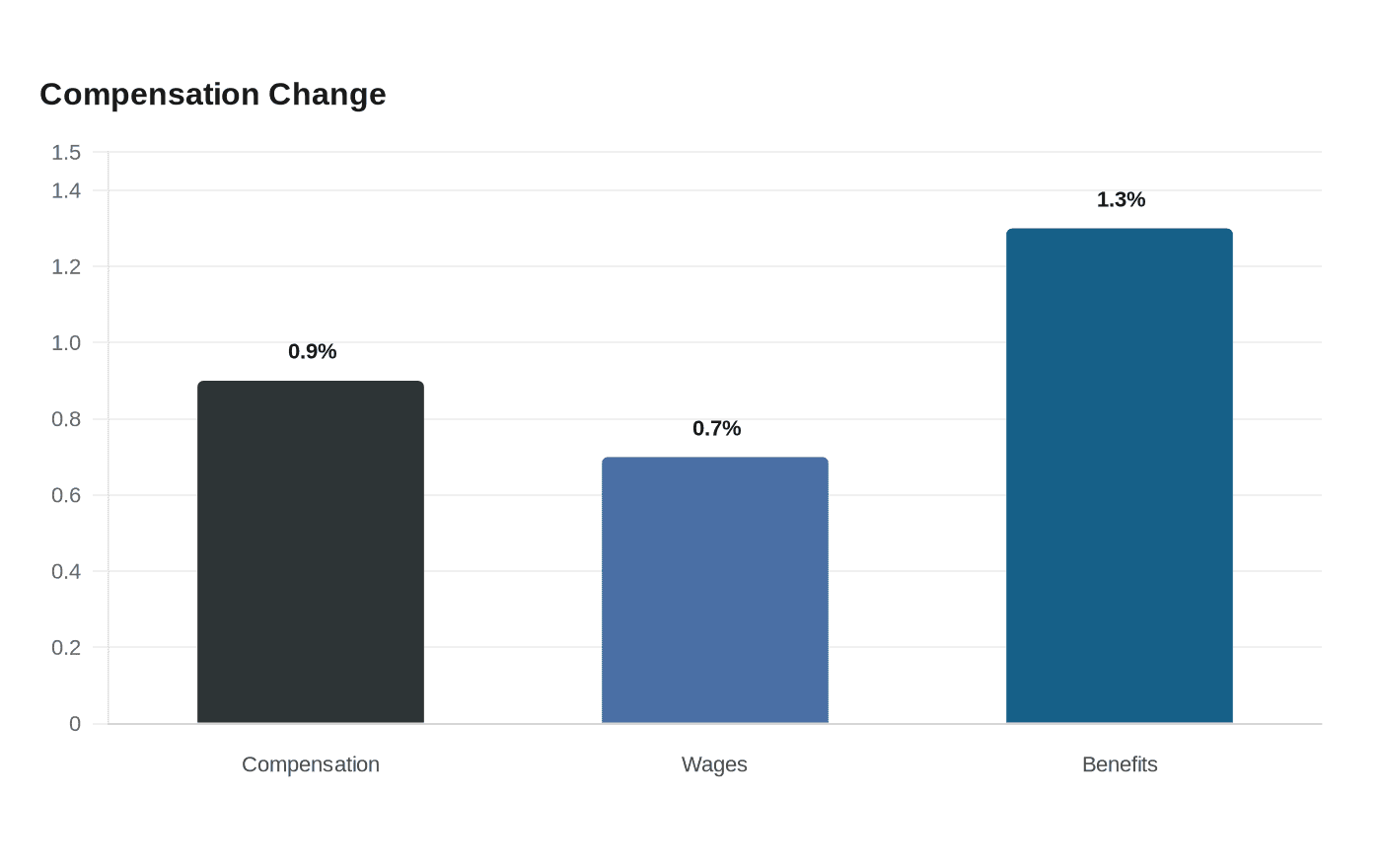
The BLS said private industry wages and salaries averaged $32.60 per hour in March 2026, with benefits adding another $14.01. For all civilian workers, total compensation averaged $49.32 an hour, with wages and salaries at $33.72 and benefits at $15.60. Private industry compensation rose 3.4 percent over the year ending in March, and benefit costs rose 3.6 percent. In the three months from December 2025 to March 2026, compensation rose 0.9 percent on a seasonally adjusted basis, with wages up 0.7 percent and benefits up 1.3 percent.
That mix matters because payroll pressure does not land evenly across the workforce. The BLS said total employer compensation costs for private industry workers ranged from $18.06 an hour at the 10th wage percentile to $34.78 at the median and $89.70 at the 90th percentile. In a store setting, that spread can shape how much flexibility a manager has when filling shifts, training new hires or deciding where to keep coverage thin and where to add it.
Retail itself remains lower cost than the broader private sector, but it is not cheap. The BLS said total employer compensation costs for private industry workers in retail trade averaged $26.41 per hour worked in December 2025, including $20.27 in wages and salaries and $6.14 in benefits. The agency also said hourly compensation in retail grew the most among three wholesale and retail industry groupings from 2019 to 2024, a sign that wage pressure has been building for years.
For Big Lots, the practical tradeoffs are clear. Slower hiring, tighter scheduling, more cross-training and closer scrutiny of overtime are the kinds of moves that usually follow when compensation keeps rising but sales stay uneven. Benefits are part of that equation too, since paid time off, health coverage and retirement contributions all add to the total cost of keeping people on payroll.
Big Lots and its subsidiaries entered voluntary Chapter 11 proceedings on Sept. 9, 2024, and that history leaves the company with less room to absorb higher labor costs while trying to steady stores, support functions and customer service. In that environment, every extra hour and every vacant shift carries a cost, and payroll discipline becomes a daily operating strategy.
This article was produced by Prism’s automated news system from verified source data, official records, and press releases, then run through automated quality and moderation checks before publishing. The system is built and supervised by the people who set the standards it runs under. Read our full AI policy.
Did this article answer your question?