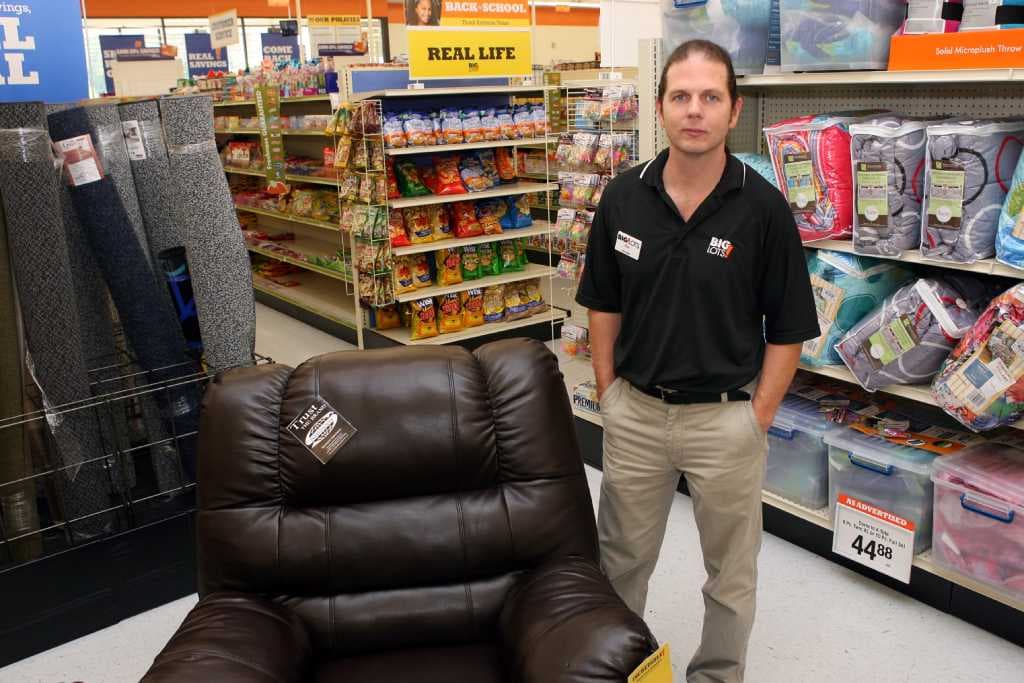
BLS data shows why Big Lots retail shifts are more exhausting than they look
Big Lots looks like simple floor work, but BLS data shows the real burden is constant interruptions, shifting demands, and no room to reset.

Why the job feels harder than it looks
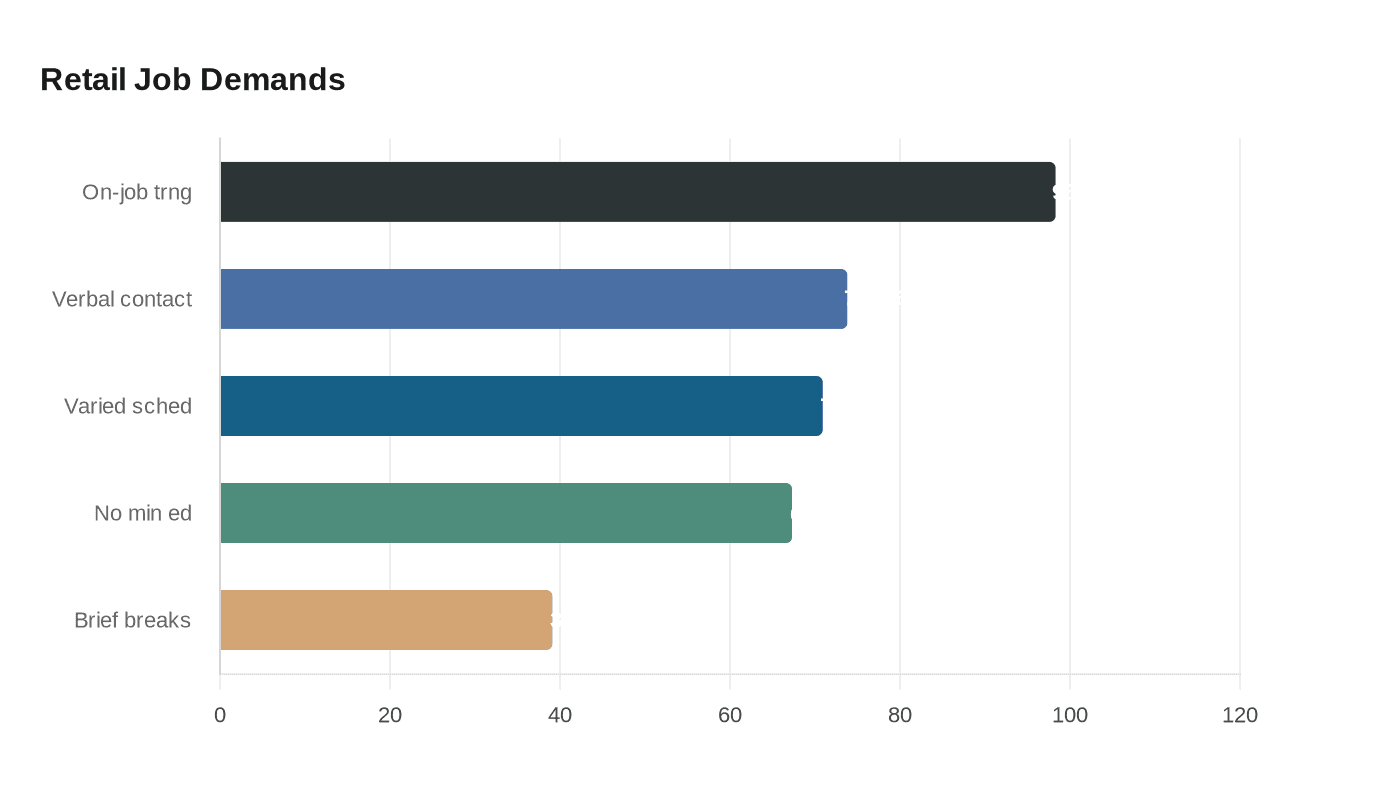
From the customer side, retail can look straightforward: ring up orders, stock shelves, answer questions, repeat. The Bureau of Labor Statistics data shows why that view misses the real work. For retail salespersons, work schedules vary for 70.9% of workers, external verbal interactions are constant for 73.8%, and 98.3% need on-the-job training. The job also has the look of an entry-level role, since 67.3% have no minimum education requirement, but that simplicity is mostly surface level.

What makes the job draining is not one big task. It is the accumulation of small ones that never line up neatly. A retail worker has to stay accurate, polite, and fast while answering questions, keeping track of the floor, and adjusting to whatever has just changed. Even the ability to pause is limited, since only 39.1% of retail salespersons can step away for brief unscheduled breaks. That means the pace is often built around fragments of time, not clean resets.
What a normal Big Lots shift really asks of one person
At Big Lots, that hidden labor is easy to miss because the work looks ordinary from a distance. A shift can begin with opening tasks, then move immediately into customer service, price checks, stocking, and problem-solving. Before one issue ends, another starts. A customer needs help finding an item, a register line builds, a truck is late, a coworker asks for backup, and a manager changes the priority list. None of that sounds dramatic on its own. Together, it creates a constant mental tax.
That is why the strain is often cognitive before it is physical. Workers are switching between demands all day, while trying to keep their tone even and their answers correct in front of the customer. The labor is in the handoff between tasks, the memory work, the emotional control, and the speed needed to keep the store moving. Big Lots workers know this feeling well because the job rarely gives them a clean lane to focus on one thing for long.
The BLS numbers help explain why that feels so relentless. If external verbal contact is constant for 73.8% of retail salespersons, then conversation is not a side feature of the job, it is part of the workload. If schedules vary for 70.9%, then the day is already unstable before the first customer walks in. And if 98.3% need training on the job, it is a reminder that retail skill is learned through doing, not because the work is simple, but because the work is too situational to master from a manual alone.
Why Big Lots made that strain sharper
Big Lots entered 2024 with a large footprint and a lot of pressure behind it. As of February 3, 2024, the Columbus, Ohio-based discount retailer operated 1,392 stores and an e-commerce platform. In a June 2024 filing, the company said it still operated 1,392 stores at May 4, 2024, but it was also telling investors it expected to close 35 to 40 stores while opening three new ones. That is the kind of mixed message employees feel immediately on the floor, even when no memo spells it out in plain English.
By September 9, 2024, Big Lots had filed for Chapter 11 bankruptcy protection in the U.S. Bankruptcy Court for the District of Delaware. Around that time, CNBC reported that the company agreed to sell itself to Nexus Capital Management for about $760 million, including $2.5 million in cash plus debt and liabilities. Big Lots said it would keep operating during the process, but for workers, bankruptcy does not feel abstract. It shows up as tighter staffing, changing priorities, and the sense that every shift may be the one where the plan changes again.
Then the uncertainty deepened. On December 20, 2024, CEO Bruce Thorn said Big Lots did not expect to close the Nexus deal and was seeking an alternative transaction. He also said the company would begin going-out-of-business sales at remaining stores and would issue WARN notices where required. That is not just corporate turbulence. It is the kind of announcement that reaches the sales floor as anxiety, confusion, and harder customer conversations.
What the store floor has to absorb when the company is unstable
A retail shift is already a juggling act. Add bankruptcy, closure risk, and layoffs, and the work gets heavier because the emotional burden rises with the operational one. Workers still have to smile, explain prices, help find merchandise, and manage the register, even while knowing the store’s future is unsettled. Customers may only see the transaction. Employees are managing the transaction plus the uncertainty around it.
Big Lots is a strong example of why retail labor cannot be measured only by education requirements or job titles. A role that appears entry-level can still demand constant judgment, rapid switching, and a level of composure that wears people down over time. The company’s path, from 1,392 stores early in 2024 to bankruptcy in September, then to going-out-of-business sales and workforce reductions, makes that pressure visible in a way that no staffing chart can fully capture.
The latest turn came later still. The Kroll Restructuring Administration case site says Big Lots’ Chapter 11 cases were converted to Chapter 7 effective November 10, 2025. That conversion closed the loop on a year of upheaval, and it also underscored how much of the worker experience was shaped by decisions far above the sales floor.
What managers should take from this
The practical lesson is not that retail workers need more toughness. They already have that. The lesson is that stores run better when leaders make invisible work visible. Clear priorities, short handoff notes, realistic task lists, and brief recovery windows can reduce the strain created by constant context switching. When the floor is busy, the goal is not to pile on more urgency. It is to decide what matters most and say it plainly.
That matters especially at a company like Big Lots, where the gap between the public-facing store and the internal reality has been wide. The job may look simple from the outside, but the BLS data, and Big Lots’ own collapse into bankruptcy, show a different truth. Retail workers are not just moving merchandise. They are managing speed, emotion, safety, and uncertainty at the same time, and that is the part of the job customers rarely see.
This article was produced by Prism’s automated news system from verified source data, official records, and press releases, then run through automated quality and moderation checks before publishing. The system is built and supervised by the people who set the standards it runs under. Read our full AI policy.
Know something we missed? Have a correction or additional information?
Submit a Tip