Dollar Tree shows value retail can still grow with better execution
Dollar Tree’s latest quarter shows value retail still works when stores look sharp, shelves are in stock, and the price mix feels relevant.
Dollar Tree’s quarter is a reminder that value retail still rewards execution
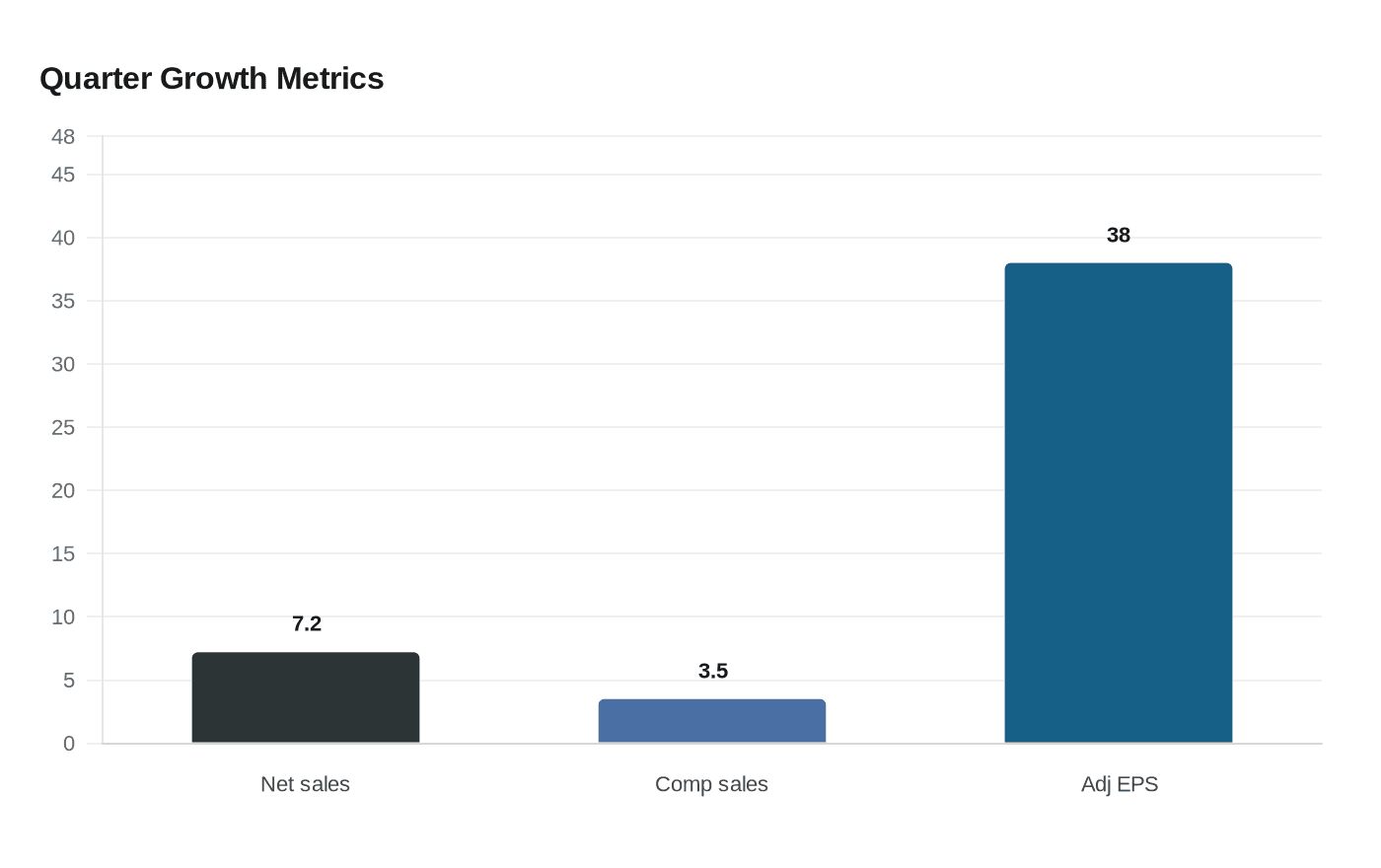
Dollar Tree just delivered the kind of quarter Big Lots employees should study closely: net sales rose 7.2 percent, comparable-store sales increased 3.5 percent, adjusted diluted EPS climbed 38 percent, and operating margins expanded. That combination matters because it shows value retail can still produce growth when traffic, assortment, and store conditions all move in the same direction.
The message for Big Lots is simple. Shoppers are still willing to spend in a discount setting when the store feels worth the trip. That means the winning formula is not just low price. It is the mix of clean presentation, relevant product, and a store that feels organized enough to make bargain hunting easy.
What Dollar Tree is doing differently
Dollar Tree’s results were not just about sales volume. The company also opened 113 new Dollar Tree stores in the quarter, converted or added about 630 stores to its multi-price format, and ended the quarter with 9,382 stores across its U.S. and Canada banners. That scale matters because it shows the chain is not standing still while it grows.
The store-count expansion also points to a broader strategic shift. Dollar Tree is leaning harder into multi-price retailing, which tells shoppers they can still find the old extreme-value appeal while also seeing a wider range of price points. For workers on the floor, that means the company is trying to give customers more reasons to buy in one trip, not just one cheap item at a time.
Why that matters for Big Lots crews
For Big Lots employees, the practical takeaway is that the value customer is still responsive to a basket that feels relevant and a store that feels fresh. Dollar Tree management emphasized a more relevant assortment, improved store conditions, stronger customer connection, and growth paired with better execution. Those are not abstract corporate talking points. They are the same forces that decide whether a shopper leaves with a full cart or walks back out.
If your store keeps fast-moving items in stock, presents seasonal product cleanly, and makes value easy to spot at the shelf edge, you are doing the work that turns a visit into a sale. That kind of execution is especially important in closeout and extreme-value retail, where the difference between exciting and disappointing can come down to whether a shopper finds the right item in the right condition at the right moment.
The floor-level signals workers can actually see
The strongest signs of better execution are usually visible before they show up in the numbers. Clean endcaps, clear price points, and shelves that do not look picked over all tell customers the store is being managed well. Faster inventory turns matter too, because stale product can make the entire sales floor feel off even when prices are low.
Big Lots workers should recognize a few of the same markers Dollar Tree appears to be rewarding:
- Faster in-stock levels on everyday essentials and impulse buys
- Cleaner presentation in seasonal and promotional areas
- Sharper opening price points that make value obvious
- Better assortment depth, so the basket feels worth building
- Shelf-edge communication that makes the deal easy to see
Those details may sound small, but they shape how customers judge the whole store. A value shopper is often comparing trade-offs across everyday essentials, convenience, and discovery. If the store makes those trade-offs easy to navigate, it earns more trust and more repeat trips.
Multi-price retail is changing the game
Dollar Tree’s quarter also shows that one-price simplicity is no longer the only play in discount retail. Shoppers are comparing formats and price ladders more carefully, which gives retailers more room to mix essentials with discovery items and higher-ticket add-ons. That is one reason the company’s multi-price push matters so much: it gives the chain more ways to capture a basket without losing its bargain identity.
For Big Lots, that is a useful signal. The retailer’s edge will not come from price alone if the store cannot support it with assortment discipline and strong standards. What still wins is the combination of useful product, visible value, and a shopping trip that feels intentional rather than messy.
The bigger lesson for Big Lots
Dollar Tree’s quarter suggests value retail is still very much winnable when the operator gets the basics right. Traffic improves when customers think the trip is worth making. Assortment gets stronger when the mix feels relevant. Store conditions matter because they shape whether a bargain feels like a find or a leftover.
That is the real lesson for Big Lots. The daily work of keeping shelves full, seasonal product tidy, and opening prices easy to understand is not background noise. It is the front line of competition. Dollar Tree’s results show that when those pieces come together, value retail can still grow, and the stores that execute best are the ones most likely to capture the next trip.
This article was produced by Prism’s automated news system from verified source data, official records, and press releases, then run through automated quality and moderation checks before publishing. The system is built and supervised by the people who set the standards it runs under. Read our full AI policy.
Know something we missed? Have a correction or additional information?
Submit a Tip