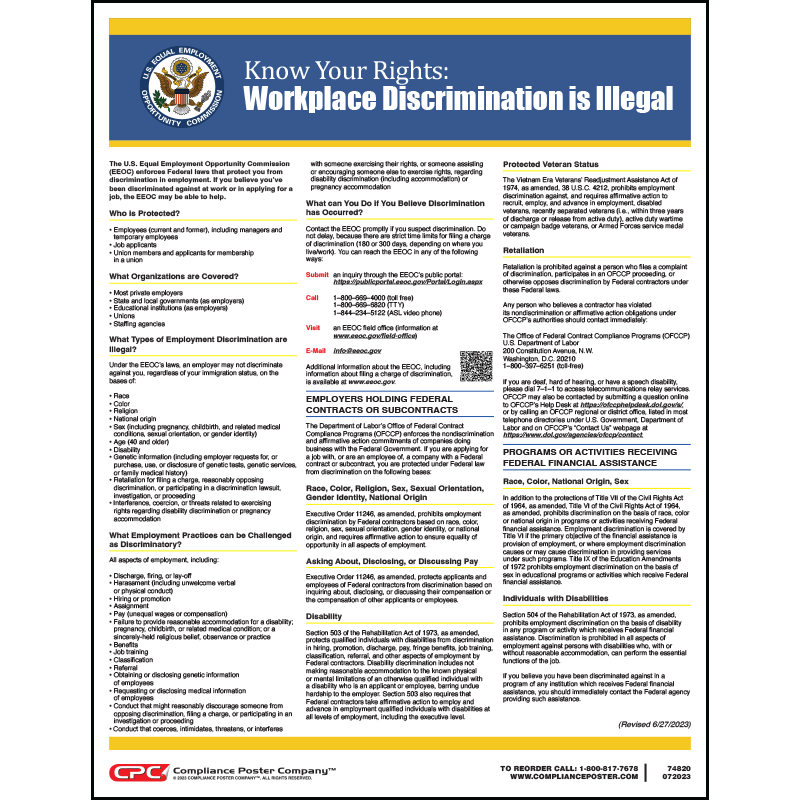
EEOC moves to end EEO-1 reporting, Big Lots employers should prepare
If EEO-1 reporting ends, Big Lots workers could lose the standard federal snapshot that shows who gets hired, promoted and paid across the company.

If the federal EEO-1 form goes away, Big Lots workers will still have internal HR records, but the standardized yearly snapshot that forces a large employer to line up hiring, pay and promotion data could disappear. That would leave the company, not Washington, in control of most of the evidence workers and managers use to spot gaps across stores, distribution and support jobs.
The Equal Employment Opportunity Commission’s proposal, submitted to the Office of Information and Regulatory Affairs on May 14, 2026, had not yet been published in full, and the rulemaking process was still ongoing. Under current rules, private-sector employers with 100 or more employees, and certain federal contractors with 50 or more employees, must file EEO-1 Component 1 reports each year. The filing is due on or before September 30 and is submitted electronically through the EEOC’s online system.

That matters at Big Lots because the company was large enough to fall squarely inside the reporting rules. Big Lots operated 1,392 stores in 48 states and an e-commerce platform as of February 3, 2024, and a market-data source listed its workforce at about 30,300 employees in 2024. The company later entered Chapter 11 bankruptcy on September 9, 2024, in the U.S. Bankruptcy Court for the District of Delaware, where the cases were jointly administered under Case No. 24-11967.
For workers, the EEO-1 filing is not just paperwork. It is the one federal form that breaks out workforce demographics by job category and by sex, race and ethnicity, which can help surface underrepresentation, promotion bottlenecks and hiring patterns that are harder to see at the store level. If that public filing burden shrinks, the question inside a retailer like Big Lots becomes whether HR will replace it with a real internal accountability process, or simply keep the numbers in-house.
The proposal reportedly reaches EEO-1 through EEO-5 reporting and touches reporting linked to Title VII, the ADA, GINA and the Pregnant Workers Fairness Act. That puts it in the middle of a broader shift away from DEI-related initiatives. Even so, the underlying duties do not vanish: employers still face non-discrimination rules, documentation demands and the need to show that pay and promotion decisions are consistent across a company with thousands of workers and a national footprint.
Know something we missed? Have a correction or additional information?
Submit a Tip