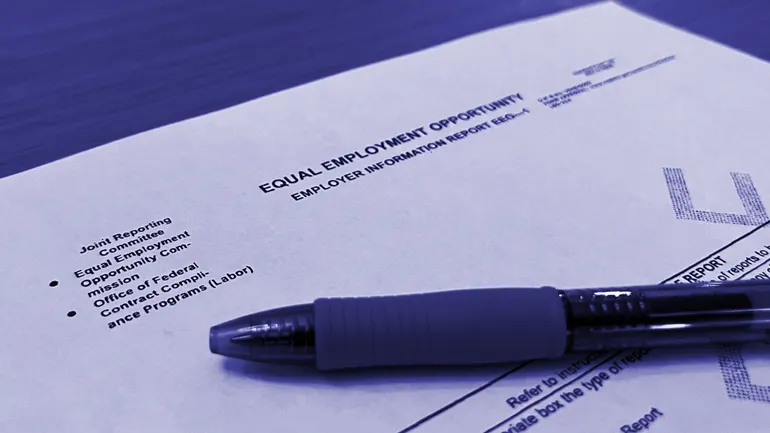
EEOC poster tells Big Lots workers how to report discrimination
The wall poster can be a worker’s fastest path to an EEOC complaint. Big Lots employees should know how to spot a current notice, and what it means if one is missing.
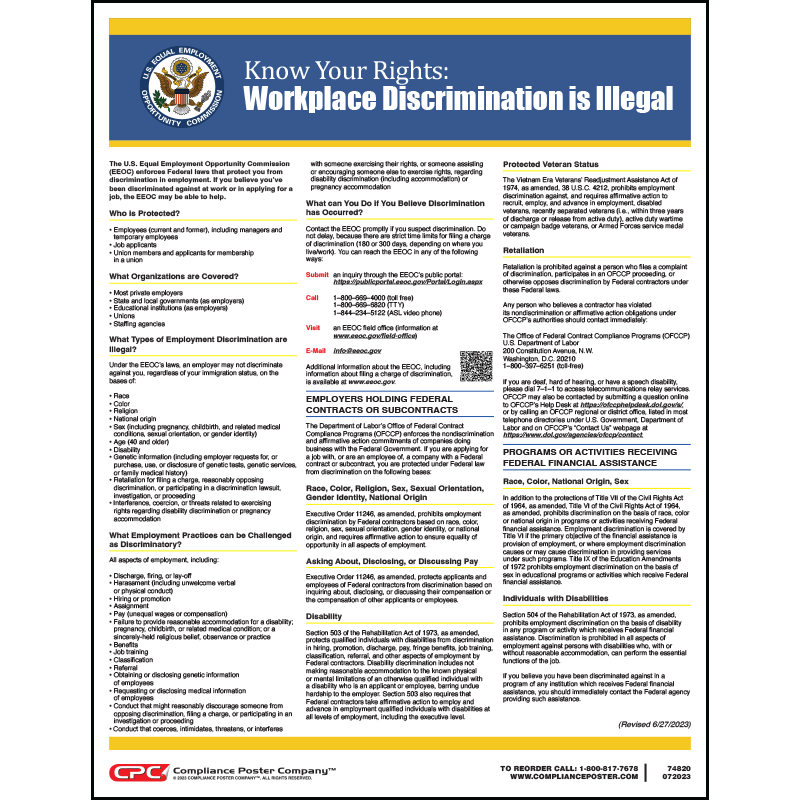
The poster that matters when something goes wrong
The discrimination poster on the wall is easy to overlook until a worker needs it. At that point, it becomes a roadmap: it tells Big Lots employees what conduct federal law covers, where complaints go, and what rights can be enforced when a manager, supervisor, or co-worker crosses the line.

For a retailer like Big Lots, that matters on the sales floor, in the stockroom, in the warehouse, and in the office. The EEOC says the notice is meant to explain federal protections against discrimination based on race, color, sex, pregnancy-related conditions, sexual orientation or transgender status, national origin, religion, age, disability, genetic information, equal pay, and retaliation.
What the current EEOC poster tells workers
The EEOC’s revised “Know Your Rights” poster, released in October 2022, is more direct than older versions. It uses plainer language, adds a QR code that links to instructions for filing a charge, and explicitly identifies harassment as a prohibited form of discrimination. That makes the poster more than a legal formality. It is a quick way to tell whether a workplace problem may rise to the level of a federal discrimination complaint.
The poster also points workers and applicants toward the complaint process itself. It explains how to file if someone believes discrimination has occurred, which is exactly why it matters during a dispute over hiring, promotion, assignment, pay, benefits, training, accommodations, harassment, or retaliation for speaking up or participating in an investigation.
- If the issue is unequal pay, the poster points toward equal-pay rights.
- If the issue is a slur, a joke, or repeated mocking, harassment is clearly covered.
- If the issue is punishment after reporting a problem, retaliation is part of the same federal framework.
That breadth is important in retail, where a complaint can start as a scheduling dispute or a bad supervisor interaction and quickly turn into a legal issue if it involves protected characteristics or retaliation.
Where the notice should be, and how to tell if it is current
The EEOC says employers must post the notice in a conspicuous workplace location. It should be somewhere applicants and employees can reasonably see it, and it should also be accessible to people with disabilities that limit mobility. The agency encourages digital posting as well, and for workers who telework or do not regularly visit a physical work site, electronic posting may be the only posting that counts.
That gives workers a practical checklist. If you work at Big Lots, the poster should not be buried in a manager’s office, hidden in a back hallway, or available only to people with the right password and no easy way to find it. A current posting should be easy to locate in the store, and if you are remote or hybrid in any corporate role, the notice should also be available electronically.
A stale notice can matter as much as a missing one. If the poster still looks like an older version and does not clearly mention harassment or the current charge-filing guidance, that is a sign to ask whether the company has updated its compliance materials. For managers, the message is even more direct: a missing, outdated, or inaccessible notice is a compliance failure before anyone ever gets to the underlying complaint.
Why Big Lots is a real test case
Big Lots is not a theoretical example. The company has already faced major EEOC matters that show why the poster is supposed to be taken seriously. In 2010, the EEOC said Big Lots agreed to pay $400,000 to settle a race-harassment case involving black employees at its Rancho Cucamonga, California distribution center. The agency alleged the workers were subjected to racial jokes and slurs and that the company did not take steps to stop it. The settlement included a two-year consent decree with policy changes, training, procedures, and court monitoring.
In 2019, Big Lots Stores, Inc. agreed to pay $100,000 to settle a disability-discrimination and retaliation suit involving its Elkins, West Virginia store. The EEOC said a worker with hearing and speech disabilities was mocked by co-workers, management knew about it but did not act, and the worker was later denied promotion and retaliated against after reporting the harassment. That settlement also required training, ADA investigation documentation, reporting to the EEOC, and a notice to employees at the Elkins store.
Those cases show the poster is not decorative. It is part of the compliance system that should help a worker understand what is protected and what steps to take when a complaint starts.
Why the scale of the company raises the stakes
Big Lots reported operating 1,392 stores and an e-commerce platform as of February 3, 2024, with headquarters in Columbus, Ohio. That scale makes a simple posting requirement more consequential than it looks. A compliance miss in one store is serious; a failure across a chain that size can leave a lot of workers without a basic point of reference when discrimination or retaliation is happening.
The EEOC’s small-business guidance also helps explain why the requirement matters across many workplaces. Businesses with 15 to 19 employees are covered by many federal anti-discrimination laws, and businesses with 20 or more employees are also covered by the age-discrimination rules for workers 40 and older. The EEOC says all employers with at least one employee are covered by the equal-pay requirement. Many Big Lots locations are likely well above those thresholds, which makes both the poster and the training behind it especially important.
What workers and managers should do with the notice
For workers, the poster is a first stop, not the last one. Use it to identify the protected category at issue, find the complaint channel, and preserve details about what happened, who saw it, and when it occurred. If the notice is hard to find, inaccessible, or clearly out of date, document that too. A missing poster can be a sign that the company is not keeping up with the basic obligations that should surround a discrimination complaint.
For managers, the standard is simpler: post it, keep it current, make sure people can actually see it, and make sure the digital version works for remote staff. A compliant workplace does not wait for a headline or an EEOC charge to learn what the notice says. It builds the habit before the problem starts, because once discrimination or retaliation is alleged, that poster becomes part of the record of what the company knew, what it told workers, and how seriously it took its obligations.
Know something we missed? Have a correction or additional information?
Submit a Tip