Home Depot's tech playbook offers Big Lots workers a simple lesson
Home Depot shows that retail tech only sticks when it saves time on the floor, and that is the standard Big Lots workers should expect next.
The floor test for retail tech
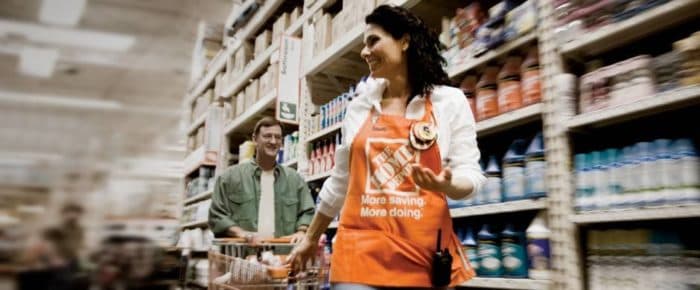
The smartest retail technology at Home Depot has never been about looking futuristic. It works because it solves a plain store problem: finding product faster, planning work better, and cutting down on the extra steps that eat up a shift. That is the clearest lesson for Big Lots workers, where every minute saved on the floor can mean one less repeat question at the register, one cleaner handoff between departments, and one more chance to keep a customer from walking out empty-handed.
Home Depot has built that idea into two different tools that point in the same direction. One helps professional customers manage projects from start to finish. The other helps store associates decide what to do first when the floor is busy and the backroom is full. Together, they show what useful retail tech looks like when it is tied to a real job instead of a shiny pilot.
What Home Depot is actually trying to solve
On March 18, 2026, Home Depot said it was expanding its Pro digital experience into a single workspace for professional renovators, remodelers and builders. The platform brings together Project Planning, Material List Builder AI, real-time delivery tracking, complex order scheduling, purchase-history search and shared access. That mix matters because it cuts out the kind of back-and-forth that slows down larger jobs, especially when a customer needs to line up materials, deliveries and team coordination at the same time.
Home Depot said Project Planning gives Pro customers access to the majority of its product assortment, including millions of items in stores and fulfillment centers. That is the kind of detail Big Lots workers should pay attention to, even if the stores are very different. The point is not luxury tech. The point is that a customer can get to the right product faster, understand what is available, and feel more confident making a purchase. In a discount store setting, that same logic could mean quicker answers about stock, clearer guidance on substitutions and less pressure on associates to improvise under time.
Sidekick shows how associate tools change a shift
Home Depot’s more store-level example arrived in January 2023, when it introduced Sidekick, a homegrown in-store app built to help associates prioritize tasks more effectively. The company said the tool uses machine learning and machine vision to identify which products need to be restocked and where excess product is sitting in overhead storage. In plain terms, it tries to tell an associate where the highest-value work is before the shift gets swallowed by noise.
That is exactly the kind of technology that matters in a leaner retail environment. Sidekick is not about replacing product knowledge. It is about making product knowledge easier to act on when a line is growing and the store needs an answer fast. If a tool can point an associate toward a shelf that needs attention, show what is hiding overhead, and help restore in-stock product faster, that associate can spend less time guessing and more time helping customers.
Home Depot said Sidekick was installed in more than 600 stores and would expand to all U.S. stores by the end of fiscal 2022. It also said it had rolled out more than 99,000 hdPhones by January 2023. Those numbers matter because they show scale, not just experimentation. When a tool reaches that many devices and that many stores, it is no longer a novelty. It becomes part of the daily rhythm of work.
What Big Lots workers should take from this
For Big Lots, the lesson is simple: technology has to solve a store pain point or it will not last. If replenishment is slow, the tool should improve backroom visibility. If customers keep asking the same questions, the tool should help associates find answers quickly. If task ownership gets fuzzy during a busy shift, the system should make priorities clearer instead of adding another layer of confusion.
That is especially relevant in discount retail, where stores often operate with limited labor and associates are expected to cover a lot of ground. A handheld device that shows a store map, inventory counts or task priorities can be useful, but only if it reduces duplicate work. A tool that helps an associate find the item, confirm the shelf location and offer a close alternative without making the customer wait is immediately more valuable than one that simply looks modern.
There is also a harder truth underneath all of this: faster tools can become pressure tools if staffing is too thin. The best retail tech frees up time for service, it does not just squeeze more tasks into the same shift. Big Lots workers should watch whether management pairs any digital changes with realistic workloads, because a system that saves minutes on paper can still create stress if the store is already running short.
Why Big Lots’ bankruptcy makes this more urgent
The stakes are higher at Big Lots because the company has been moving through severe financial pressure. Big Lots and its subsidiaries initiated voluntary Chapter 11 proceedings on September 9, 2024. The bankruptcy cases were later converted to Chapter 7 effective November 10, 2025, according to the court-appointed restructuring site. The case is being administered in the U.S. Bankruptcy Court for the District of Delaware under Case No. 24-11967.
That financial backdrop changes how workers should think about technology. In a stable chain, a new app might be sold as a convenience. In a distressed retailer, the same tool can become part of the company’s survival strategy. Reporting in February 2025 said Big Lots had 872 U.S. stores after the bankruptcy filing, and a court filing listed 200 stores likely to stay open. That is a much smaller and more fragile operating reality than the chain had before the filing, and it puts even more weight on store execution, labor efficiency and basic customer service.
A retailer in that position does not have room for technology that merely impresses executives. It needs tools that help an associate get the right item onto the shelf, answer a customer faster, and keep a shift from spinning out over avoidable busywork. That is why Home Depot’s playbook is worth studying. Its best systems are not branded as futuristic revolutions. They are built to make real work easier, and in a store environment, that is the only standard that matters.
The real test for the next wave
Home Depot’s Pro workspace and Sidekick point to the same conclusion: the most useful retail tech is the kind that disappears into the job. It shortens searches, clarifies priorities, and helps people move from question to answer without wasting motion. For Big Lots workers, that is the practical benchmark to use for any new system that shows up on the sales floor.
If a tool helps you find product, explain options, and finish the task faster, it is likely to stick. If it only adds clicks, adds pressure or adds another layer of management talk, it will fade. In a business where every shift has to count, that difference is everything.
This article was produced by Prism’s automated news system from verified source data, official records, and press releases, then run through automated quality and moderation checks before publishing. The system is built and supervised by the people who set the standards it runs under. Read our full AI policy.
Did this article answer your question?