How Big Lots store-specific planograms could improve sales and efficiency
Store-specific planograms turn shelf maps into labor plans, and at Big Lots they could mean faster resets, fuller shelves and fewer customer dead ends.
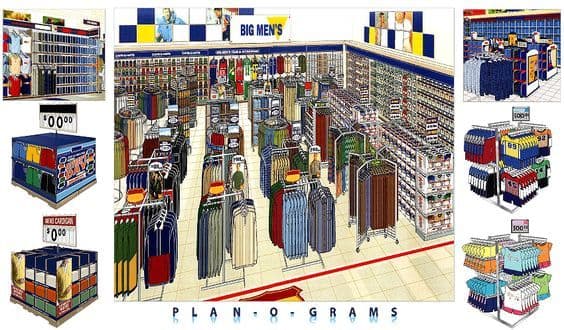
Planograms as execution tools
Planograms are not just merchandising diagrams. They are labor instructions that tell a store where product goes, how much space it gets, and how quickly a team can turn freight into a shoppable floor. At Big Lots, that distinction matters because assortment can change fast, and the same category may perform very differently from one neighborhood to the next.
When the plan is right, stocking speeds up, recovery gets easier, and associates spend less time improvising in the aisle. When it is wrong or late, the store pays for it in wasted movement, empty shelves, confusing adjacencies and customers who cannot find what they came in for.
Why store-specific layouts fit this chain
RELEX Solutions has argued that store-specific planograms work better than one-size-fits-all layouts because they reflect unique sales patterns, demand swings and space constraints. The company says that approach has been used in retail for more than 20 years, but it also says fully store-specific planning depends on automation because the calculations are enormous.
That point lands hard at Big Lots. A chain that once operated 1,392 stores in 48 states and an e-commerce platform, according to a filing with the U.S. Securities and Exchange Commission, no longer has the same footprint or the same operating assumptions. Big Lots entered Chapter 11 bankruptcy on September 9, 2024, after a weak retail environment, and its store base has been reshaped by closures, a sale process and reopenings under new ownership.
For workers, that means the floor cannot be run on habit alone. A store-specific planogram is the difference between a reset that fits the room and a reset that forces the team to fight the room all day.
What changed after the sale
Variety Wholesalers acquired 219 Big Lots stores out of bankruptcy, and the deal was finalized in January 2025. The reopening cadence was gradual: nine stores came back first on April 10, 2025, then another 132 were announced for May 2025, and by June 2025 Variety Wholesalers said all 219 had reopened.
That reopening matters because the assortment is not a simple copy of the old Big Lots floor set. Variety Wholesalers said reopened stores would include closeout deals, apparel, electronics and other new merchandise categories, and the company said customer response to the expanded mix had been positive. Once the merchandise mix changes, the shelf map has to change with it.
A layout built for one merchandise balance can be inefficient for another. Apparel needs different spacing and adjacencies than closeout home goods. Electronics need different protection, presentation and replenishment habits than bulky seasonal items. If the planogram does not match the new mix, the store spends more time correcting the floor than selling off it.
What goes wrong when the plan is ignored
The practical cost of a bad planogram shows up fast on the sales floor. Associates may stock to an old map because the new one arrived late, or because the printed instructions do not match what is actually in the building. That creates dead space, duplicated work and out-of-stocks in the very places customers expect to find product.
It also creates customer frustration. When a fast-moving item is in the wrong bay, shoppers wander longer, ask more questions and leave sooner. When an endcap is assigned to a product that does not really belong there, the store loses one of its best chances to turn traffic into sales. When the right item is available but hidden in an odd spot, the store has not really solved its availability problem, it has just moved it out of sight.
For department leads, the message is simple: a shelf map is not decoration. It is a control document for labor, recovery and sales.
Why automation is part of the answer
Store-specific planning sounds intuitive, but it becomes complicated quickly. Every store has its own sales pattern, its own demand swings and its own space limits. Multiply that across a large chain and the math gets too large to manage by hand.
That is why automation matters. With automated planning systems, retailers can build shelf maps that reflect local demand without asking store teams to guess which version of the assortment matters most. For Big Lots, that kind of precision can reduce the back-and-forth that comes with resets, especially in a period when the company’s footprint and merchandise strategy are still changing.
It also gives management a cleaner way to match inventory to reality. If one store sells a certain category faster than another, the planogram can put more space behind that category instead of forcing the same generic layout everywhere. That is how shelf planning becomes an availability tool, not just a visual one.
What this means on the floor
The day-to-day lesson for associates is that planograms are there to speed work, not slow it down. If a reset is executed well, the team should see fewer surprises, cleaner facings and less time spent searching for a home for every carton. If it is executed badly, the whole floor gets harder to run.
A smart reset usually does a few things well:
- It puts the highest-demand categories where customers actually look first.
- It keeps facings aligned so the shelf looks full without wasting space.
- It uses endcaps and adjacencies to support actual buying patterns, not guesswork.
- It lets associates recover the floor faster after rush periods, because the product has a clear place to return.
That is especially important at Big Lots now, because the chain is not just rebuilding stores, it is rebuilding how those stores sell. A reopened location carrying closeouts, apparel, electronics and newly added categories needs a planogram that reflects the business as it is now, not as it was before the bankruptcy filing or before the sale.
The bigger picture for Big Lots workers
Big Lots is in a phase where every operational decision carries more weight than usual. The company’s 1,392-store footprint from May 2024 gave way to bankruptcy on September 9, 2024, then to a 219-store transfer and reopening process in 2025. In that kind of transition, store execution becomes a measure of whether the new assortment can actually work on the floor.
Store-specific planograms offer one of the clearest ways to connect corporate strategy to the reality of the aisle. They can help stores sell the right item in the right place, keep shelves more available, and cut down on the friction that drains time from the sales team. At Big Lots, that is not a cosmetic improvement. It is a practical way to make the store easier to run and easier to shop.
This article was produced by Prism’s automated news system from verified source data, official records, and press releases, then run through automated quality and moderation checks before publishing. The system is built and supervised by the people who set the standards it runs under. Read our full AI policy.
Did this article answer your question?