Meta, Google push AI agents, Big Lots must sharpen product data
AI shopping agents are making product data a frontline issue. For Big Lots, clean pricing, inventory and shelf information could decide which stores get found first.
Meta and Google are pushing AI agents that do more than answer questions, and that shift could land hard in retail. If a shopper asks an assistant to find the cheapest sofa, storage bin or kitchen item nearby, the retailer with the clearest product data and strongest inventory signals may get the visit. For Big Lots, that means store teams and merchants are not just maintaining shelves, they are feeding the systems that may decide whether a customer ever shows up.
Google’s move has made that future more concrete. In January 2026, the company announced the Universal Commerce Protocol, an open standard for agentic commerce designed to work across shopping discovery, buying and post-purchase support. Google said it was co-developed with retailers and platforms including Shopify, Etsy, Wayfair, Target and Walmart. By March, Google said shopping agents could save multiple items to a cart at once and pull real-time product details such as variants, inventory and pricing. The company also said it was simplifying onboarding in Merchant Center. That puts a premium on accurate product naming, clean shelf labels, reliable stock counts and fast updates from store to system.
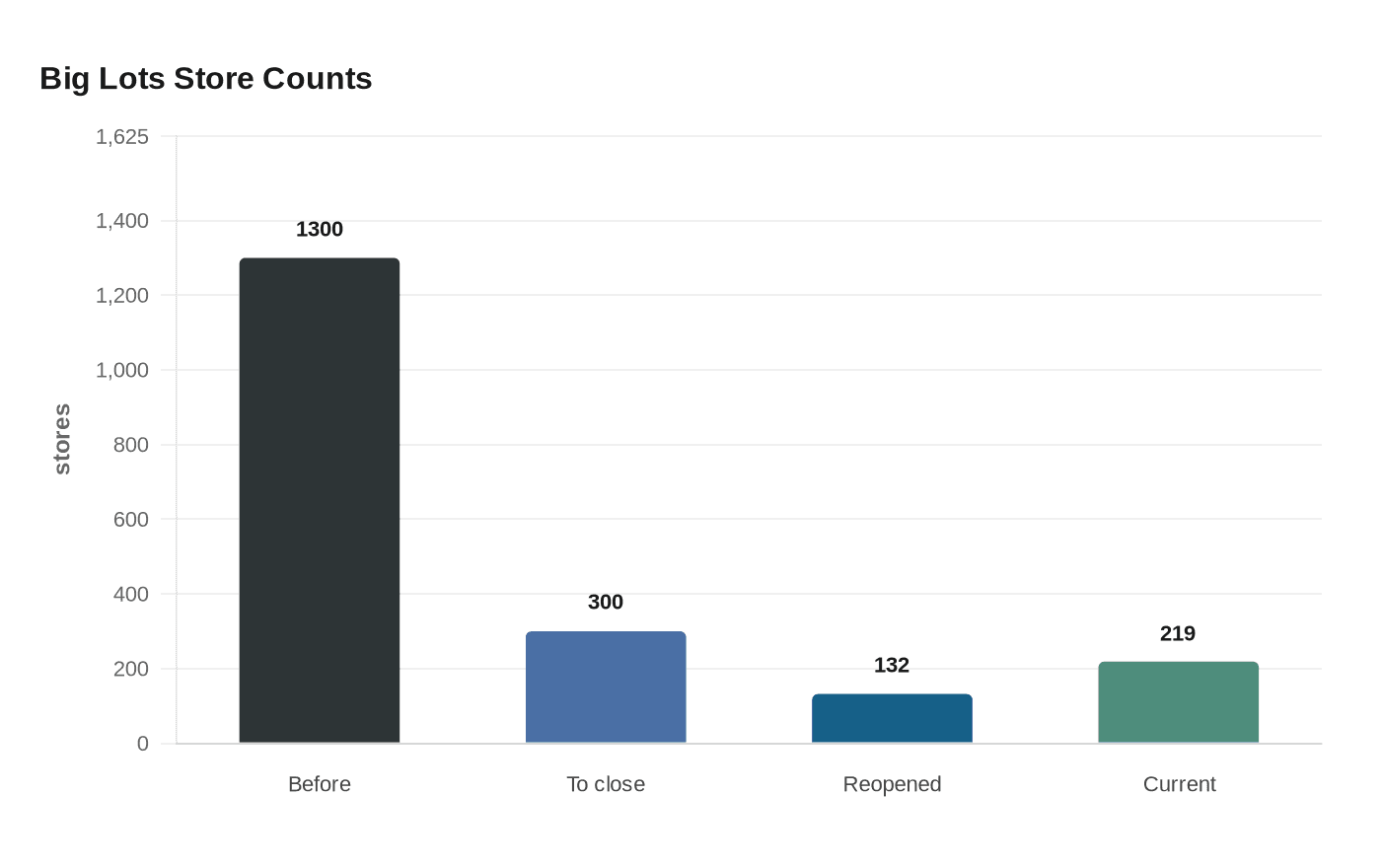
The stakes are especially clear at Big Lots, which has been reshaped by bankruptcy and a smaller footprint. The chain filed voluntary Chapter 11 on September 9, 2024, in the U.S. Bankruptcy Court for the District of Delaware. Before the restructuring, Big Lots operated more than 1,300 stores across 48 states and reported about $4.7 billion in fiscal 2023 revenue. The company had said it planned to close nearly 300 stores and agreed to sell to Nexus Capital Management for about $760 million. The case was later converted to Chapter 7 effective November 10, 2025, according to Kroll Restructuring Administration.
Big Lots then re-emerged under Variety Wholesalers, which bought the brand out of bankruptcy in 2025 and now says the chain will operate 219 stores in 15 states across the Midwest, Southeast and Mid-Atlantic. Variety Wholesalers says it runs more than 400 stores in 18 states under banners including Roses Discount Stores, Roses Express and Maxway. In April 2025, the company said it would reopen 132 Big Lots stores in May, building on earlier reopenings that brought the total reopened store count to 219.
That matters because agent-led shopping rewards precision. Clean inventory data can help a Big Lots location show up when a customer searches for a deal on a sofa or a kitchen item. Sloppy pricing or stale stock counts can just as easily send that sale somewhere else. The opportunity is smoother traffic and better matching between what shoppers want and what stores actually have. The risk is more operational pressure on a chain still rebuilding its store base, where every mislabeled item or delayed system update can now ripple far beyond the sales floor.
This article was produced by Prism’s automated news system from verified source data, official records, and press releases, then run through automated quality and moderation checks before publishing. The system is built and supervised by the people who set the standards it runs under. Read our full AI policy.
Did this article answer your question?