Whirlpool warning signals softer big-ticket demand at Big Lots
Whirlpool’s warning points to weaker demand for big home purchases, a sign Big Lots associates may see more price-checking, hesitation and trade-down shopping.

Whirlpool’s latest warning is a reminder that value retailers can feel a slowdown long before consumers stop coming in the door. When shoppers get nervous about fuel prices, inflation or the broader economy, they often delay washers, dryers, dishwashers and other durable goods, then trade down into lower-price home items, décor or closeout buys instead of committing to a bigger ticket.
That is the pressure point Big Lots workers know well. Whirlpool said in its May 6 earnings release that it was taking “decisive actions” in Major Domestic Appliances North America, including a double-digit price increase and faster cost cuts. The Benton Harbor, Michigan, company also reported first-quarter GAAP diluted earnings of minus $1.43 a share and ongoing diluted earnings of minus 56 cents, then cut its 2026 ongoing EPS outlook to $3.00 to $3.50. It said it expected to pay down more than $900 million in debt this year, with about $700 million in operating cash flow and more than $300 million in free cash flow.
The tone from management was caution, not confidence. Whirlpool said the war in Iran had triggered a “recession-level industry decline” in the United States after consumer confidence weakened in late February and March. Higher fuel costs and softer sentiment were already hitting demand. The company said it had pushed through more than a 10% price increase in North America in mid-April and planned another 4% list-price increase on July 9.
The numbers behind that warning were ugly. North America major-appliance revenue fell 7.5% to $2.24 billion, and segment EBIT sank to $6 million from $149 million a year earlier. Whirlpool also suspended its dividend for the first time in 55 years, a sharp signal that the downturn was severe enough to overwhelm the company’s usual playbook.
Big Lots is exposed to the same consumer mood. The retailer filed for Chapter 11 on September 9, 2024, after sales declined and it had already flagged 244 underperforming stores in a June 2024 filing. First-quarter net sales that year were a little over $1 billion, down about 10% from the year before. In stores, that means more customers comparing price tags, asking whether a sale is real, and pressing associates on durability, warranty coverage and delivery timing before they buy.
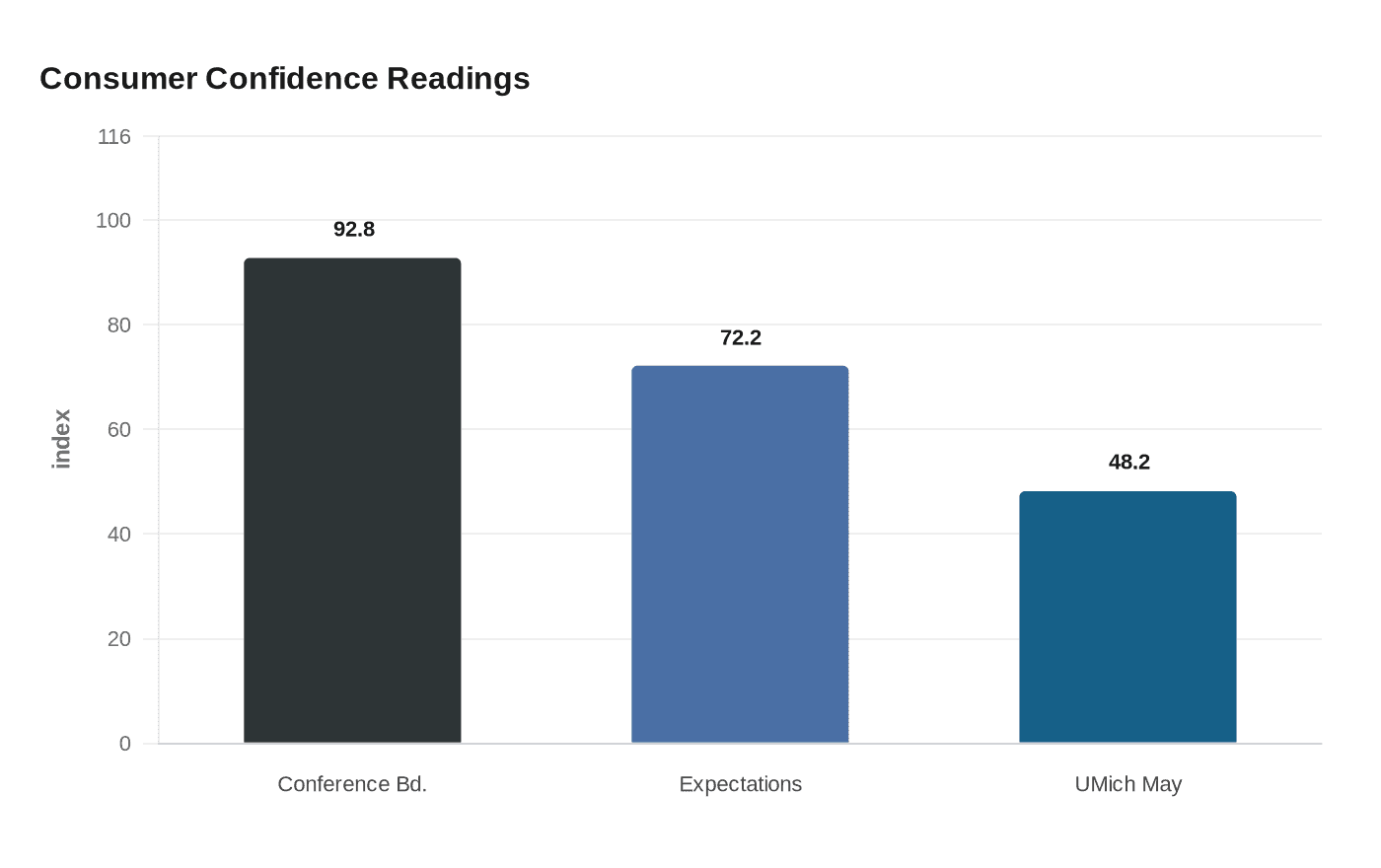
Even broader confidence data has not erased that caution. The Conference Board’s April reading edged up to 92.8, but the expectations index was still weak at 72.2, and the University of Michigan’s preliminary May sentiment reading was 48.2, near the trough reached in June 2022. For Big Lots, that is the kind of backdrop that can keep traffic coming while basket size stays under pressure.
This article was produced by Prism’s automated news system from verified source data, official records, and press releases, then run through automated quality and moderation checks before publishing. The system is built and supervised by the people who set the standards it runs under. Read our full AI policy.
Did this article answer your question?