New Jersey Macy’s closures underscore ongoing retail job risk for Big Lots workers
Two Macy’s stores in New Jersey were set to close, putting 89 jobs at risk and offering Big Lots workers a sharp warning about local retail weakness.

New Jersey’s latest Macy’s closures are a reminder that store-level job risk can change fast, even at names workers know well. The state’s WARN archive listed 89 affected workers tied to Macy’s positions in Paramus, Ramsey and Livingston, with effective dates of March 31, 2026 for Paramus and Ramsey and April 30, 2026 for Livingston. The closing stores included locations at Livingston Mall in Livingston and Interstate Shopping Center in Ramsey, part of a broader pullback that has been hitting malls, shopping centers and chain retailers across the state.
For Big Lots workers, the important part is not that Macy’s is a department store and Big Lots is a discount chain. It is that the same pressure reaches different corners of retail at once. When traffic weakens, leases become harder to justify and corporate turnaround plans speed up, employees often see the first impact in reduced hours, fewer shifts or a full store exit. The New Jersey layoff notices show how formal those cuts can be: the company used state filings to map out the closures, and the state recorded Macy’s as part of a larger 2026 layoff wave.

Macy’s said the early-2026 closures were part of its three-year Bold New Chapter strategy. The company said it closed 66 stores in 2025 and plans to close about 150 stores total, leaving about 350 remaining. It also said it was offering transfer opportunities where available, along with severance and outplacement resources where applicable. That mix of shrinkage and transition support is familiar to retail workers because it shows how quickly even a large chain can redraw its footprint around underperforming stores.
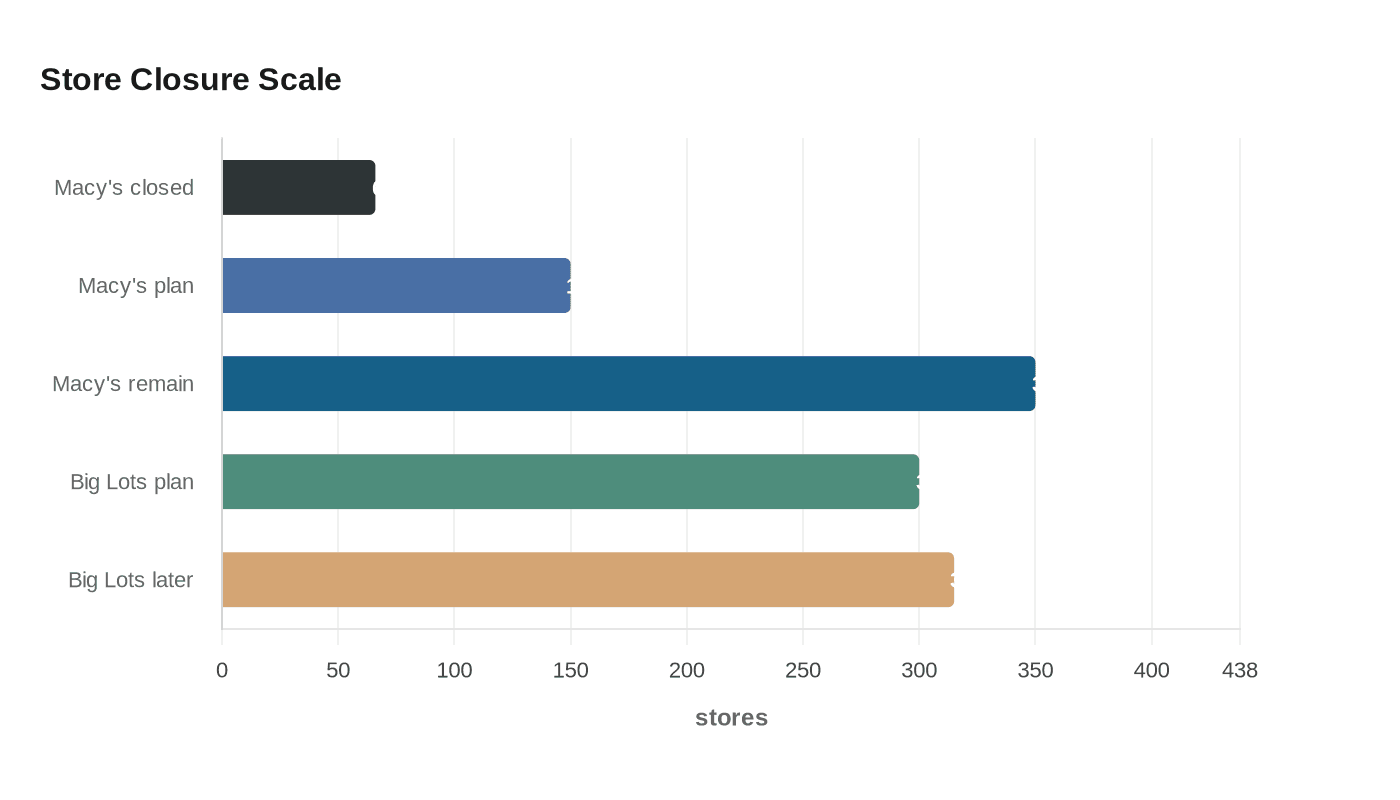
Big Lots workers have already lived through a more severe version of that same pressure. The company filed for Chapter 11 bankruptcy protection on September 9, 2024, after citing stubborn inflation, high interest rates and weaker consumer spending on home goods. It said then that it would close nearly 300 stores as part of the restructuring, later disclosed plans to close as many as 315 stores nationwide, and its Chapter 11 cases were converted to Chapter 7 effective November 10, 2025. Big Lots had previously entered a sale agreement with Nexus Capital Management for about $760 million, including $2.5 million in cash plus remaining debt and liabilities.
The lesson for Big Lots employees is local, not abstract. Watch the stores around your own location: if an anchor closes, traffic often falls, landlords can squeeze harder and neighboring chains may trim labor before shoppers notice the change. In retail, the warning signs usually show up in the parking lot first.
This article was produced by Prism’s automated news system from verified source data, official records, and press releases, then run through automated quality and moderation checks before publishing. The system is built and supervised by the people who set the standards it runs under. Read our full AI policy.
Did this article answer your question?