OSHA ergonomics guide highlights injury risks for Big Lots workers
Awkward lifts and carryouts can turn routine Big Lots shifts into back and shoulder injuries. OSHA’s retail guide shows the fixes are small, specific, and immediate.
Big Lots workers do not need a dramatic accident to get hurt. A normal shift can stack up the same strains again and again: reaching into awkward shelves, shifting mixed-weight freight, and walking heavy items out to cars until a back, shoulder, or wrist finally gives out. OSHA’s retail grocery ergonomics guide was built for exactly that kind of repetitive work, and the lesson carries straight onto a Big Lots sales floor.
Why the guide matters on a discount-store floor
OSHA issued its retail grocery ergonomics guide on May 28, 2004, and later listed it among its ergonomics publications. The agency’s point is simple: injury prevention is not just a safety slogan, it is a way to reduce musculoskeletal disorders such as back injuries, sprains, strains, and repetitive-motion problems like carpal tunnel syndrome. The guide specifically points to front-end work, stocking, bagging, carryout, bakery, meat and deli, and produce tasks as places where ergonomic fixes matter.
That is why the guidance fits Big Lots even though the chain is not a grocery store. Big Lots operated 1,392 stores in 48 states and an e-commerce platform as of May 4, 2024, with headquarters in Columbus, Ohio. Its business depends on the same physical basics retail has always run on: moving freight from the back room, handling bulky cartons, bending to pull product, and helping customers load large purchases. The motions are different in detail, but the injury pattern is the same.
The work that wears people down
The biggest risk is not one bad lift. It is the accumulation of awkward movements that look harmless in isolation. A box lifted from a low pallet, a top-shelf reach for a customer-requested item, then a carryout to a parking lot can put the same body parts under load three or four different ways in one trip. Over a whole shift, those little compromises in body position become the thing that turns a busy day into a missed shift.
Big Lots’ own filings show how much freight handling sits behind the scenes. The company operated regional distribution centers handling store merchandise, plus Ohio warehouses that distributed fixtures and supplies and served as a fulfillment center for direct-ship e-commerce. That matters because store work does not begin and end at the register. It also means product is constantly moving through the chain, so the safest process is the one that reduces strain before it reaches the sales floor.
What OSHA says actually works
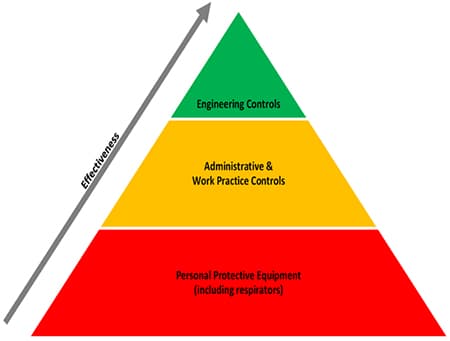
OSHA’s guidance does not treat injury prevention as a one-person habit problem. It calls for management support, employee involvement, training, and ongoing evaluation of prevention efforts. In other words, the store has to make the good method the easy method. If workers are expected to protect their bodies while still moving fast, the setup has to help them, not fight them.
The agency also says stores that have implemented injury-prevention efforts have reported reduced work-related injuries and lower workers’ compensation costs. OSHA’s ergonomics materials say those changes can also reduce physical demands, lower injury rates, reduce employee turnover, and improve efficiency and productivity. That is the part workers often feel first: when the workflow is cleaned up, the shift gets easier to survive and easier to repeat tomorrow.
The small changes that prevent the big injuries
The most useful fixes are usually the least glamorous. A store can reduce risk by organizing work so people do not need to bend, twist, or reach as often, and by keeping frequently handled items at easier-to-reach heights. That means the heaviest, fastest-moving, or most frequently pulled items should not live on the floor or overhead if the team can avoid it.
A few habits matter immediately:
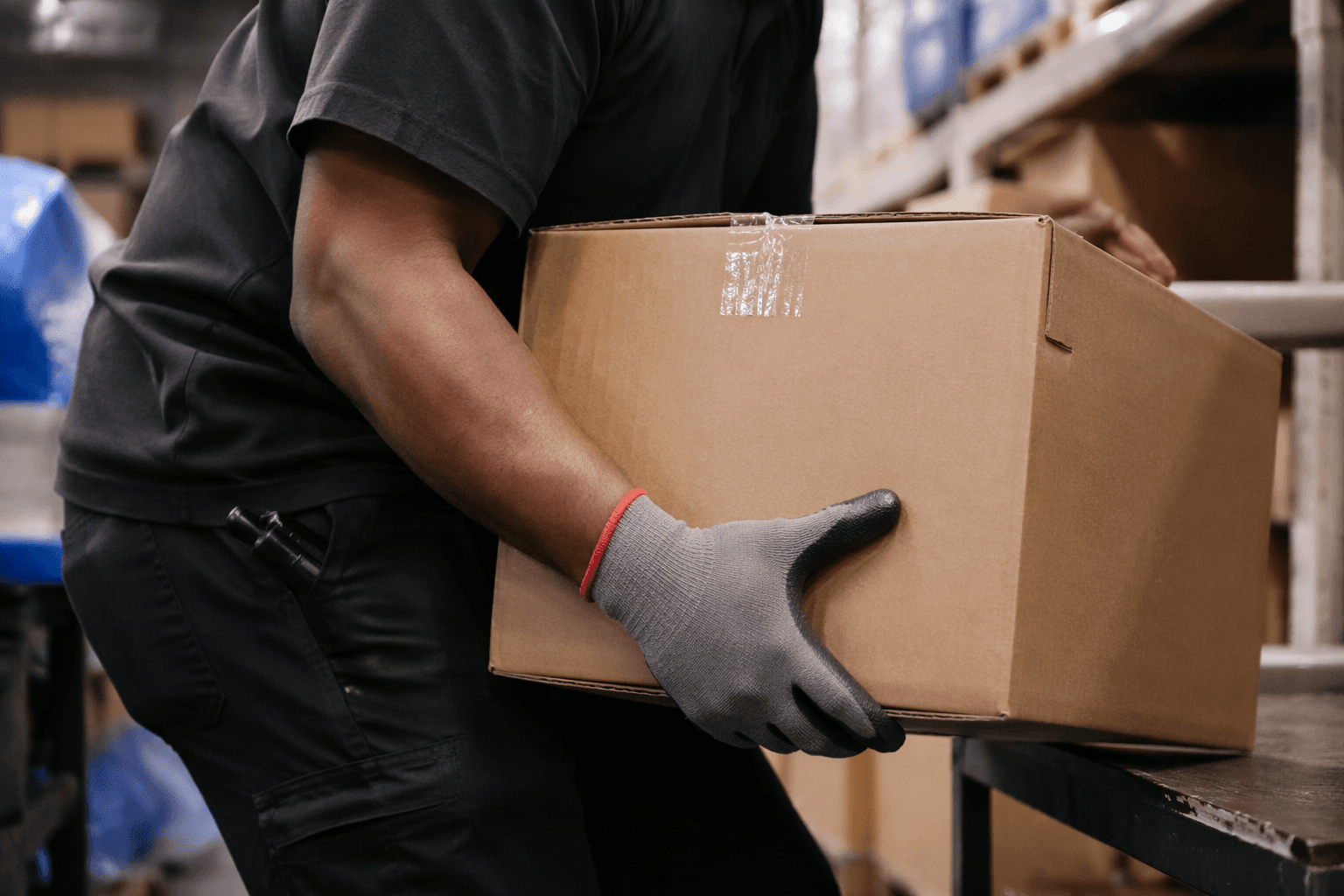
- Use safe lifting techniques every time, especially with awkward or bulky freight.
- Ask for help with loads that are heavy, wide, unbalanced, or hard to grip.
- Use power grips instead of pinch grips when the task allows it.
- Set up the work so repeated tasks are grouped in ways that limit constant strain.
- Report pain before it turns into a stronger injury.
Those changes sound basic because they are. The point is not to turn every employee into a biomechanist. The point is to make it harder for a routine task to become a back pull, a shoulder strain, or a wrist problem that lingers for weeks.
Why the numbers should get attention
The national injury picture shows how common these problems still are. The U.S. Bureau of Labor Statistics says private-industry employers reported 2,488,400 total recordable cases of nonfatal injuries and illnesses in 2024. It also reported 888,100 cases involving days away from work, plus 248,180 cases involving the exterior and musculoskeletal structures of the back.
Those figures are not abstract when your job includes cartons, carts, and carryouts. They are a reminder that soreness is not a badge of toughness. If lifting from a low shelf keeps lighting up your back, or stocking keeps bothering your shoulders, the task design deserves the attention, not the pain.
Why the pressure feels sharper now
Big Lots entered a much more unstable period in 2024. The company and subsidiaries filed voluntary chapter 11 petitions on September 9, 2024, in the U.S. Bankruptcy Court for the District of Delaware, case No. 24-11967 (JKS). Then on December 27, 2024, it reached an asset purchase agreement with Gordon Brothers Retail Partners involving stores, distribution centers, and intellectual property.
The planned footprint shift was large enough to affect day-to-day store work. Variety Wholesalers said it intended to acquire between 200 and 400 Big Lots stores and up to two distribution centers, subject to court approval. Big Lots’ court filings said 295 stores had already begun closing sales since July 2024, and that it would begin closing approximately 250 more locations around the week of September 28, 2024. In a period like that, injury prevention matters even more because staffing, pace, and turnover pressure can all make bad mechanics more likely.
What a safer shift looks like
On a Big Lots floor, ergonomics is not a policy binder sitting in an office. It is the difference between carrying one manageable load and trying to muscle through three awkward ones because the process was never set up well. It is the difference between a shelf arranged for easy reach and a daily scramble for the same heavy item at the worst possible height.
The workers who stay healthiest are usually the ones who treat discomfort as a warning, not a rite of passage. A task that repeatedly hurts your back, shoulders, wrists, or knees is telling you the workflow needs to change. When the store adjusts the lift, the reach, the grip, or the carryout before the strain becomes an injury, it protects the body, keeps the shift moving, and helps the team stay on its feet.
This article was produced by Prism’s automated news system from verified source data, official records, and press releases, then run through automated quality and moderation checks before publishing. The system is built and supervised by the people who set the standards it runs under. Read our full AI policy.
Did this article answer your question?