Retail productivity rises 2.9% as Big Lots faces efficiency pressure
Retail output rose 2.5% while hours slipped 0.4%, a sign Big Lots may face tighter staffing, sharper scheduling and more pressure to run lean.

The biggest retail labor number in the new Bureau of Labor Statistics release is not just that productivity rose 2.9%. It is that output increased 2.5% while hours worked fell 0.4%, a combination that usually points to a tighter operating model and more pressure to do more with less.
For Big Lots, that matters because retail has always been a labor-efficiency business. When sales or fulfillment grow without a matching rise in hours, managers usually get there through better task allocation, cleaner scheduling, stronger in-stock discipline, improved technology or simply a smaller crew carrying a heavier load. The BLS also said unit labor costs in retail trade fell 0.7%, another sign that retailers are still chasing efficiency as a margin lever, not just a back-office metric.

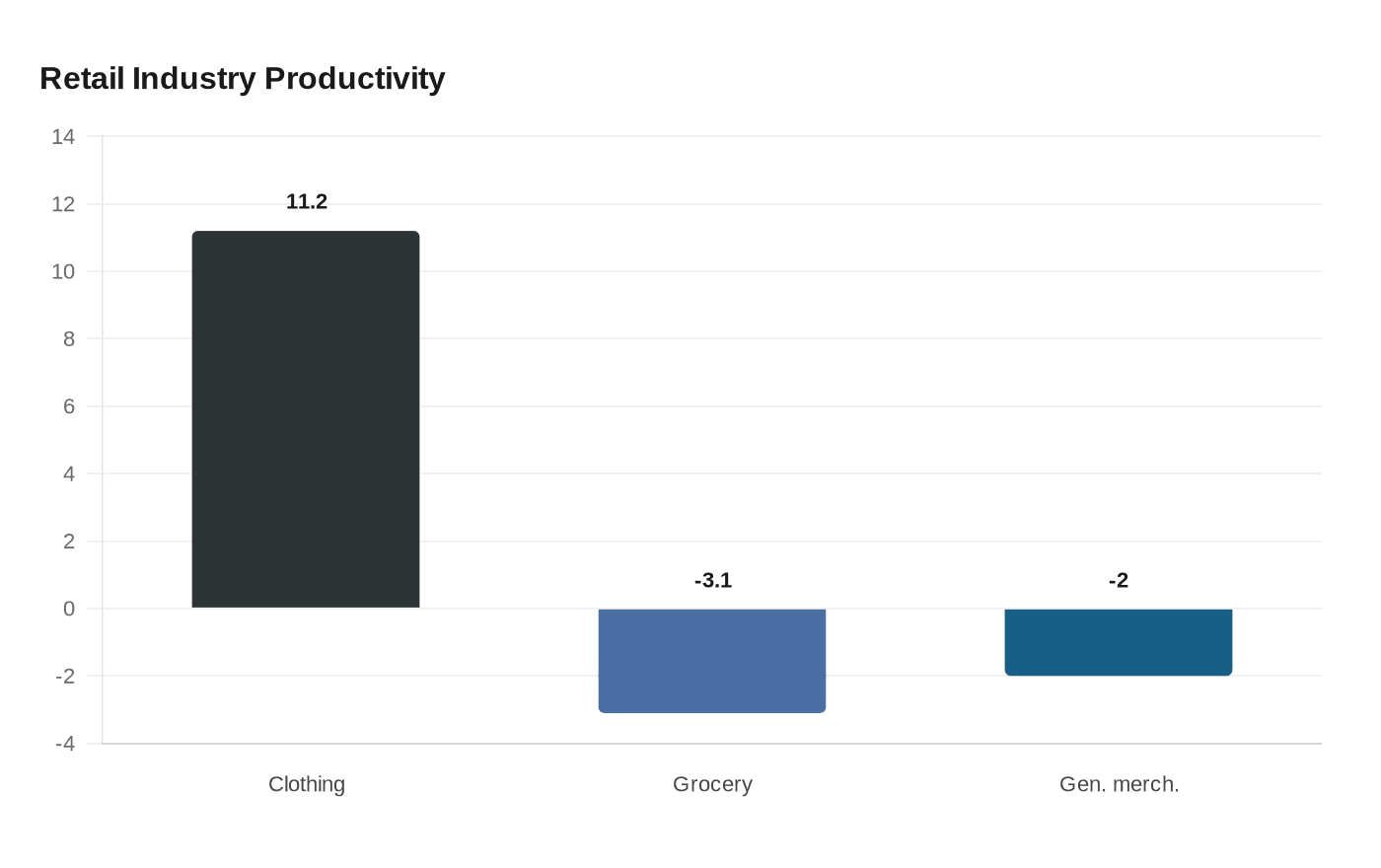
The numbers land in a part of retail that Big Lots knows well. BLS said productivity increased in 35 of 46 trade industries, but the gains were not evenly spread. Among the ten largest four-digit trade industries by employment, clothing stores posted the strongest productivity increase at 11.2%, while grocery stores fell 3.1% and other general merchandise stores fell 2.0%. Big Lots sits much closer to that general merchandise side of the business than to apparel, where the operating model can support sharper inventory turns and different labor patterns. In other words, the pressure on a Big Lots store is not abstract. It shows up in how fast freight gets worked, how quickly aisles are recovered, how reliably stock is on hand and how much of the shift disappears into catch-up work.
That pressure has only sharpened as the company rebuilt itself. Big Lots and its subsidiaries filed voluntary Chapter 11 cases on September 9, 2024, in the U.S. Bankruptcy Court for the District of Delaware and entered a sale agreement with an affiliate of Nexus Capital Management LP the same day. Variety Wholesalers later acquired 219 Big Lots stores out of bankruptcy and began reopening them in April 2025, with the first wave starting April 10, 2025. A May 30, 2025 update said the reopening phase would reach 219 stores by June 5, and Big Lots’ store locator now lists 219 locations.
That smaller footprint makes every labor hour count even more. If Big Lots uses the productivity squeeze to sharpen execution, stores could get better scheduling, steadier staffing and less daily chaos. If management treats productivity as a code word for thinner schedules, workers will feel it first on the sales floor, where the demand to move faster rarely comes with extra hands.
This article was produced by Prism’s automated news system from verified source data, official records, and press releases, then run through automated quality and moderation checks before publishing. The system is built and supervised by the people who set the standards it runs under. Read our full AI policy.
Did this article answer your question?