Costco ties employee development to its core ethics and growth strategy
Costco treats training and promotion as part of its ethics, not a perk. For hourly workers, that means a real ladder from the floor, backed by wages and mentoring.
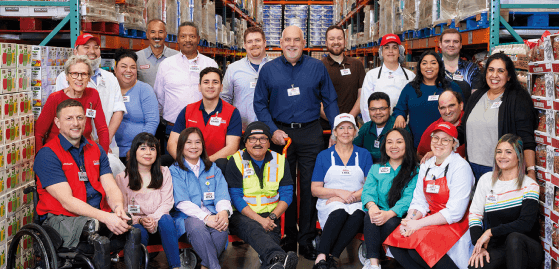
Costco’s employee-development message is unusually direct: advancement is not a side benefit, it is part of how the warehouse club says it succeeds. In its own materials, the company says, “A satisfied, challenged and respected workforce is the foundation of our success,” and it places that idea inside the same ethics framework that governs how it treats employees, members, and suppliers. For hourly workers trying to tell the difference between a slogan and a path, that matters because Costco pairs the language with a standing promise to promote from within and to keep development tied to daily operations.
Ethics first, then promotion
Costco updated its mission statement and Code of Ethics in March 2010, and one of the five core principles is plain enough to read as a management order: “Take care of our employees.” That puts labor practices on the same ethical plane as legal compliance and member service, which is not how most retailers frame career growth. Costco’s careers pages add a business case to the ethics case, saying the company has been a leader in warehouse club and retail for more than four decades and that its accomplishments depend on attracting, developing, and retaining the very best employees in the industry.
That combination gives the employee-development message real weight. When a company embeds training and promotion inside its ethics statement, it is signaling that development is supposed to show up in staffing decisions, scheduling, and supervision, not just in a recruiting brochure. Costco’s own about page makes the ladder even more explicit: “We promote from within.”
What the ladder looks like in warehouse life
The most useful part of Costco’s development materials is how broad they are. The company says it wants to provide all employees with training, education, and opportunities for career development and advancement, not just salaried managers or corporate staff. It also says leaders should continue to teach, mentor, and sponsor employees so they are ready to be considered for opportunities and greater responsibility.
That matters on the warehouse floor because it suggests development is supposed to be active and visible. A worker can start in a front-end, merchandise, or service role and later build toward supervisory or specialized positions, but the path depends on whether supervisors are actually coaching, sharing information, and putting names forward when openings appear. In practice, the question is not whether Costco says development exists, but whether a worker can see it happening in everyday warehouse life.
Look for concrete signs that the ladder is real:
- supervisors who explain how to move from one department to another
- regular training that goes beyond the first week on the job
- managers who sponsor employees for new responsibilities, not just assign extra work
- access to opportunities across departments rather than a closed internal circle
- fair access to resources so employees can succeed, which Costco says is part of the goal
That last point matters because fair access is the difference between a system that talks about advancement and one that actually lets people use it. If training is uneven or opportunities go only to a small set of favorites, the promotion story collapses fast. Costco’s own language pushes the opposite standard: development should be broad-based and open enough for workers to see a future inside the company.
Why wages and retention belong in the same conversation
Costco’s 2024 annual report ties employee treatment to the member experience in a way that is easy to miss if you only look at the headline numbers. The company said it increased wages across its pay scales in the U.S., Canada, and other parts of the world during fiscal 2024, and it linked a stable, cared-for employee base to the courtesy and friendliness members experience in warehouses. That is a direct operational argument: retention is not just about keeping labor costs predictable, it is about keeping the floor staffed by people who know the work.
For hourly employees, that is the part that makes Costco’s model different from the usual retail churn. If a company is willing to raise pay across its scales and pair that with internal development, long tenure stops looking like an accident and starts looking like the point. The pay structure, the mentoring language, and the “promote from within” message all point in the same direction: stay, learn, move up.
Why analysts keep using Costco as the example
The outside attention is not random. Harvard Business School’s Institute for Business in Global Society highlighted Costco, Sam’s Club, and QuikTrip as examples of a “good jobs” strategy, where higher wages, better benefits, and stronger work design can raise sales, reduce turnover, and improve performance measures. That framing matters because it treats employee development as a business system, not a feel-good gesture.
For retail managers, the lesson is uncomfortable but clear: if you want lower turnover and better service, you cannot separate development from operations. You have to staff enough, coach enough, and promote enough for employees to believe the ladder exists. Costco’s own materials lean into that reality by tying employee growth to ethics, retention, and the member experience all at once.
That is why Costco keeps showing up in conversations about long-term retail careers. The company’s model says a worker should be able to enter on the floor, get trained, be mentored, and see a route toward greater responsibility without having to leave the warehouse family to find it elsewhere.
This article was produced by Prism’s automated news system from verified source data, official records, and press releases, then run through automated quality and moderation checks before publishing. The system is built and supervised by the people who set the standards it runs under. Read our full AI policy.
Did this article answer your question?