Chicago Fed retail tracker gives Dollar General a real-time demand read
A Chicago Fed dashboard now shows retail demand before month-end, giving Dollar General workers an early read on hours, freight, and sales pressure.

When a Dollar General store feels busier or slower before the district update arrives, the Chicago Fed’s Advance Retail Trade Summary is the kind of signal that explains why. Updated May 13, the dashboard uses weekly retail and price indexes through May 12, 2026 to project month-over-month changes in retail and food-services sales, plus prices excluding autos, making it a live read instead of a backward-looking report.
The value for store teams is practical. A near-real-time tracker can help explain why customer counts, basket size, refill timing, seasonal sets and labor deployment can shift quickly from one week to the next. The Chicago Fed’s gauges also place the latest nowcasts against historical percentiles for seasonally adjusted month-over-month changes since 2018, which shows whether demand is running unusually strong or weak by recent standards. The Federal Reserve Bank of St. Louis says CARTS data are released twice, first as a preliminary projection near month-end and then as a final release one day before the U.S. Census Bureau retail sales report. That shortens the feedback loop for managers who are trying to adjust hours, freight pacing and inventory priorities before the next company memo lands.

Dollar General’s own results show why that matters. On March 12, 2026, the company reported fiscal fourth-quarter 2025 net sales of $10.9 billion, up 5.9% from a year earlier, with same-store sales up 4.3%. Traffic rose 2.6% and average transaction amount rose 1.7%, a split that shows how closely the chain’s results depend on how many shoppers come through the door and how much they spend once they get there. For the full fiscal year, net sales rose 5.2% to $42.7 billion, while same-store sales grew 3.0%, with customer traffic up 1.6% and average transaction amount up 1.4%. The quarter included growth in consumables, seasonal goods, home products and apparel.
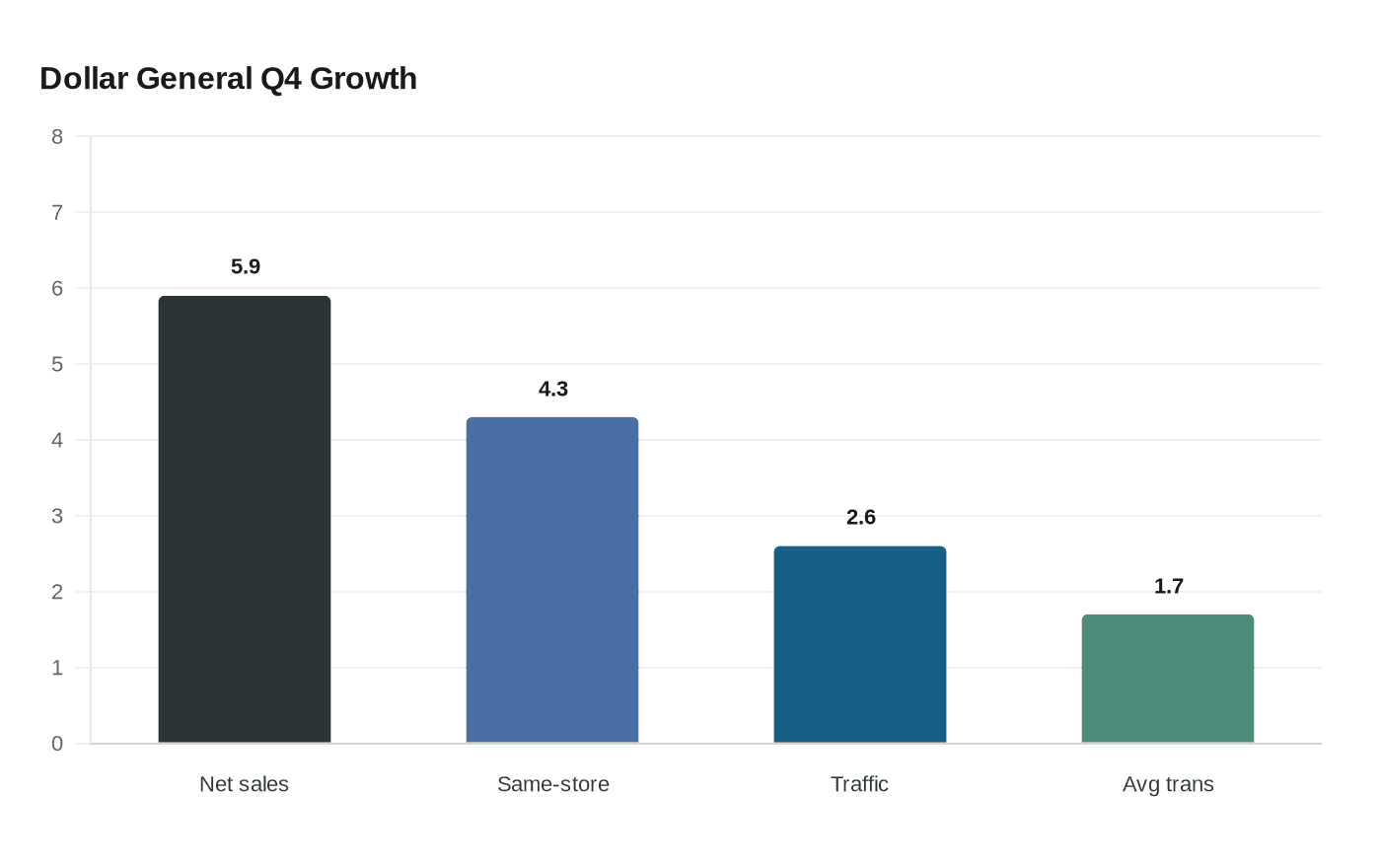
That sensitivity helps explain why investors and store managers watch these numbers so closely. Retail-industry coverage said Dollar General’s 4.3% same-store sales gain was its fastest pace in three years, a notable rebound for a chain built on thin margins and fast-moving basics. The company also said it planned to open about 450 U.S. stores in 2026 and fully or partially remodel 4,250 stores through Project Renovate and Project Elevate, signaling that it is still investing heavily in the box while trying to manage demand swings.
For Dollar General employees, the Chicago Fed tracker matters because the company now has more ways to see a turn in demand before the floor does. With another earnings announcement scheduled for June 2, 2026 at 9:00 a.m. ET, the real-time read is a preview of whether spring traffic, basket size and spending pressure are holding up or starting to slip. In stores where a few points of sales can change labor plans and manager expectations, that early signal can show up quickly in the schedule, the backroom and the freight line.
Know something we missed? Have a correction or additional information?
Submit a Tip