Dollar General highlights day-one benefits, tuition aid and retirement perks
Dollar General’s benefits pitch is broader than most cashiers see at a glance. The fine print matters: eligibility, full-time status and role type can change the value of the package.
What Dollar General wants workers to see
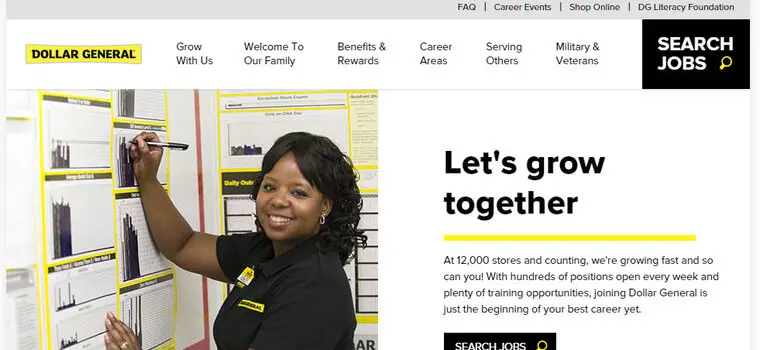
Dollar General’s careers pages are built to make one point feel simple: the company wants to look like more than an hourly retail stop. The pitch combines day-one benefits eligibility, retirement savings, tuition help, paid leave, and family support into a single “total rewards” story, then layers in internal promotion and training numbers to suggest a place where workers can build a career, not just punch a clock.
That is the right frame to use when reading the site. For a store associate or district manager, the question is not whether benefits exist in the abstract. It is how the package changes the reality of long shifts, staffing gaps, physical work, and the difference between a short stint and a longer path inside a company with more than 20,800 stores and about 194,200 employees.
The headline promise: benefits on day one
Dollar General’s retail careers page says all employees are benefits-eligible on day one. That is the kind of language that can sound bigger than it is unless you read it carefully, because “benefits-eligible” is not the same thing as “everything applies equally to everyone.” The company’s own materials say the benefit highlights are an overview and that eligibility requirements can vary by employee.
Still, the core list is broad. On the corporate side, Dollar General highlights comprehensive health insurance options, flexible spending accounts, health savings accounts, short-term and long-term disability insurance, life insurance options, supplemental medical coverage, a wellness program, paid vacation and holidays, service award recognition, parental leave, adoption assistance, an employee assistance program, 401(k) savings and retirement, employee perks and discounts, legal-plan access, and identity-theft protection.
For workers, the practical takeaway is that a job offer at Dollar General should be read like a full compensation package, not just an hourly rate. That matters most in retail, where the pay rate is visible but the value of benefits often determines whether the job can hold up over time.
What to ask before you treat the pitch as real
• When do medical and retirement benefits actually start? • Which benefits apply to part-time workers, and which are limited to full-time roles? • What counts as eligible for tuition support, parental leave, or adoption assistance? • How do bonus opportunities work for store roles versus corporate jobs?
Those are the questions that separate a polished benefits page from the working life behind it.
Tuition help and education are a major part of the message
Dollar General gives education an unusually prominent place in its employer brand. The retail careers page says full-time employees get zero-cost or discounted tuition, and the company says annual bonus opportunity is part of the package. In 2022, Dollar General said it launched an educational benefits platform that gave full-time employees access to employer-paid, full-tuition-covered degree programs at select universities.
That matters because tuition support can be more than a perk in a company like this. It can be a retention tool, especially for employees who want to move from a store job into supply chain, fleet, operations, or management. But the fine print still matters: the strongest education benefit described here is tied to full-time status, which is a real dividing line in retail.
The company also says it provided 5.5 million training courses to employees in 2023. That number supports the idea that Dollar General wants to present itself as a place where people can learn inside the job, not just use it as a stopgap. But training volume is not the same as advancement for every worker, and store labor realities still shape whether employees can actually use those opportunities.
Promotion from within is part of the story, but it is not the whole story
Dollar General leans hard on internal mobility. It says 74% of promotions in 2023 happened from within, that 14% of its private fleet team began careers in a DG store or distribution center, and that it has a Store Manager Ladder Program designed to prepare store managers to move into district manager roles.
Those are useful numbers because they show where the company believes loyalty can pay off. They also tell you who Dollar General is trying to persuade: the store associate who wants a path upward, the district manager trying to manage a tough labor market, and the worker in distribution or fleet who wants to see movement across the company instead of out of it.
But readers should keep the scale in mind. A company can promote heavily from within and still leave many workers stuck in jobs with thin staffing, heavy workload, and slow wage growth. That tension is especially familiar in discount retail, where advancement often exists on paper, but the number of management slots is still limited compared with the number of people starting at the bottom.
Family benefits and leave are broader than many retail workers expect
Dollar General’s parental leave and adoption assistance benefits stand out because they are described as available to eligible full-time and part-time employees across retail locations, distribution centers, and the corporate office. The company says the parental leave policy provides two weeks of paid parental leave, and birth mothers receive eight weeks total, including six weeks of paid maternity leave. It also says adoption assistance can provide up to $4,000.
That is meaningful in a workforce where many employees are balancing caregiving, irregular schedules, and physical labor. In a store environment that can already feel understaffed, paid leave becomes a practical test of whether the company’s family-friendly language survives contact with the schedule board.
Dollar General also says the Dollar General Employee Assistance Foundation had supported employees with $16 million as of October 2024, offering financial help when disaster strikes. That kind of assistance can matter a lot for rural and suburban workers who may have fewer nearby safety nets, especially when a car breakdown, storm damage, or an unexpected bill can destabilize a household quickly.
Why the safety record belongs in the same conversation
Dollar General’s benefits messaging does not exist in a vacuum. In October 2022, the Occupational Safety and Health Administration placed the company on its severe violator watch list after citations at four Southeast stores. At the time, Bloomberg Law reported that OSHA had proposed $1.68 million in fines in that action, that Dollar General had more than 18,100 stores and about 163,000 employees, and that proposed fines had totaled $9.6 million over the previous five years.
That history matters because it complicates the employer brand. A company can offer tuition assistance, retirement savings, and parental leave while still drawing criticism over store conditions, workload, and compliance. For workers, the lesson is not to ignore the benefits pitch. It is to read it alongside the day-to-day reality of retail, where understaffing, safety concerns, and the pressure of running lean can shape the actual value of every perk.
How to read Dollar General’s “total rewards” language
The smartest way to decode Dollar General’s message is to separate the promise from the specifics. The promise is that the company offers a wide benefits toolkit and wants to frame itself as a career builder. The specifics are that eligibility varies, full-time status unlocks some of the most valuable education perks, and the company’s best arguments for retention lean heavily on internal advancement.
For store associates, that means the offer is only as strong as the hours, scheduling stability, and access to the benefits you can actually use. For district managers and corporate employees, it means the package may look more complete, but it still sits inside a retail business with a long-running tension between growth, labor pressure, and safety scrutiny.
Dollar General’s own materials make the case that it wants to be seen as a place where people stay, move up, and build something. The question workers should keep asking is whether the benefits are broad enough, and the store conditions stable enough, to make that story hold up beyond the careers page.
This article was produced by Prism’s automated news system from verified source data, official records, and press releases, then run through automated quality and moderation checks before publishing. The system is built and supervised by the people who set the standards it runs under. Read our full AI policy.
Did this article answer your question?