Dollar General spotlights 4-H pantry challenge, rural food access role
Dollar General’s 4-H pantry challenge puts rural food access in focus, showing how store aisles can function as a budget lifeline in small towns.
Dollar General is using the pantry challenge to make a larger point about its stores
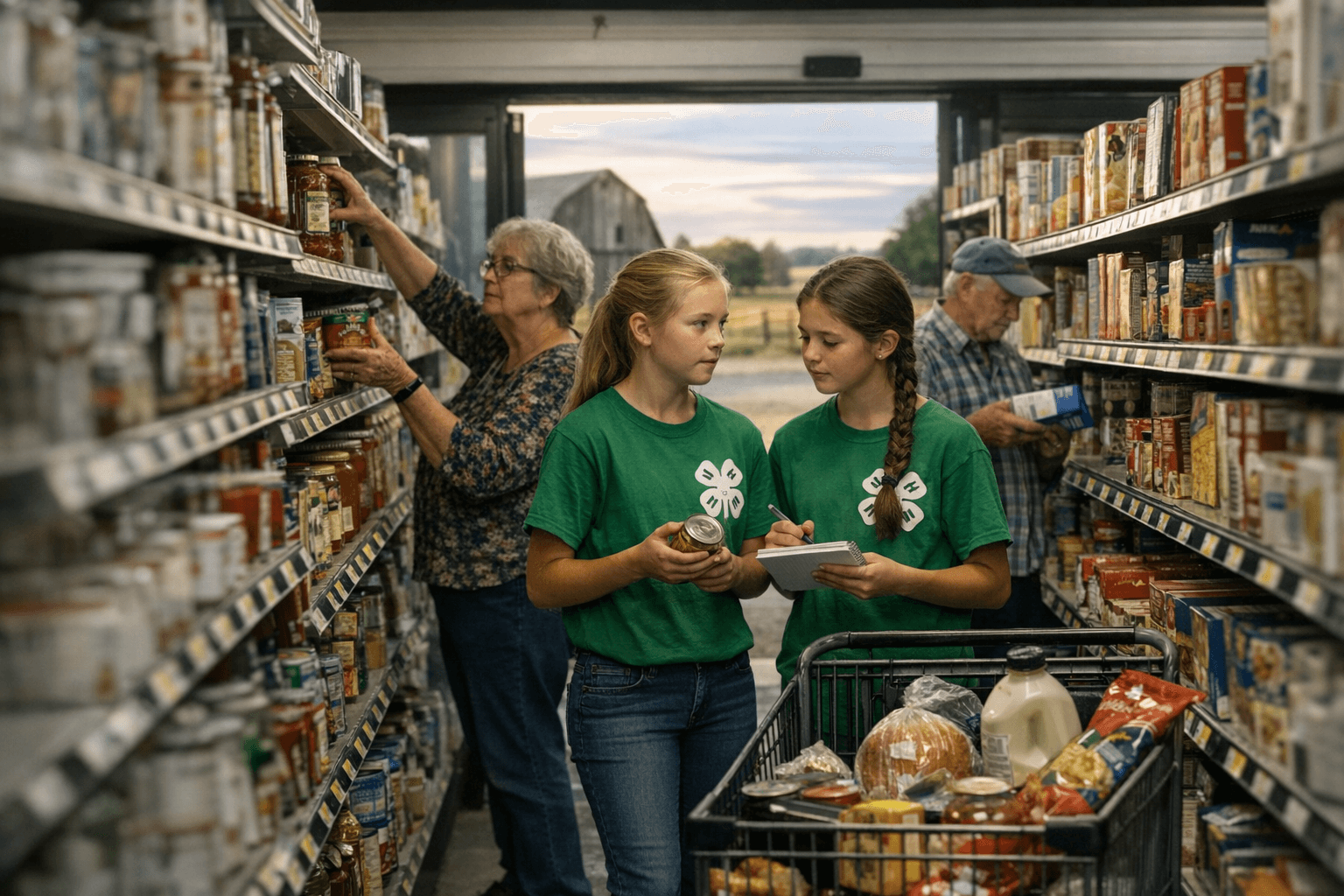
Dollar General’s spotlight on the Mid-South 4-H Pantry Challenge is not just a feel-good community note. It is a reminder that in many small towns, the nearest Dollar General aisle is part pantry, part convenience stop, and sometimes the easiest place to piece together dinner with limited cash and limited options.
That is why the company’s framing matters. The challenge, which asks young people to plan, cook and present nutritious, affordable meals from ingredients commonly found in dollar stores and food pantries, matches the way many customers already shop. It also gives store teams a clear signal about how the company wants to be seen: not just as a discount retailer, but as a basic-access stop in places where grocery choice can be thin.
What the contest is really teaching
The Mid-South 4-H Food Pantry Challenge is built around skills that map closely to real household pressures. Tennessee 4-H says the competition brings together youth from Mississippi, Tennessee, Arkansas, Missouri and Louisiana, and the focus is on healthy meals, food safety, reducing food waste and using pantry ingredients efficiently.
That matters in stores because those same tradeoffs show up every day in the basket at the register. Shoppers looking for inexpensive meals are often balancing shelf-stable items, limited fresh options and whatever they can stretch across several days. The contest turns that reality into a public lesson, showing how to build something nourishing without a full grocery run.
A separate Arkansas Cooperative Extension report from 2023 showed 11 teams from Arkansas, Louisiana, Tennessee and Mississippi competing that year, which underscores that this is not a one-off event. It is part of a recurring regional conversation about how to cook affordably and waste less when the pantry is the starting point.
Why the Memphis event matters to store teams
The 2026 Mid-South Farm & Gin Show was scheduled for February 27 and 28 at the Renasant Convention Center in Memphis, Tennessee, and the pantry competition sits inside that larger agriculture setting. That detail matters for Dollar General employees because it places the company’s message in a space that already carries rural credibility. It links the chain’s stores to the broader food and farm ecosystem, not just to checkout lanes and endcaps.
For district managers and store leaders, that connection is practical. Community events like this can shape how local residents think about assortment, freshness and whether the store can cover pantry basics when other retail options are farther away. They also reinforce the idea that merchandising is not only about margin and shrink. In towns where the store may be one of the most convenient places to shop, shelf decisions become part of the brand.
The competition results show how DG wants to be seen
Dollar General’s own community feature called out the winners: the Jalapeño Hotties took second place and received a $500 Dollar General gift card, while the Louisiana Spice Girls placed third and received a $250 gift card.
Those results give the story a useful local anchor. They turn the pantry challenge from abstract corporate messaging into a concrete community moment, one that recognizes students for building meals around affordable ingredients rather than around luxury or abundance. For employees, that is the real share hook: the company is tying its name to a competition that celebrates the kind of cooking many customers have to do every week.
The names of the teams also help the event feel rooted in the region rather than in a corporate communications plan. These are young people representing local food habits, local budgets and local problem solving, which is exactly the audience Dollar General wants to reach when it talks about relevance in small-town America.
How the pantry challenge fits Dollar General’s food-access push
The pantry challenge also lands in the middle of a broader corporate food-access push. In January 2024, Dollar General said it aimed to offer fresh produce in more than 5,000 stores. By January 2025, a sponsored Atlantic feature said more than 6,700 Dollar General locations offered fresh produce.
That growth matters because it shows the company trying to move beyond the old image of a purely shelf-stable discount store. Dollar General has said about 80% of its stores are in towns of 20,000 people or fewer, which means the chain’s assortment decisions have outsized importance in places where grocery competition is often limited. When fresh produce appears in more locations, it changes what customers can reasonably expect from a DG trip.
The company has also said it wants to increase access to fresh food for millions of U.S. households. For store teams, that adds weight to everything from cooler placement to produce presentation. It also helps explain why a pantry challenge gets so much attention: it is a public way to connect store operations with the food needs of the neighborhoods around them.
The larger food insecurity picture is hard to ignore
Dollar General has said U.S. food insecurity affects 44 million people and that rural communities bear a heavy burden because of limited retail options. That is the backdrop for why this story lands so strongly with store workers. In many of the towns Dollar General serves, the issue is not only price. It is access, distance and the number of places that actually carry enough basics to keep a household going.
The company’s July 2024 extension of its Feeding America partnership added another $1 million and brought its reported total of meals helped to more than 33 million since 2021. That gives the pantry challenge a concrete food-insecurity benchmark. It is not just messaging about community support. It sits alongside a measurable donation record and a documented effort to push fresher food deeper into the store network.
For associates and managers, the takeaway is straightforward: events like the Mid-South 4-H Pantry Challenge are part of how Dollar General wants customers to see the chain in rural America. They cast the store as a place where affordability, access and everyday meals meet, and they remind local teams that community relations are part of the job, not an extra. In towns where one store can matter more than a slogan, that distinction is the business.
This article was produced by Prism’s automated news system from verified source data, official records, and press releases, then run through automated quality and moderation checks before publishing. The system is built and supervised by the people who set the standards it runs under. Read our full AI policy.
Did this article answer your question?