Goldman CEO Solomon Calls Market Reaction to Iran Conflict Surprisingly Benign
Solomon told the Australian Financial Review Business Summit he was "actually surprised" markets haven't panicked more, warning the real impact could take weeks to show.
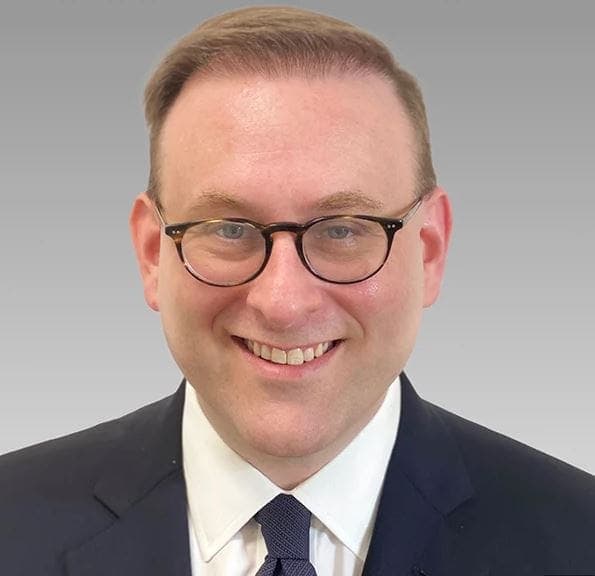
Goldman Sachs Chairman and CEO David Solomon said he was caught off guard by how calmly financial markets absorbed the widening conflict between the United States, Israel and Iran, warning investors that the full economic reckoning may still be ahead.
"I'm actually surprised," Solomon said at the Australian Financial Review Business Summit in Sydney. "I think the market reaction has been more benign, given the magnitude of this, than you might think." He added that it would likely take time for the shock to register fully: "I think it's going to take a couple of weeks for markets to really digest the implications of what's happened both in the short term or in the medium term."
The remarks came as U.S. stocks continued to slide. The Dow Jones Industrial Average fell 0.83%, the S&P 500 slipped 0.94%, and the Nasdaq Composite shed 1.02%, with futures pointing lower heading into Wednesday's session. Solomon also gave a Bloomberg Television interview on March 4 addressing markets' response to the escalating conflict.
The calm Solomon described was not uniform across global markets. The conflict wiped more than $60 billion from the Australian sharemarket and forced the Korean exchange into an emergency halt after stocks slumped 8 percent, according to the Australian Financial Review. Investors tracked oil prices closely after Iran announced the Strait of Hormuz had been shut and warned that any vessel passing through would be targeted, a development CNBC flagged as the primary driver of market anxiety.
Quartz characterized Solomon's comments as a rare Wall Street complaint: there isn't enough fear. That framing captures the tension in his remarks. A muted market reaction isn't necessarily reassurance; it can mean investors haven't yet priced in a scenario where a prolonged regional conflict spikes inflation and disrupts supply chains.

Solomon gestured at that broader risk when he briefly set the conflict aside to address the macro backdrop. He described the current environment as generally supportive, pointing to an easing cycle, looser regulation, and a U.S. economy he called "in solid shape." But he was candid about the risks embedded in that picture. "There is definitely a reasonable probability this year that the U.S. economy runs a little bit hot," he said, with inflation potentially "slightly higher than the consensus expectation."
He flagged a lending dynamic that tends to surface late in economic cycles: "Lending standards come down because there's a competition to deploy capital," he said, warning that the problem becomes visible once a slowdown arrives and "the loans start telling the truth."
For Goldman staff and the broader financial industry, Solomon's read matters not just as market commentary but as a signal of where the firm's leadership believes risk is accumulating. When the CEO of one of the world's largest investment banks says markets may not have fully processed a geopolitical shock of this magnitude, the implication is that the adjustment, when it arrives, could be sharper than current prices suggest.
This article was produced by Prism’s automated news system from verified source data, official records, and press releases, then run through automated quality and moderation checks before publishing. The system is built and supervised by the people who set the standards it runs under. Read our full AI policy.
Did this article answer your question?