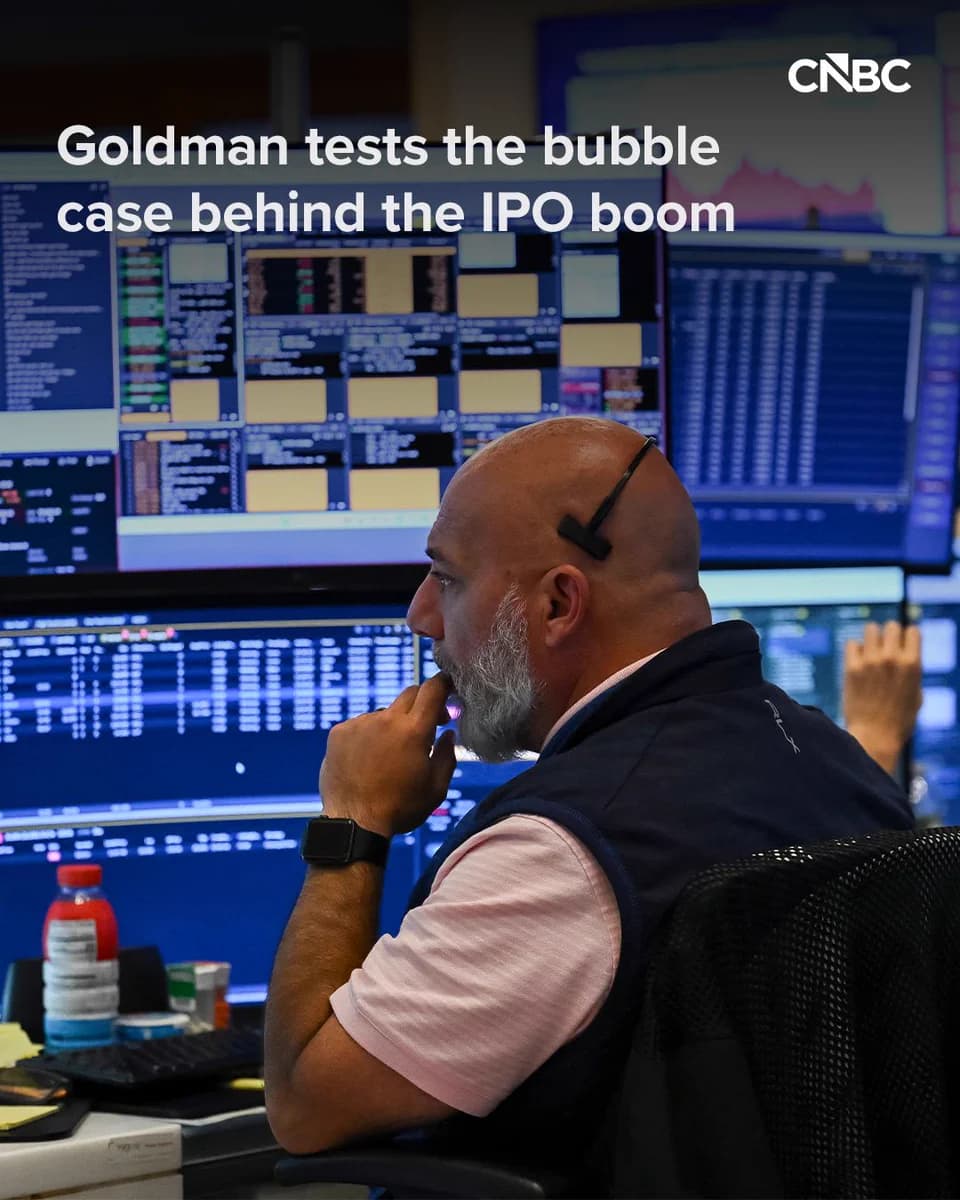
Goldman data shows hedge funds keep trimming AI hardware bets
Goldman’s prime desk says hedge funds are backing away from chip exposure even after AI drove 2026 gains, turning the trade into a profit-taking test for bankers.
Goldman Sachs’ prime-brokerage data showed hedge funds trimming tech hardware again, with information technology the most net-sold U.S. sector for a fourth straight week. Hedge funds also sold U.S. stocks overall for a third straight week, even as they kept buying index and ETF products, a split that matters inside Goldman because it points to less one-way risk and more demand for hedging, relative-value calls and single-name selection.
The read-through for Goldman’s sales and trading teams is sharper than a simple de-risking story. Goldman Sachs Prime Services said the AI and momentum trade that dominated much of 2026 reversed starting June 22, a turning point that can change how bankers frame positioning advice for clients who still want exposure to artificial intelligence but no longer want to chase the most crowded chips and hardware names. That leaves desks parsing whether the selling reflects profit-taking, macro caution or a deeper reassessment of near-term AI capex.

The move comes after a powerful run. Goldman’s hedge fund trend monitor showed hedge funds sharply increasing bets on AI-linked companies at the start of Q2 2026, with semiconductor and AI infrastructure firms among the biggest beneficiaries. By early July, that accumulation had flipped into distribution, a rapid rotation that feeds directly into Goldman’s prime brokerage conversations, equities execution and research pitches.
The selling does not mean hedge funds have abandoned the space. Stock-picking hedge funds returned 4% in June, while Goldman-tracked fundamental long-short funds posted an 18.4% return for Q2 2026, the strongest quarterly performance in Goldman’s records. Those same managers were up 17.4% year to date, which helps explain why the current pullback looks more like selective profit-taking than a wholesale exit from AI.
The pressure was visible in the chip tape. The Philadelphia Semiconductor Index fell 4.2% in the cited week, as investors leaned harder into concerns about AI-related spending and took gains ahead of earnings from major chip names. For Goldman employees, that kind of backdrop usually means more client demand for financing guidance, more questions about which AI beneficiaries still have room to run, and more urgency in explaining why the trade is shifting from consensus winner to career-risk debate.
This article was produced by Prism’s automated news system from verified source data, official records, and press releases, then run through automated quality and moderation checks before publishing. The system is built and supervised by the people who set the standards it runs under. Read our full AI policy.
Did this article answer your question?