Goldman Executive Says Some Private Markets Clients Welcome Iran Conflict as Distraction
A Goldman exec told clients some private markets investors are "glad" the Iran conflict distracts from software exposure fears and private credit stress.

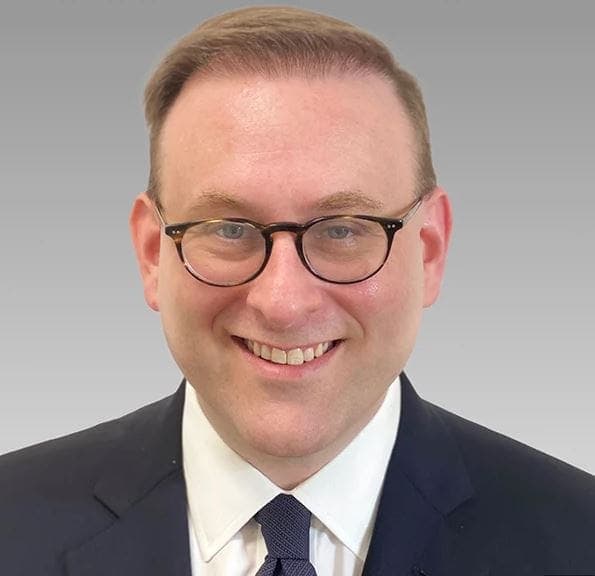
Kunal Shah, co-chief executive of Goldman Sachs International and global co-head of fixed income, currencies and commodities, told clients on a Wednesday call that some of the bank's private-markets investors were relieved the Iran conflict had shifted attention away from mounting stress in private credit and technology lending.
According to three people familiar with the call, Shah said some clients were "just glad there's something to talk about that isn't software exposures and private credit." He added: "And this is at least a distraction from that," in response to a question about how Goldman's clients were viewing the conflict.
The call, titled "Strikes in Iran — End of the Beginning . . .?", also featured Sir Alex Younger, the former chief of Britain's Secret Intelligence Service, who became a paid adviser to Goldman Sachs International in 2021. Senior executives from Goldman's oil and power trading divisions also participated, and the call was open to the bank's hedge fund clients.
A Goldman Sachs spokesman told the Financial Times that Shah was "asked a question about what he was hearing from clients and shared his observations from multiple points of view." Shah also noted on the call that some of Goldman's clients "are quite resilient" and "have lived through episodes that are similar in some ways."
The remarks land at a sensitive moment for private credit. Private equity and credit firms have poured capital into enterprise software businesses for years, and questions about those positions have intensified as artificial intelligence threatens to disrupt many of those companies' underlying business models. The Financial Times had reported earlier this week that Goldman itself had pitched hedge funds on strategies to short private corporate loans, offering a way to bet against debt linked to software firms and other industries considered vulnerable to AI disruption.
The stress in private credit is visible in public market proxies. Blue Owl Capital, a listed private credit firm with significant technology exposure, has seen its shares fall nearly 40 percent year to date. The firm restricted cash withdrawals at one of its funds after a flood of redemption requests, and earlier accelerated redemptions by liquidating $1.4 billion to return capital to investors.
Not all private credit players are caught in the same bind. Legal & General, the pension and insurance giant, reported private market assets under management rising nearly a third to £75 billion, with chief financial officer Andrew Kail noting the firm is "very selective about where we invest" and that its insurance structure limits which asset types it can hold. Legal & General's private credit book is weighted toward infrastructure, utilities, and property rather than direct technology lending.
The Iran conflict has complicated the picture further by driving volatility across energy, bond, and equity markets, generating losses for some hedge funds caught on the wrong side of those moves. Shah's framing, that geopolitical upheaval functions as cover for an unresolved structural problem inside private credit, reflects a calculation that Goldman's clients may prefer any narrative that buys time before the software exposure reckoning arrives. The bluntness of the observation, delivered on a client call, is what made it travel.
This article was produced by Prism’s automated news system from verified source data, official records, and press releases, then run through automated quality and moderation checks before publishing. The system is built and supervised by the people who set the standards it runs under. Read our full AI policy.
Did this article answer your question?