Goldman Sachs, ANZ See Gold's Recent Selloff as Temporary Amid Geopolitical Tensions
Goldman holds its $5,400 gold target after March's worst monthly selloff since 2013, with ANZ backing the recovery call on central-bank buying and Fed cuts.
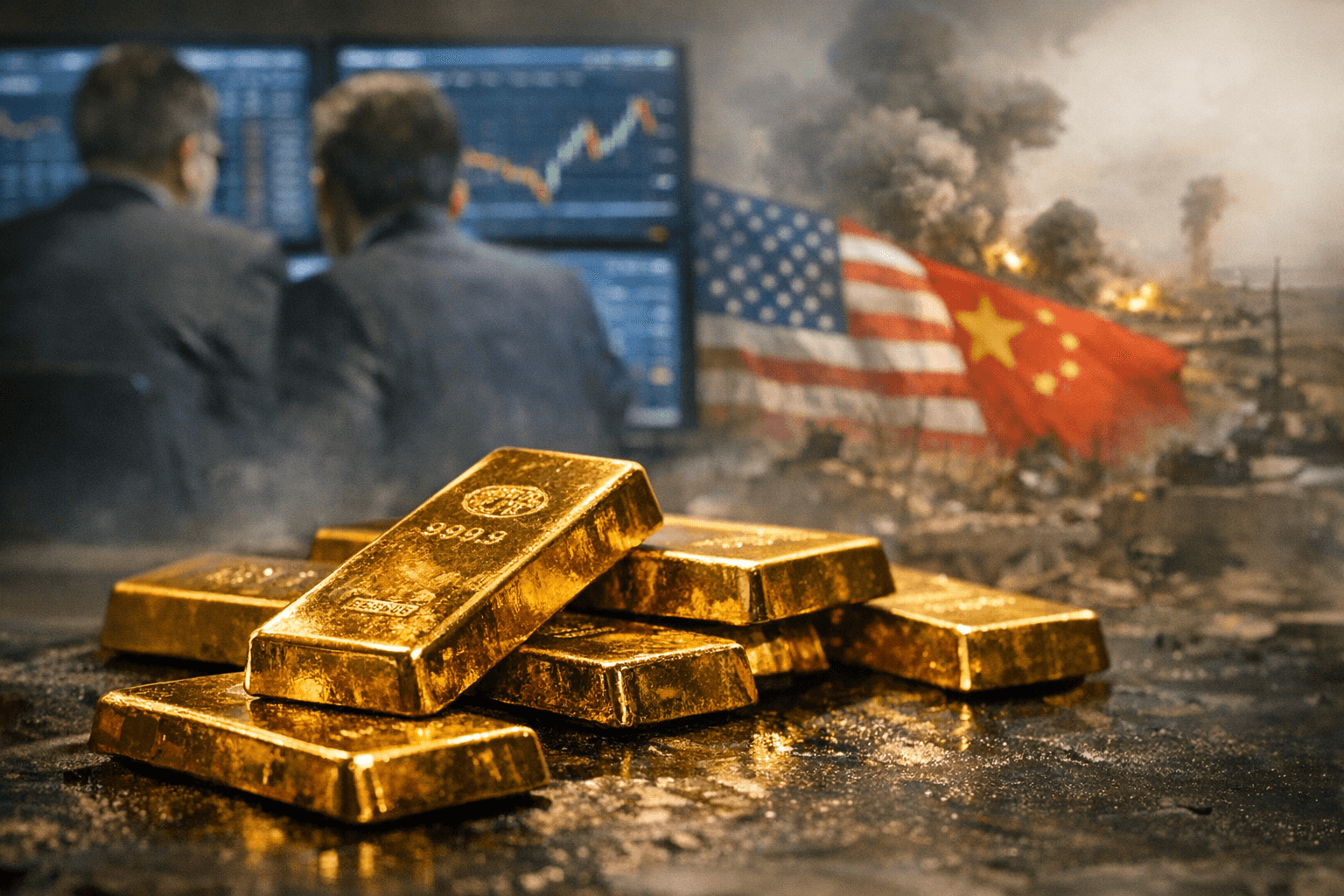
Goldman Sachs raised its conviction around gold's long-term recovery even as the metal absorbed one of the sharpest drawdowns in more than a decade, reaffirming a year-end price target of $5,400 per ounce after March 2026 delivered the metal's worst monthly decline since 2013.
ANZ Banking Group joined Goldman in that view, with both banks pointing to structurally resilient demand from central banks, continued geopolitical uncertainty, expected Federal Reserve rate cuts, and a broad diversification away from dollar-denominated assets as forces that outlast any near-term liquidation wave.
The immediate catalyst for the selloff was not a failure of gold's safe-haven thesis but a cascade of liquidity-driven selling triggered by the escalating Middle East conflict. Gulf states facing revenue shortfalls from disrupted oil flows liquidated gold reserves to plug fiscal gaps, while rising Treasury yields and a strengthening dollar pulled institutional capital toward Treasuries. The SPDR Gold Shares ETF saw significant outflows as the 10-year yield climbed to 4.28 percent.
Gold had traded at an all-time high of roughly $5,600 per ounce in late January 2026, a figure that already reflected enormous safe-haven positioning built up through 2025. By early April it was trading near $4,660. The magnitude of the reversal is partly an artifact of how much had already been priced in: net speculative positioning collapsed to the 39th percentile during the selloff, clearing the kind of crowded trade that amplifies moves in both directions.
Goldman's structural case rests on three pillars. Central bank demand has been relentless, with China extending its gold accumulation streak to 15 consecutive months of purchases through January 2026. Western ETF inflows added roughly 500 tonnes since early 2025, well above what rate-cut expectations alone would explain. Goldman Senior Commodities Analyst Lina Thomas outlined in February that anticipated Fed cuts totaling roughly 50 basis points in 2026 would contribute an estimated $120 per ounce in direct price support, with ETF reinflows capable of amplifying that figure if easing arrives sooner or deeper than projected.
History provides a working frame. When Iraq invaded Kuwait in August 1990, gold surged to around $410 per ounce as markets priced in prolonged conflict. When the ground campaign wrapped in 100 hours in late February 1991, gold gave back all of its invasion gains, retreating to roughly $363. It then recovered. The episode illustrates a consistent pattern: the selloff phase during conflict resolution is mechanical, not diagnostic of a broken thesis.
The trigger list that would validate Goldman's call is specific. On the bullish side: Fed cuts materializing as projected, inflation prints staying elevated enough to sustain real-yield compression, persistent central-bank purchasing, and ETF flows reversing to net inflows. The risks are symmetric: a faster-than-expected ceasefire paired with dollar strength, any deceleration in China's reserve accumulation pace, or a real-yield upside surprise that raises the opportunity cost of holding a non-yielding asset.
At $5,400, Goldman's target implies roughly 16 percent upside from current levels. The March selloff cleared the crowded positioning that made a correction inevitable. The structural drivers that carried gold to its January record did not disappear; the entry point simply got cheaper.
Know something we missed? Have a correction or additional information?
Submit a Tip