Goldman Sachs backs ORO Labs, signaling enterprise AI push in procurement
Goldman Sachs Alternatives joined ORO Labs’ $100 million Series C, betting that procurement AI can cut approvals, tighten controls, and shave costs inside big firms.
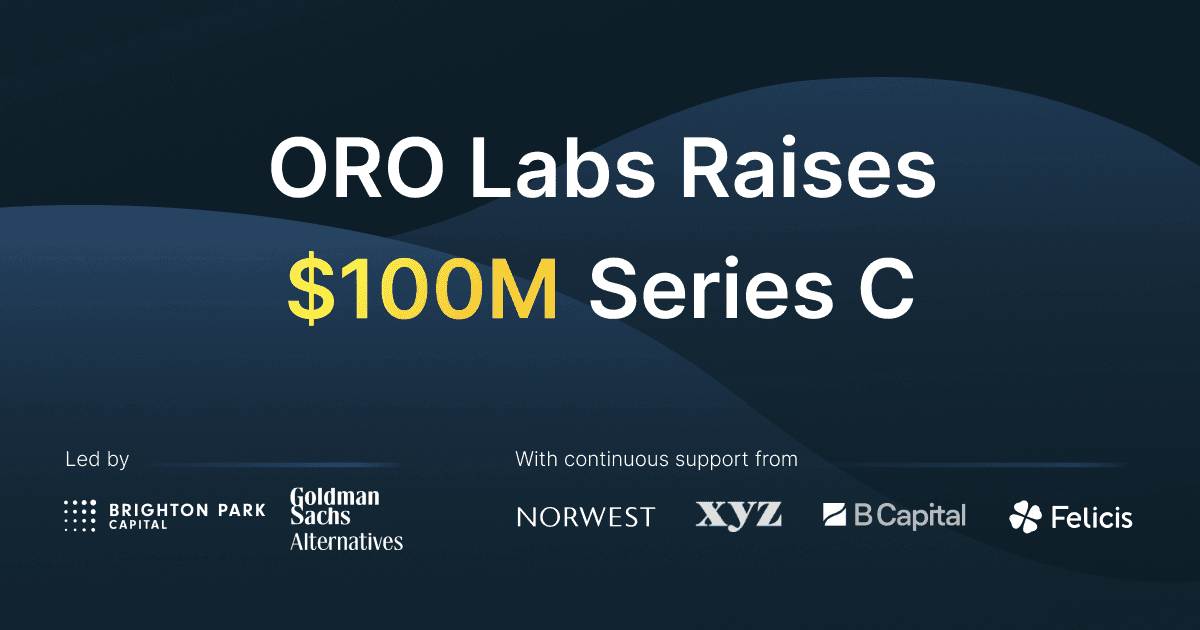
Goldman Sachs Alternatives has backed ORO Labs in a $100 million Series C that points to a more practical corner of enterprise AI: procurement, approvals, compliance and the finance workflows that control how large companies spend money.
The financing was announced March 12, 2026 and was led by Brighton Park Capital and Goldman Sachs Alternatives’ Growth Equity team, with continued participation from Norwest Venture Partners, B Capital, XYZ Capital and Felicis. Clare Greenan, a vice president on Goldman Sachs Alternatives’ Growth Equity team, is the firm’s board representative at ORO, which was founded in 2020 by Sudhir Bhojwani, Lalitha Rajagopalan and Yuan Tung.

ORO says its platform is deployed in more than 100 countries and used by Fortune 500 companies across life sciences, financial services, consumer products, manufacturing, energy and telecommunications. Reported customers include Coca-Cola, Siemens Energy, Novartis, Pfizer, Thermo Fisher, Booking.com, Danone, Stellantis and Bayer. The company has also been described as serving 15 of the top 25 life sciences companies and two of the top four U.S. banks, a sign that it has moved well beyond early pilot territory.
The appeal for Goldman employees is less about venture investing than about where enterprise AI is starting to create real operating leverage. Procurement sits in the middle of spending controls, vendor onboarding, risk checks and finance sign-offs. ORO’s pitch is that agentic orchestration can bring more visibility, automation and compliance to those steps, reducing the manual handoffs that slow middle-office and back-office teams and make cost control harder.
That makes the round a useful read on what corporate clients are likely to ask about next. When firms talk about technology budgets, headcount discipline and savings targets, the buying process itself becomes part of the operating question. Software that can route requests, check controls and manage supplier activity can affect how quickly purchases get approved, how tightly risks are managed and how much manual work still sits with finance and operations staff.
ORO’s roots help explain why Goldman would lean in. Bhojwani and Tung both came out of SAP Ariba, and the company’s early focus was on solving the visibility problem created when Fortune 500 companies manage tens to hundreds of thousands of suppliers with little insight into the spend pipeline. For Goldman’s alternatives, fintech, enterprise software, treasury and advisory teams, the signal is clear: the next phase of enterprise AI is not only about chat, but about the plumbing of corporate buying.
This article was produced by Prism’s automated news system from verified source data, official records, and press releases, then run through automated quality and moderation checks before publishing. The system is built and supervised by the people who set the standards it runs under. Read our full AI policy.
Did this article answer your question?