Goldman Sachs Strait of Hormuz forecast misses as shipping stays near halt
Goldman’s 120% Hormuz traffic call collided with a near-halt in shipping, exposing how quickly geopolitical scenarios can outrun market assumptions.
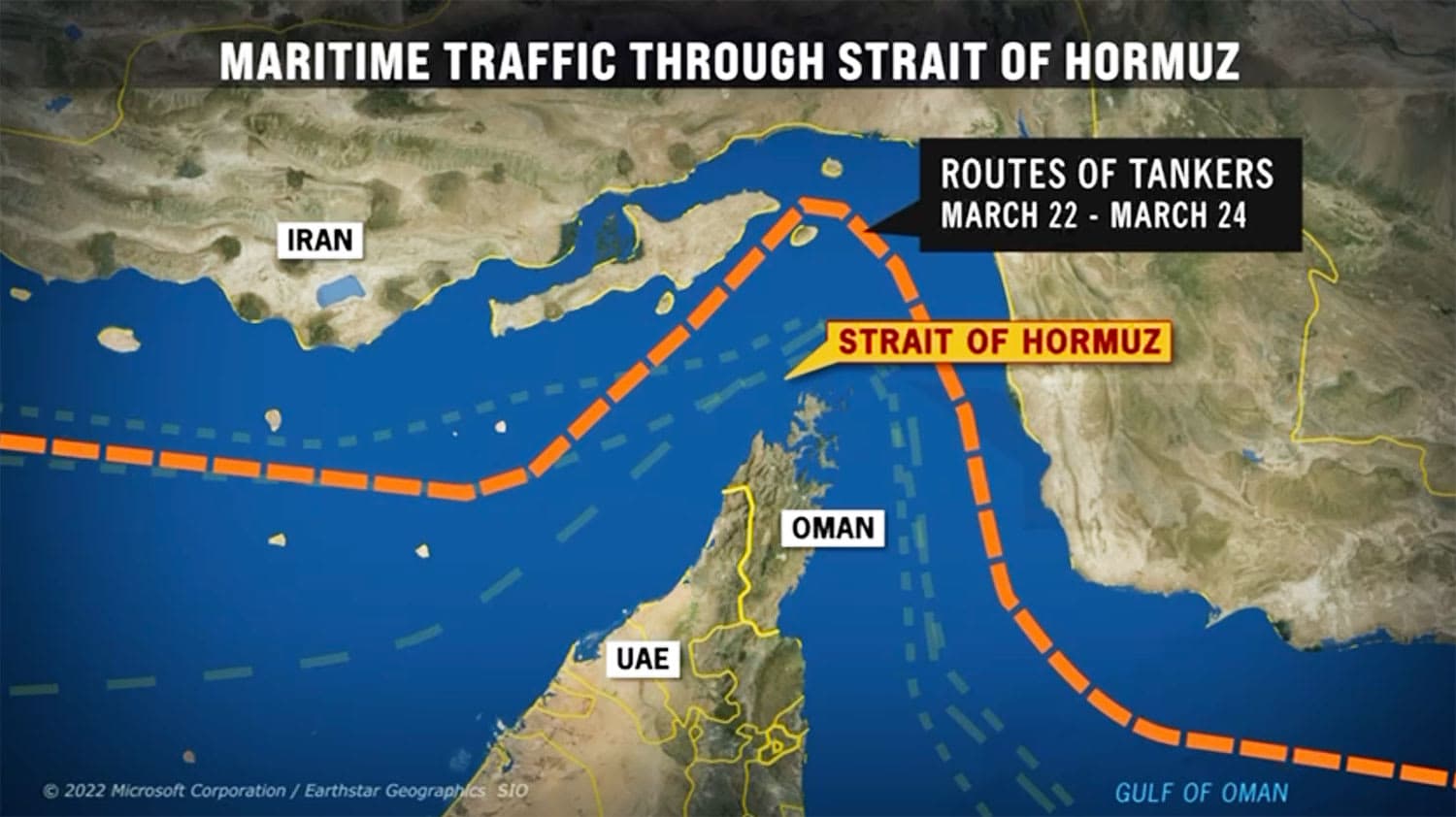
Goldman Sachs’ call that Strait of Hormuz traffic would rebound to 120% of normal now looks badly out of step with reality, as vessels kept moving at a trickle and the chokepoint stayed frozen under war risk, sanctions pressure and military interference.
Goldman’s own March 23 Top of Mind report had described the U.S.-Israeli attack on Iran as the largest energy supply disruption in history, with shipping in the Strait of Hormuz grinding to a near halt. But late-April shipping data showed something far different from a rebound: only about six to seven ships a day were transiting, compared with roughly 125 to 140 a day before the war began on Feb. 28. The U.S. military said it had turned back 37 vessels by April 25, Reuters reported that six tankers loaded with Iranian oil had been forced back to Iran, and hundreds of ships plus about 20,000 seafarers were stranded inside the Gulf.
By May 1, Lloyd’s List Intelligence data cited by USNI News showed transits at the lowest level since the offensive began, at less than 10% of pre-conflict traffic. There were 24 transits between April 23 and May 1, versus 65 in the prior week, and roughly 70% had an Iranian nexus. In other words, the market did not normalize as fast as any model built on simple passage counts or historic congestion patterns would have implied.
The miss highlights the hard part of forecasting geopolitical shocks for client-facing bankers and traders: conflict risk is not linear, shipping behavior is not purely economic, and market signaling can flip when vessel operators fear detention, rerouting costs or sanctions exposure. Reuters reported on April 29 that at least six ships had crossed in the prior 24 hours, but the U.S. Treasury had warned that payments to Iran for passage could create sanctions exposure even for non-U.S. persons. That kind of constraint changes behavior faster than a standard supply-and-demand model can capture.

For Goldman employees who have to explain scenarios to clients, the episode is a reminder that high-conviction geopolitical views need clear boundaries. A sharp call can be useful, but only if it is framed as a scenario with explicit assumptions about military escalation, commercial shipping decisions and official retaliation. When those assumptions break, so does the credibility of the message.
The broader stakes also went beyond crude. Goldman said the Strait of Hormuz mattered for nitrogen fertilizer shipments too, raising the prospect that a prolonged shutdown could spill into agriculture prices and a wider inflation story. Goldman’s own later polling suggested investors were still braced for pain: Bloomberg reported on May 8 that 43% of respondents did not expect shipping to return to normal until after July, and a majority saw disruption lasting beyond the end of June. In a market built on foresight, the lesson was not to stop making bold calls. It was to make them with much less certainty than the headline implies.
Know something we missed? Have a correction or additional information?
Submit a Tip.png&w=1920&q=75)