Goldman Sachs, BofA Gain Ground in Japan's Surging ECM Market
Goldman Sachs claimed 17.3% of Japan's ECM market in fiscal 2026, its highest share since 2017, as a block trade surge tied to governance reform reshapes fee pools.
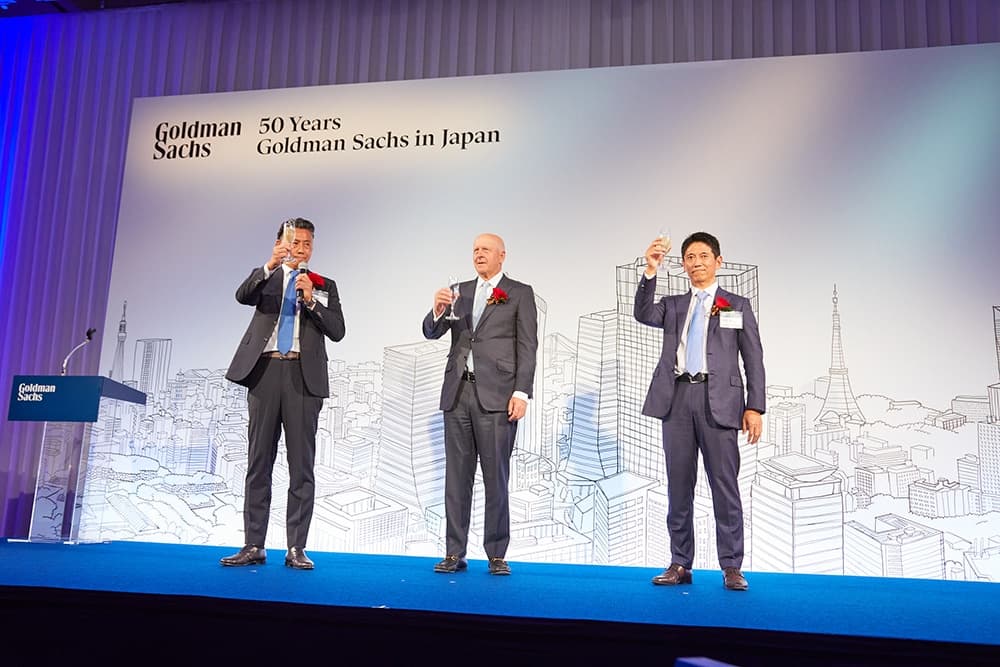
Goldman Sachs captured 17.3% of Japan's equity capital markets for the fiscal year ending March, its highest share since 2017, as a record wave of block trades and follow-on placements rewarded banks with deep local execution capabilities and strong institutional distribution networks.
Bank of America's parallel climb to 13.3% in the same period marks its largest Japan ECM share in Bloomberg data going back to 2009. Nomura Holdings retained the top spot at 19.6%, but the closing gap between the domestic giant and both Wall Street banks signals how sharply the competitive landscape shifted over the past 12 months.
The driving force is structural, not cyclical. Pressure from the Tokyo Stock Exchange and the Financial Services Agency has pushed Japanese corporations to dismantle cross-shareholdings, the long-standing webs of mutual equity stakes that critics argued shielded management from accountability and suppressed shareholder returns. As those positions get unwound, large equity blocks move to market and the banks best equipped to warehouse and place stock quickly collect both the mandates and the fees. Major Japanese insurers have committed to exiting cross-shareholdings entirely, extending the pipeline of supply well beyond any single quarter.
For Goldman's ECM and syndicate desks, the competitive edge comes down to execution speed and distribution reach. Block trades are among the highest-fee ECM mandates precisely because they compress risk and decision-making into hours. A placement that misses its window by an afternoon can cost a client millions in discount; banks that can't move stock into institutional hands with confidence rarely get a second call. Goldman's sustained Tokyo coverage footprint, rather than retreating during leaner years, positioned it to absorb deal flow as volume accelerated into the fiscal year-end.

Private equity-linked transactions and a broader rebound in domestic issuance added further fuel. For associates and VPs staffing Goldman's ECM desks, the volume surge means tighter cross-time-zone execution windows with Tokyo teams and a larger transaction-based fee pool feeding into year-end compensation calculations.
League table momentum carries internal weight at Goldman too. Reclaiming a 17.3% share in Japan, a level last seen nearly a decade ago, strengthens the regional origination argument in client pitches, influences how senior coverage resources get allocated in Asia headcount planning, and surfaces in the performance discussions that shape retention decisions. With Tokyo's corporate calendar generating block trade supply well into the summer, ECM teams have little reason to expect the pace to slow.
This article was produced by Prism’s automated news system from verified source data, official records, and press releases, then run through automated quality and moderation checks before publishing. The system is built and supervised by the people who set the standards it runs under. Read our full AI policy.
Did this article answer your question?