Goldman Sachs clients rethink bond allocations as yields stay elevated
Higher yields are pushing Goldman clients to shorten duration and rethink bonds’ role in portfolios. That shifts revenue, product mix, and pitch language across wealth, asset management, and fixed income.
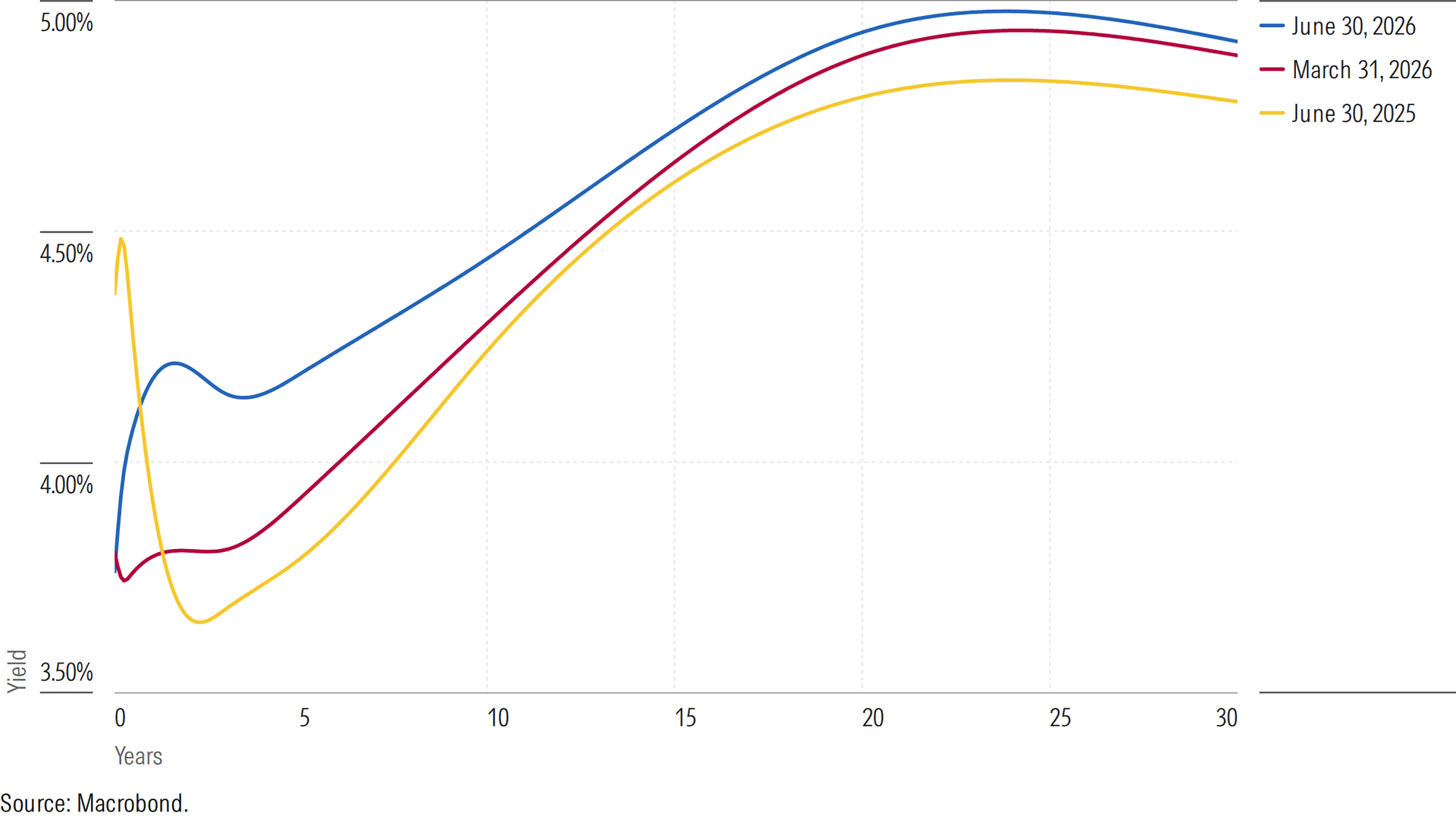
Goldman Sachs Short Duration Bond Fund carried a yield to maturity of 5.19% and an option-adjusted duration of 1.76 years in a March 31, 2026 portfolio positioning report. Goldman’s affluent clients are no longer asking whether bonds belong in their portfolios. They are asking what kind of bonds, how much duration they should own, and whether they still need to lock up money for years when cash and short-term paper now pay meaningfully more than they did in the zero-rate era. That change reaches straight into private wealth, asset management, and fixed-income desks, where the next conversation is less about allocation slogans and more about income, liquidity, and downside protection.
Bonds are becoming a selection exercise
The higher-yield backdrop has changed the economics of portfolio construction. Cash and short-duration instruments now look more attractive than they did when rates were pinned near zero, but that also forces clients to confront the tradeoff between today’s yield and tomorrow’s reinvestment risk. For Goldman advisers, the pitch has to move beyond “own bonds” and toward a more precise discussion of duration, credit quality, and the purpose each sleeve is supposed to serve.
That is especially important with affluent investors who moved away from fixed income during the 2010s and may still think of bonds as a low-return, slow-moving asset class. The current market asks something different of fixed income: it can provide income, but it can also act as a tactical buffer, a liquidity reserve, or a source of tax efficiency depending on the structure. Employees selling asset allocation or model portfolios need to explain that bond exposure today is less about returning to an old playbook and more about deciding which job the portfolio needs fixed income to do.
Where the client conversation is shifting
Municipal bonds are one obvious place where the conversation has gotten more specific. Schwab’s June 17 municipal-bond outlook highlighted that muni bonds may offer attractive tax-efficient income potential, but elevated supply, an uncertain rate backdrop, and issuer dispersion may pose risks. That combination matters for Goldman’s private wealth teams because it rewards advisers who can explain why a muni sleeve belongs in a taxable account and where credit quality, state exposure, and maturity laddering matter more than headline yield.
The taxable market is getting the same treatment. Schwab’s June 5 outlook on taxable fixed income kept income at the center for the second half of 2026, but urged investors to be selective and not favor long-duration investments. That message fits the current market cleanly: clients want yield, but they do not want to overpay for it by extending duration too far. Goldman employees should expect more questions about short-term Treasury exposure, higher-quality credit, and laddered portfolios that spread maturities instead of betting on one rate call.
Goldman’s own short-duration positioning reinforces that tilt. Those March 31 fund metrics give advisers a concrete way to show that investors can still find income without taking on the rate sensitivity that comes with longer-dated bonds. They also help explain why short-duration products have become practical alternatives for clients who want return potential without turning the portfolio into a duration bet.
Why product mix now matters more
For Goldman Asset Management, the opportunity is not just in gathering assets, but in being clearer about what kind of fixed income the client is actually buying. Goldman Sachs Asset Management’s 3Q 2026 fixed-income outlook framed divergent macro paths across geographies as fertile ground for selective, high-conviction investing. It also highlighted emerging markets debt as a source of carry, underscoring a lean toward differentiated income rather than broad market exposure.
That is where product shelf discipline becomes a business issue. Goldman already has a Short Duration High Yield Fund, which fits a client base looking for more income with lower duration exposure, and that sort of product mix can win in a market where clients want flexibility rather than long commitments. The firm also benefits when its advisers can move between municipal bonds, higher-quality credit, emerging markets debt, and short-duration strategies without sounding like they are forcing every client into the same answer.
Goldman created a private-markets platform for wealthy clients, broadening its menu just as investors are reassessing traditional portfolio building blocks. When bonds no longer serve as the default ballast they once did, clients are more likely to ask for portfolio reviews, alternative sources of return, and advice that ties fixed income to the rest of their balance sheet.
Which Goldman teams feel it first
The pressure lands first on private wealth advisers, who now have to defend the role of bonds in a way that feels practical rather than formulaic. They need to talk about volatility, duration risk, real returns, and the difference between generating income and preserving purchasing power, because clients can see yield everywhere and may not see why a bond should still occupy a large share of the portfolio. The conversations are more technical, and that usually favors the teams that can translate macro into portfolio construction quickly.
Asset management stands to gain when those conversations lead to active management, credit selection, and tactical duration calls. Goldman’s fixed-income desks and portfolio managers can benefit if clients decide that matching maturities, rotating among credit tiers, or shifting into shorter paper requires professional oversight rather than a passive allocation.
On July 15, 2024, Goldman Sachs profit jumped on robust debt underwriting and fixed-income trading. If clients permanently prefer shorter duration and more frequent rebalancing, those desks may see more turnover in product demand, even if the long-end of the market draws less enthusiasm.
The backdrop also fits what John Waldron was signaling two years earlier, when he said Goldman was planning for a period of sluggish growth and higher inflation.
This article was produced by Prism’s automated news system from verified source data, official records, and press releases, then run through automated quality and moderation checks before publishing. The system is built and supervised by the people who set the standards it runs under. Read our full AI policy.
Did this article answer your question?